
Florida Flood Policy Overview: What You Need to Know
Florida’s flood risk is real, and it’s growing. With rising sea levels and increasingly severe storms, homeowners in Naples and across the state face genuine threats to their properties.
Understanding your Florida flood policy options isn’t optional-it’s essential protection. Here at Responsive Insurance, Inc., we help residents navigate the complex landscape of flood coverage so you can make informed decisions about your home’s safety.
Why Florida’s Flood Risk Demands Immediate Action
Florida’s flood threat extends far beyond coastal properties and hurricane season. According to recent flood insurance data, approximately one-third of NFIP flood claims come from properties outside Special Flood Hazard Areas, meaning inland homes face genuine flood exposure. The state’s geography creates multiple flood pathways: heavy rainfall overwhelms drainage systems, storm surge pushes water inland, rising water tables increase seepage into basements, and poor drainage infrastructure in older neighborhoods compounds the problem. Naples sits on the 2024 Flood Insurance Rate Maps that reflect updated hazard data, with zones ranging from VE (coastal high hazard with wave action) to AH (shallow flooding) to X (lower-risk areas). The reality is stark-flood damages easily total $25,000 or more per event, yet standard homeowners insurance provides zero coverage for any flood-related loss. This gap between what homeowners think they’re protected against and what they actually are protected against is why flood insurance stands apart as a separate, mandatory purchase for most properties.
Understanding Your Local Flood Zone
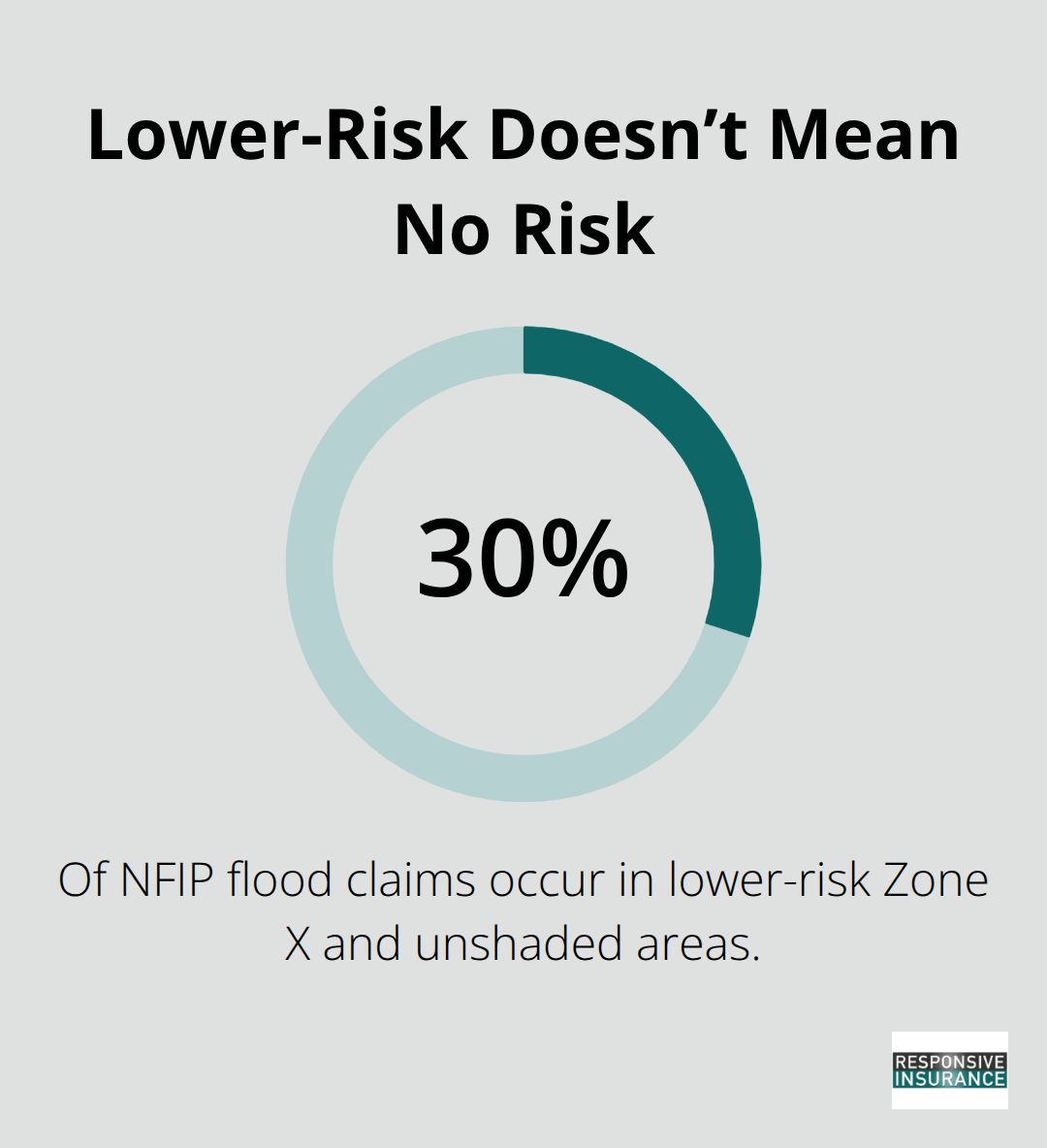
The City of Naples joined the National Flood Insurance Program in 1970, and the 2024 FIRMs now in effect provide more detailed flood-risk data than the previous 2012 maps. Your property’s flood zone determines both your insurance requirements and your costs. Zone VE properties face mandatory flood insurance and higher premiums because coastal wave action poses extreme risk. Zone AE and AH areas also require flood insurance if you have a federally backed mortgage. Even Zone X (0.2% annual chance) and unshaded areas outside the 0.2% flood zone aren’t exempt from risk; NFIP data shows that nearly 30% of flood claims occur in these lower-risk designations.
How to Identify Your Flood Zone
To verify your specific flood zone, use the City of Naples interactive flood maps tool and enter your address, or contact the Floodplain Coordinator at 239-213-5039. This step takes minutes and provides clarity on your actual exposure. Knowing your zone helps you understand what coverage you need and what you’ll pay for it.
NFIP vs. Private Flood Insurance in Florida
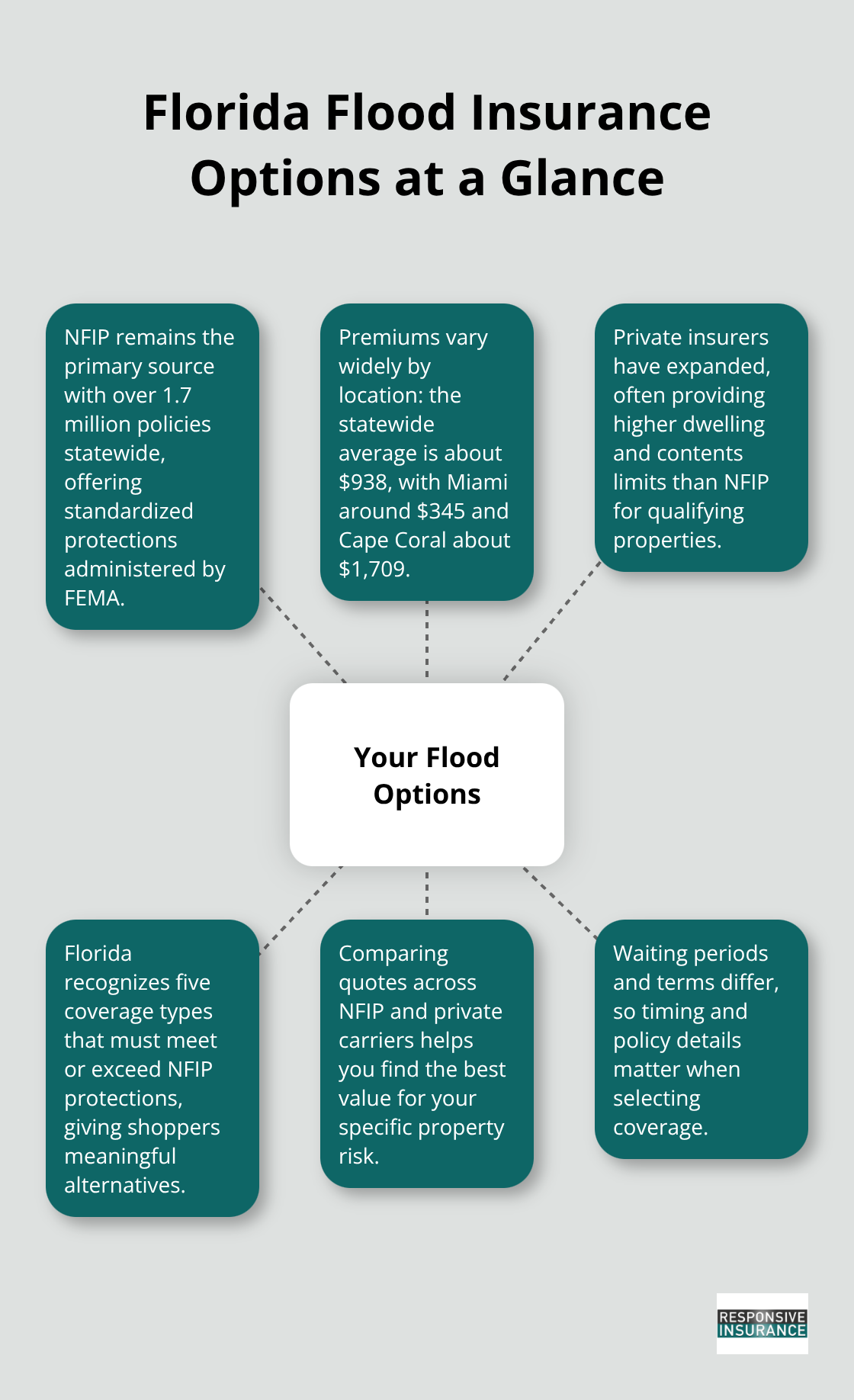
The National Flood Insurance Program, administered by FEMA, remains Florida’s primary flood insurance source, with over 1.7 million NFIP policies in force statewide as of April 2026. However, the private flood insurance market has expanded significantly, offering stand-alone policies and higher coverage limits for those who qualify. Florida’s five approved flood coverage types-Standard, Preferred, Customized, Flexible, and Supplemental-all must equal or exceed NFIP protections, giving you meaningful alternatives to shop. Average NFIP premiums in Florida run about $938 annually, though this varies dramatically by location; Miami averages $345 per year, while Cape Coral reaches $1,709. These differences reflect your specific flood risk, and comparing quotes across both NFIP and private options reveals where you’ll find the best value for your property.
What Flood Insurance Actually Covers and What It Doesn’t
[NFIP flood policies cover direct physical damage from flooding events including storm surge, heavy rainfall, mudflows, and overflowing bodies of water. Building coverage protects the structure itself up to $250,000 under standard NFIP policies, while contents coverage covers your belongings up to $100,000. This includes furniture, electronics, clothing, and appliances. NFIP policies also pay for debris cleanup, structural damage, and wall-to-wall carpeting or flooring. If you’re displaced, additional living expenses coverage helps with temporary housing costs while your home undergoes repairs. However, standard NFIP policies have significant gaps that catch homeowners off guard. Basement coverage remains severely limited regardless of water intrusion, mold damage receives no coverage at all, and living expenses only apply if your home becomes uninhabitable. Belongings receive payment at actual cash value unless you purchase a replacement-cost endorsement, meaning a five-year-old television worth $300 new receives payment at depreciated value. Private flood insurers in Florida often offer broader coverage than NFIP, including higher limits and options that NFIP simply doesn’t provide, so comparing both sources matters before you purchase.
How Deductibles Impact Your Out-of-Pocket Costs
Flood insurance deductibles work differently than homeowners insurance deductibles, and this distinction costs homeowners real money. NFIP allows you to choose separate deductibles for building coverage and contents coverage, with options typically starting at $1,000 and increasing to $5,000, $10,000, or higher. A higher deductible lowers your annual premium, but it means you pay more when a flood actually happens. For example, if you choose a $5,000 deductible and experience $15,000 in flood damage, you cover the first $5,000 and insurance pays $10,000. Most homeowners in low-to-moderate risk areas benefit from a $1,000 deductible because the premium savings don’t justify the increased out-of-pocket exposure during a flood event. If you live in a high-risk zone where premiums already run $1,500 or more annually, raising your deductible to $5,000 might save $300 to $500 per year, making it a reasonable trade-off. Private flood policies often allow deductibles as a percentage of the claim rather than a fixed dollar amount, which can work in your favor on large losses but may cost more upfront. The key is calculating your actual financial ability to pay out-of-pocket during a disaster when you’re already stressed and potentially displaced from your home.
Elevation Certificates Lower Your Costs
An elevation certificate documents the height of your home’s lowest floor and other structural details that insurers use to calculate risk. If your home sits above the base flood elevation for your area, an elevation certificate can significantly reduce your NFIP premium through lower risk classifications. Certificates typically cost between $400 and $750 to obtain from a surveyor, but they can save you money annually depending on your elevation advantage. Contact your local floodplain manager before paying for a new certificate because your property may already have one on file. Homeowners who complete mitigation work like elevating utilities, filling basements, or installing flood vents should absolutely obtain an elevation certificate since these improvements directly reduce your premiums. In communities like Pinellas County that maintain strong floodplain management programs, residents receive up to 40% NFIP discounts through Community Rating System participation, and elevation certificates help you access those savings.
What Private Flood Insurance Offers Beyond NFIP
Private flood insurers in Florida provide coverage options that NFIP cannot match. Higher dwelling limits (sometimes exceeding $250,000) and contents limits (above $100,000) protect homes with significant value or expensive belongings. Some private policies cover basement damage more generously than NFIP, include mold coverage, or offer replacement-cost contents coverage without additional endorsements. Waiting periods also differ-while NFIP typically requires 30 days before coverage takes effect, some private insurers offer shorter waiting periods. Shopping both NFIP and private options with an independent agent reveals which carrier offers the best combination of coverage, limits, and price for your specific property. An agent can also explain how private policies handle deductibles, exclusions, and claims to help you make an informed comparison.
Your flood zone, elevation, and mitigation efforts all influence what you’ll pay and what you’ll receive when you file a claim. Understanding these factors positions you to select coverage that actually protects your financial interests when water threatens your home.
Choosing the Right Flood Policy for Your Naples Home
Start with the City of Naples interactive flood maps tool and enter your address to identify your exact flood zone. This single step determines nearly everything about your flood insurance decision. If you land in Zone VE, AE, or AH, flood insurance isn’t optional-your lender requires it and state law mandates it for Citizens Property Insurance policyholders above certain coverage limits. The phase-in schedule matters: properties with $400,000 or more in dwelling coverage must obtain flood insurance by January 1, 2026, while lower-value homes have until January 1, 2027. If you’re in an unshaded Zone X or outside the mapped flood areas entirely, you still face genuine risk since nearly 30% of NFIP claims originate outside Special Flood Hazard Areas. This reality should drive your decision toward protection rather than assuming your location exempts you. Contact the City Floodplain Coordinator at 239-213-5039 if the maps leave any doubt about your zone designation.
Obtain Quotes from Multiple Sources
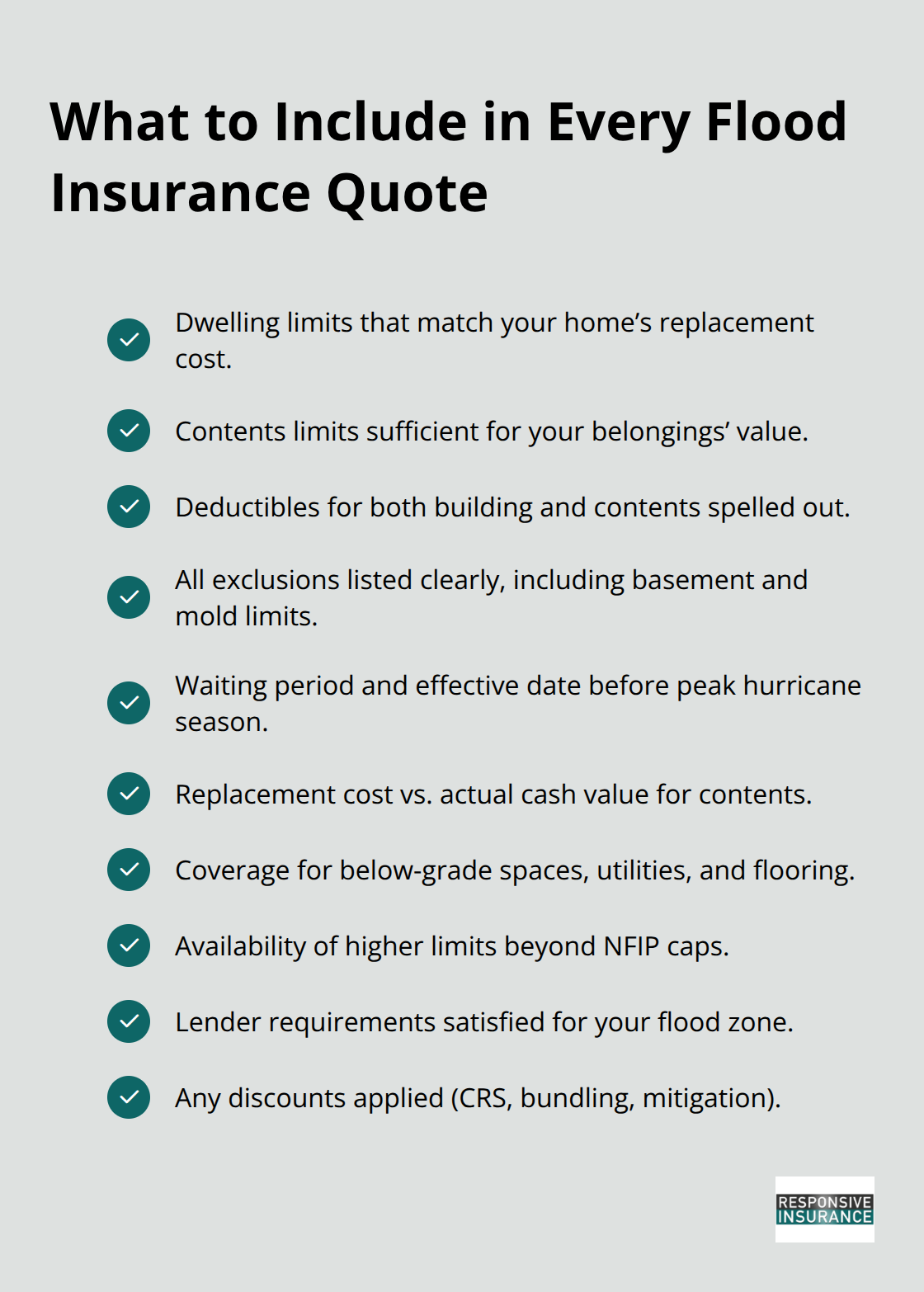
Once you know your zone, request quotes from both NFIP and private insurers before you make a purchase decision. The NFIP average in Florida sits around $938 annually, but your actual cost depends entirely on your flood zone and elevation. Miami residents pay roughly $345 per year while Cape Coral residents pay $1,709 for NFIP coverage-a 396% difference driven by location-specific risk. Private flood insurance often undercuts NFIP in certain zones and offers higher limits that NFIP cannot match, making the comparison essential. Request quotes that specify dwelling limits, contents limits, deductibles, and any exclusions so you compare identical coverage rather than just premiums.
Work with an Independent Agent
An independent agent can pull quotes from multiple carriers simultaneously and explain how each policy handles basement coverage, mold exclusions, and claims procedures. Most agents charge nothing for this service since they earn commission from the insurer you select. Don’t purchase through a carrier’s website or phone line without agent involvement-you’ll miss coverage options and potential discounts. An independent agency like Responsive Insurance, Inc., based in Naples, works with multiple A-rated insurance companies to compare coverage and find the best fit for your needs.
Leverage Discounts Through Bundling
Bundling flood insurance with your homeowners, wind, or auto policies frequently produces discounts that online shopping cannot access. Ask your agent about all available discounts before you finalize your purchase. Some communities participate in the Community Rating System, which can reduce your NFIP premium by up to 25% or more depending on local floodplain management efforts.
Time Your Purchase for Hurricane Season
Plan your purchase for at least 30 days before hurricane season peaks because the standard NFIP waiting period prevents coverage from taking effect immediately, and private policies may have their own waiting periods. Purchasing early protects you if storms develop faster than expected.
Final Thoughts
Florida’s flood policy overview shows that flood insurance is not optional for most homeowners, and the cost of waiting far exceeds the cost of acting now. Your flood zone determines your legal requirements, but your actual flood risk extends beyond any map designation-nearly 30% of NFIP claims originate outside Special Flood Hazard Areas, meaning properties in lower-risk zones still experience devastating losses. The difference between being protected and unprotected often amounts to tens of thousands of dollars when water enters your home.
Identify your flood zone using the City of Naples interactive maps tool, then request quotes from both NFIP and private insurers before hurricane season intensifies. Compare dwelling limits, contents limits, deductibles, and exclusions across multiple carriers rather than accepting the first quote you receive. If you hold a Citizens Property Insurance policy, the phase-in schedule matters: properties with $400,000 or more in dwelling coverage must carry flood insurance by January 1, 2026, while lower-value homes have until January 1, 2027.
The 30-day waiting period for NFIP coverage means purchasing in June or July protects you well before peak hurricane season in August and September. Private flood policies may offer shorter waiting periods, making them worth comparing alongside NFIP options. An independent agent can pull multiple quotes simultaneously and explain how each policy handles your specific property’s risks, so contact Responsive Insurance, Inc. to discuss your flood insurance options and secure coverage before hurricane season arrives.


