
Unoccupied Home Insurance Florida: How To Cover An Empty Property
Leaving a property vacant creates insurance gaps that standard homeowners policies won’t fill. Florida’s weather, theft risks, and liability concerns make unoccupied home insurance Florida essential for protecting your investment.
We at Responsive Insurance, Inc. help Naples homeowners find the right coverage for empty properties. This guide walks you through your options and the steps needed to keep your vacant home secure.
What Happens to Your Coverage When a Home Sits Empty
Standard homeowners policies assume your house is occupied. The moment you move out, most insurers consider your property vacant after 30 to 60 consecutive days, and coverage either becomes severely limited or disappears entirely. Many Florida carriers have updated their language to suspend all coverage-not just specific perils-if you don’t notify them of the occupancy change. This means a fire, windstorm, or theft could leave you with zero protection and a denied claim. Understanding the difference between occupied and vacant properties matters before you leave a home empty.
Defining Vacant Versus Unoccupied
The terms vacant and unoccupied are not interchangeable in insurance. Unoccupied means the home is temporarily unused but still furnished and move-in ready-think of a seasonal property or a home you’re preparing to sell. Vacant means no people live there and little to no personal property remains inside. Your insurer’s definition determines whether your standard policy applies or whether you need specialized coverage. Some carriers treat these distinctions differently, so you must verify whether your policy covers vacancy periods before any occupancy change to avoid gaps. A home left unoccupied for even a few weeks without notification can trigger a coverage suspension that leaves you exposed to significant financial loss.
Why Florida Properties Face Steeper Risks
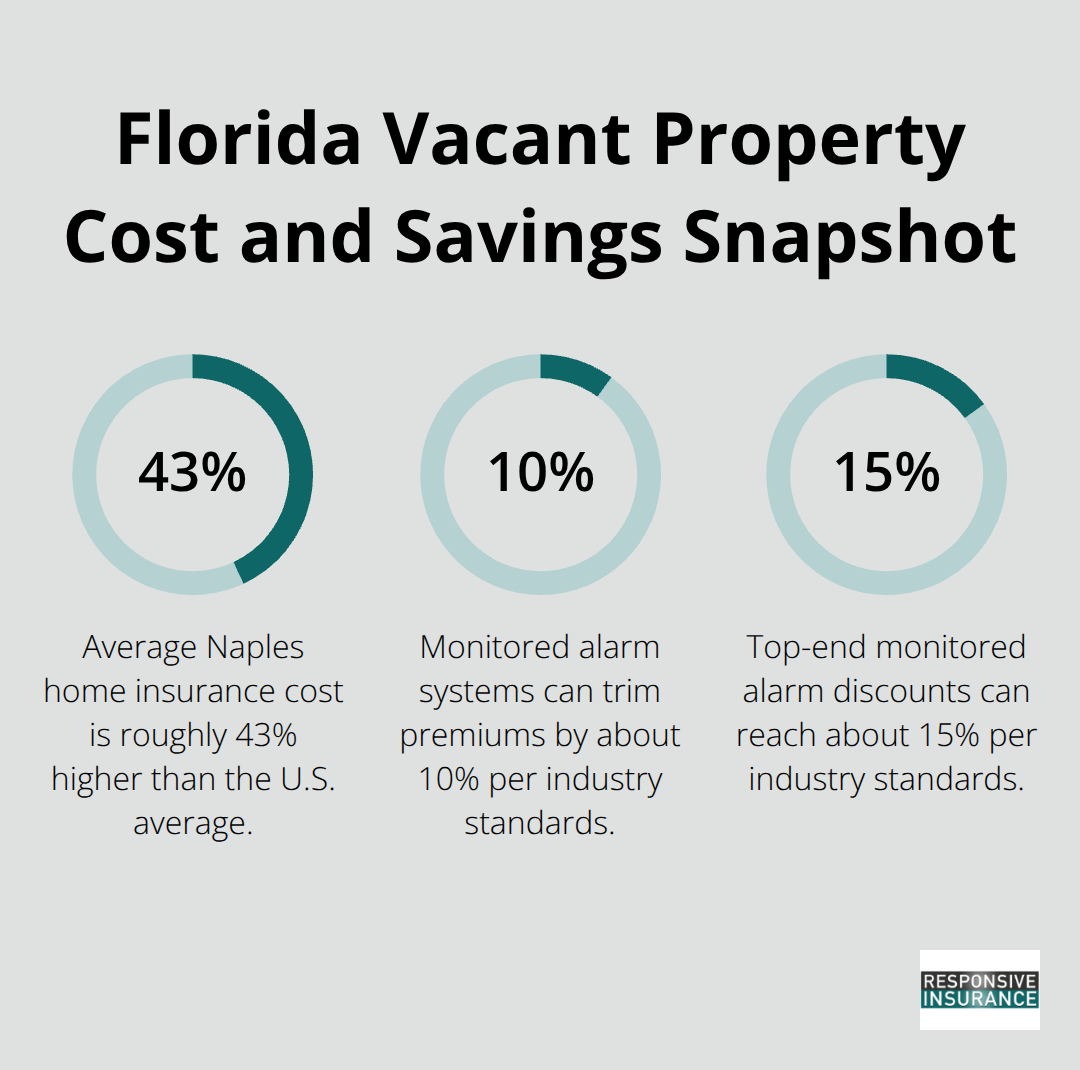
Florida’s climate and property characteristics create unique exposures that vacant homes amplify. Undetected water leaks become catastrophic in an empty house because no one is present to notice them early, leading to mold, rot, and structural damage that spreads unchecked. Hurricanes and windstorms pose extreme risk, especially in coastal areas like Naples where the average home insurance cost runs about $2,502 per year according to Policygenius data-roughly 43% higher than the national average. Vandalism and theft occur more frequently in vacant properties because there are no signs of occupancy and no one to respond quickly.
Additionally, Florida’s humidity accelerates deterioration, and pest infestations establish themselves rapidly in an unattended space. Standard homeowners policies exclude or severely limit coverage for these vacant-property scenarios, making specialized dwelling-fire policies (DP-1 forms) or vacant home endorsements necessary to protect your investment during any extended vacancy period.
Coverage Gaps That Leave You Exposed
Your standard homeowners policy contains specific language about occupancy thresholds and what happens when you cross them. Most policies require you to report occupancy changes within a set timeframe-often 30 days-or face automatic suspension. Water damage represents one of the largest gaps for vacant homes; insurers exclude losses from undetected leaks because no occupant can catch problems early. Theft of building materials and fixtures also falls outside standard coverage for vacant properties, as does mold that results from moisture intrusion. Liability coverage may also suspend if the property sits empty, leaving you vulnerable if someone enters the property and suffers an injury. These gaps explain why you cannot rely on your existing homeowners policy once a property becomes vacant, and why specialized vacant home insurance exists as a separate product designed specifically for this exposure.
What Vacant Home Insurance Actually Covers
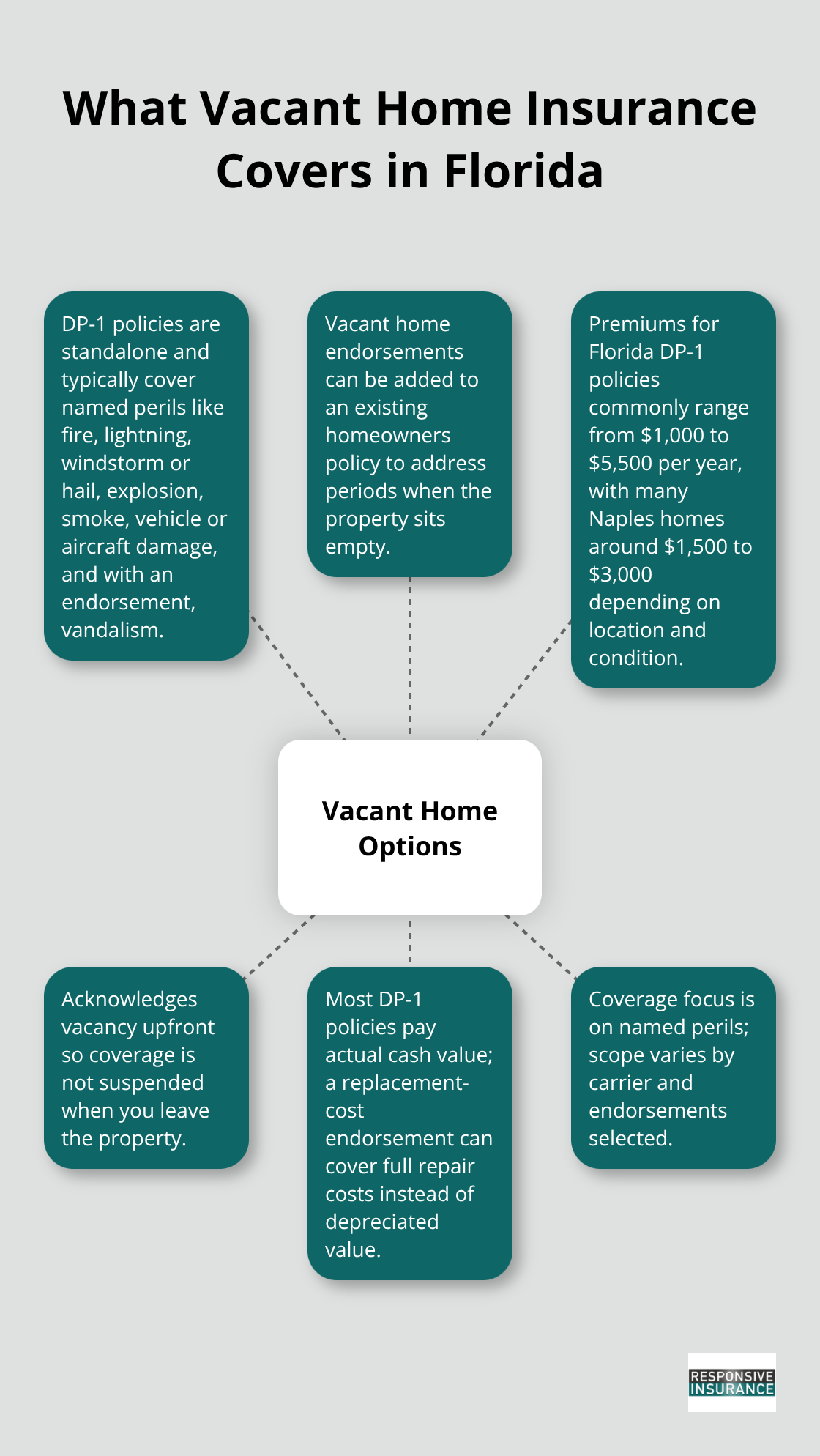
Vacant home insurance in Florida comes in two main forms: dwelling-fire policies (DP-1) and vacant home endorsements added to your existing homeowners policy. DP-1 policies are standalone products designed specifically for unoccupied properties and typically cover named perils including fire, lightning, windstorm or hail, explosion, smoke, damage from vehicles or aircraft, riot or civil commotion, and often vandalism with an endorsement. According to Policygenius data, typical Florida vacant DP-1 premiums range from about $1,000 to $5,500 per year, with most Naples homeowners paying roughly $1,500 to $3,000 depending on location, property condition, and how long the home will sit empty. The key advantage of a DP-1 policy is that it acknowledges vacancy upfront and does not suspend coverage when you leave the property. Most DP-1 policies pay actual cash value, though you can add a replacement-cost endorsement for additional premium to cover the full cost of repairs rather than depreciated value.
Water Damage and Major Coverage Exclusions
Water damage represents the major exclusion on vacant DP-1 policies because no occupant exists to detect leaks early. You must shut off your main water supply and consider installing automatic shutoff valves before you leave the property vacant. DP-1 policies also exclude mold that results from moisture intrusion, theft if the property is not properly secured, and ordinance or law coverage that addresses building-code upgrades required after a loss. Liability coverage on DP-1 forms remains minimal compared to standard homeowners policies, so if someone enters your vacant property and suffers injury, your protection is limited. Loss of rental income is typically excluded as well, meaning if you own an investment property that should generate rent, a covered peril that makes the home uninhabitable will not compensate you for lost income.
Additional Protection Through Flood and Windstorm Coverage
Many Naples property owners add private flood endorsements through carriers like Tower Hill, which offer up to $5 million in flood protection for an additional premium, or purchase separate flood insurance through the National Flood Insurance Program if the property sits in a high-risk flood zone. American Integrity Insurance and other Florida-focused carriers offer vacant home policies with windstorm loss-mitigation discounts for homes with wind-resistant features like hip roofs. These carriers also provide discounts for monitored alarm systems, automatic sprinklers, and paperless billing that can reduce premiums meaningfully.
How Inspections and Maintenance Lower Your Premium
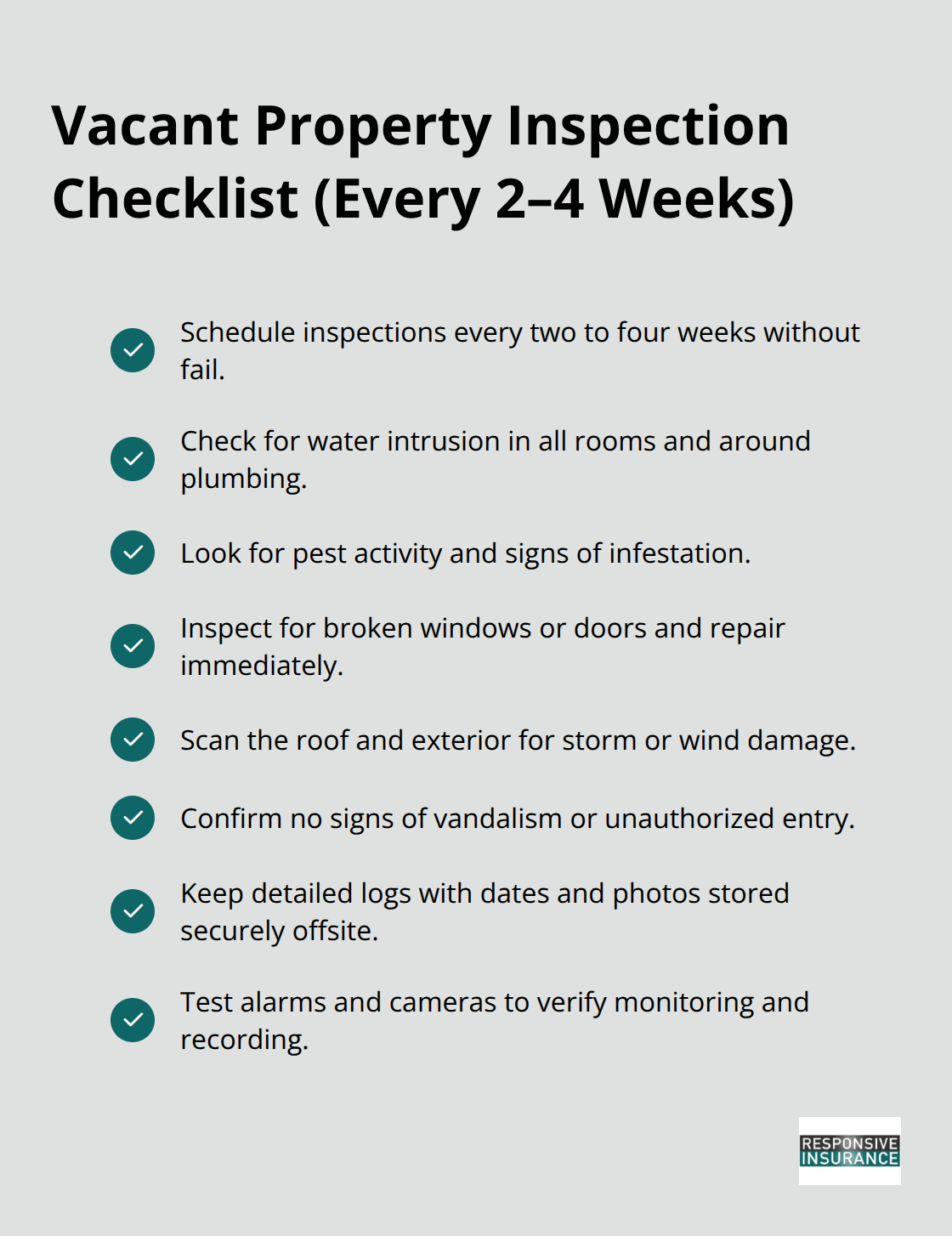
Most Florida insurers require documented regular inspections for vacant properties, typically every two to four weeks, to keep your premium competitive and maintain active coverage. These inspections should include checks for water intrusion, pest activity, broken windows or doors, roof damage, and signs of vandalism or unauthorized entry. You should keep detailed inspection logs with dates and photos to demonstrate that you actively manage the property, which insurers reward with lower rates.
Security systems with monitored alarms, motion sensors, and door or window contacts can reduce your premium by 10 to 15 percent according to industry standards, while security cameras with cloud storage provide documentation in case of theft or vandalism. Installing automatic water shutoff valves and maintaining HVAC systems at a minimum temperature to prevent pipe freezing are practical steps that many insurers recognize with discounts. For properties undergoing renovation, some carriers allow coverage under a vacant policy as long as renovations do not affect load-bearing walls or alter the home’s blueprint-you should coordinate with your agent and builder before work begins to confirm what your specific policy permits. Understanding what your DP-1 policy covers and what it excludes helps you identify which additional protections you need, which brings us to the specific steps you can take to reduce your risk and lower your costs.
How to Protect a Vacant Property From Common Risks
Assess Your Property’s Vulnerabilities
Walk through your vacant home and identify specific vulnerabilities before you leave it empty. Check your roof for existing damage, inspect foundation cracks, test all doors and windows for secure locks, and look for signs of water intrusion around plumbing fixtures and exterior walls. Document everything with dated photos because insurers often ask for proof that you maintained the property in good condition before vacancy. Pay special attention to your water supply system-shut off the main valve and open all faucets to drain the lines, then consider installing automatic shutoff valves that detect leaks and cut water flow immediately. Florida’s humidity accelerates mold growth, so verify that your HVAC system can maintain 76°F to 78°F with relative humidity kept below 60% to prevent condensation buildup. If your property is in a flood zone, review whether your DP-1 policy covers flood damage or whether you need a separate National Flood Insurance Program policy or private flood endorsement through a carrier like Tower Hill, which offers up to $5 million in coverage.
Install Security Systems and Physical Barriers
Physical security measures directly reduce your premium and protect against theft and vandalism that plague vacant properties. Install a monitored alarm system with motion sensors on all entry points and interior spaces-this single step can lower your premium by 10 to 15 percent according to industry standards. Add security cameras with cloud storage so you have real-time footage if someone enters your property without permission, and consider installing automatic sprinklers on your lawn to signal occupancy and reduce fire risk. Secure all windows with locks or security bars, and use door reinforcement plates on exterior doors to prevent forced entry.
Document Inspections and Coordinate Renovations
Schedule regular property inspections every two to four weeks-this is not optional if you want to maintain competitive rates-and create detailed logs with dates, times, and photos documenting that no water damage, pest activity, broken windows, roof damage, or signs of unauthorized entry exist. Keep these inspection records offsite in digital form so you have proof of your diligence if you ever file a claim. For properties undergoing renovation, coordinate with your contractor and insurer before work begins because your DP-1 policy permits renovations only if they do not affect load-bearing walls or change the home’s blueprint. Notify your neighbors or hire a property manager to watch the home and respond quickly to emergencies, and participate in any local watch groups or homeowners association notification lists that alert members to suspicious activity in your area.
Final Thoughts
Protecting an unoccupied home in Florida requires a DP-1 dwelling-fire policy or a vacant home endorsement that acknowledges vacancy upfront, not a standard homeowners policy that suspends coverage the moment you leave. You must assess your property’s vulnerabilities, install monitored security systems and automatic water shutoff valves, and schedule regular inspections every two to four weeks with detailed documentation. These actions lower your premium while reducing the risk of catastrophic losses from water damage, theft, or vandalism that plague vacant properties across Florida.
Unoccupied home insurance Florida policies typically cost between $1,500 and $3,000 per year in Naples, depending on location, property condition, and vacancy length-an investment that protects you from exposure to losses far exceeding your annual premium. Many insurers offer meaningful discounts for security cameras, monitored alarms, automatic sprinklers, and hip roof designs, so you should shop across multiple carriers to find the best rate. You should also verify whether you need separate flood coverage through the National Flood Insurance Program or a private flood endorsement, especially if your property sits in a high-risk flood zone.
Contact Responsive Insurance, Inc. to discuss your vacant property and receive quotes from carriers that specialize in vacant home coverage. We work with multiple A-rated insurance companies to compare your options and find the coverage that fits your specific property and timeline. The sooner you secure the right policy, the sooner you can leave your property with confidence that your investment stays protected.


