Short-Term Rental Liability: Protect Your Hosting Venture
Short-term rental liability is one of the biggest blind spots for hosts in Naples, FL. Most standard homeowners policies won’t cover income loss, guest injuries, or damage that happens during a rental period.
At Responsive Insurance, Inc., we’ve seen hosts lose thousands because they didn’t have the right coverage in place. This guide walks you through the real risks, the insurance options that actually work, and the steps to protect your hosting business.
What Threatens Your Rental Income in Naples
Guest Damage Depletes Your Reserves Fast
Guest damage in short-term rentals costs more than most hosts anticipate. A single incident-a broken window, damaged furniture, or stolen electronics-wipes out weeks of rental income. Naples hosts face particular exposure because seasonal guests and tourists often lack accountability. Property damage claims spike during peak winter months when occupancy rates climb and guest turnover accelerates.
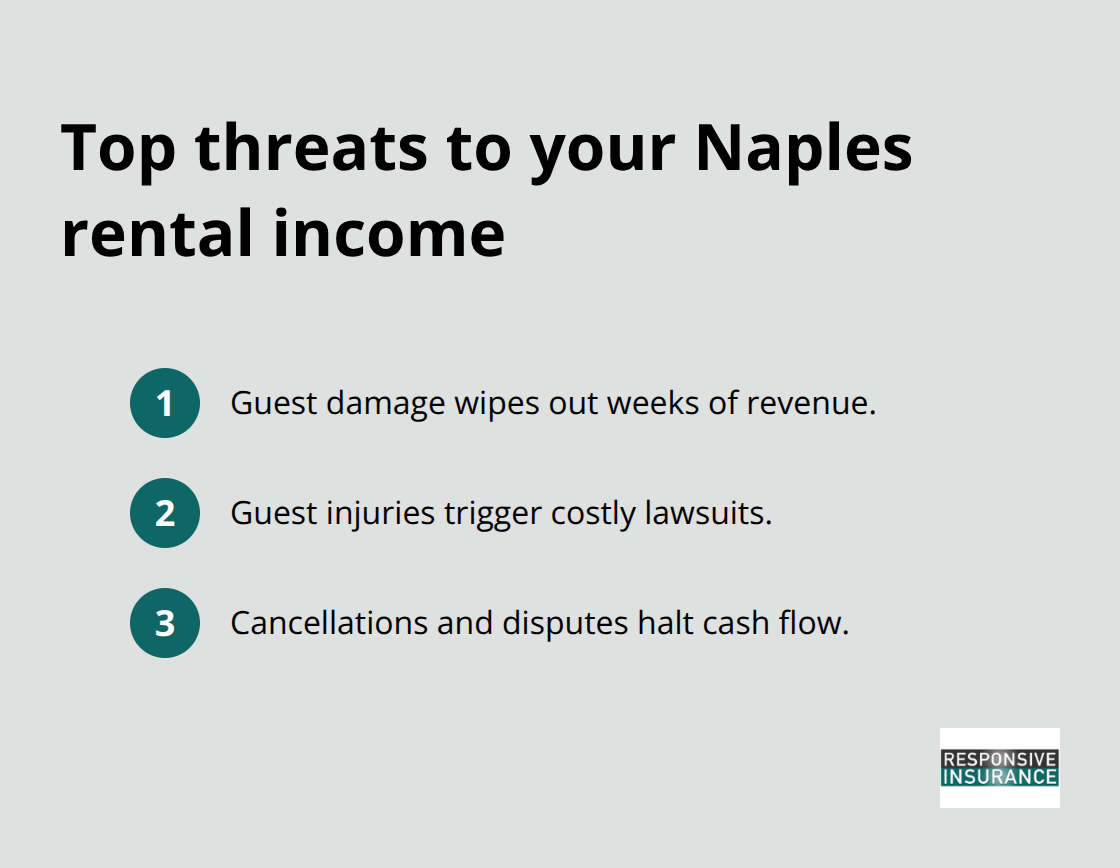
Theft hits equally hard; guests have stolen everything from kitchen appliances to outdoor furniture, leaving hosts with replacement costs and lost rental days while repairs happen.
Standard homeowners policies won’t cover these losses because they exclude rental activity entirely. You remain personally liable for every dollar of damage unless you carry specialized short-term rental coverage. The financial impact compounds quickly-a $5,000 repair bill requires 10–15 days of rental income to recover, and that assumes full occupancy during peak season.
Guest Injuries Expose You to Major Lawsuits
A guest slip-and-fall on your wet patio or an injury from defective furniture exposes you to lawsuits that can exceed $100,000. Florida’s premises liability laws hold property owners responsible for guest safety, and courts have awarded substantial settlements to injured guests. Medical bills, legal defense costs, and settlement amounts drain your personal assets if your insurance denies the claim or coverage limits prove inadequate.
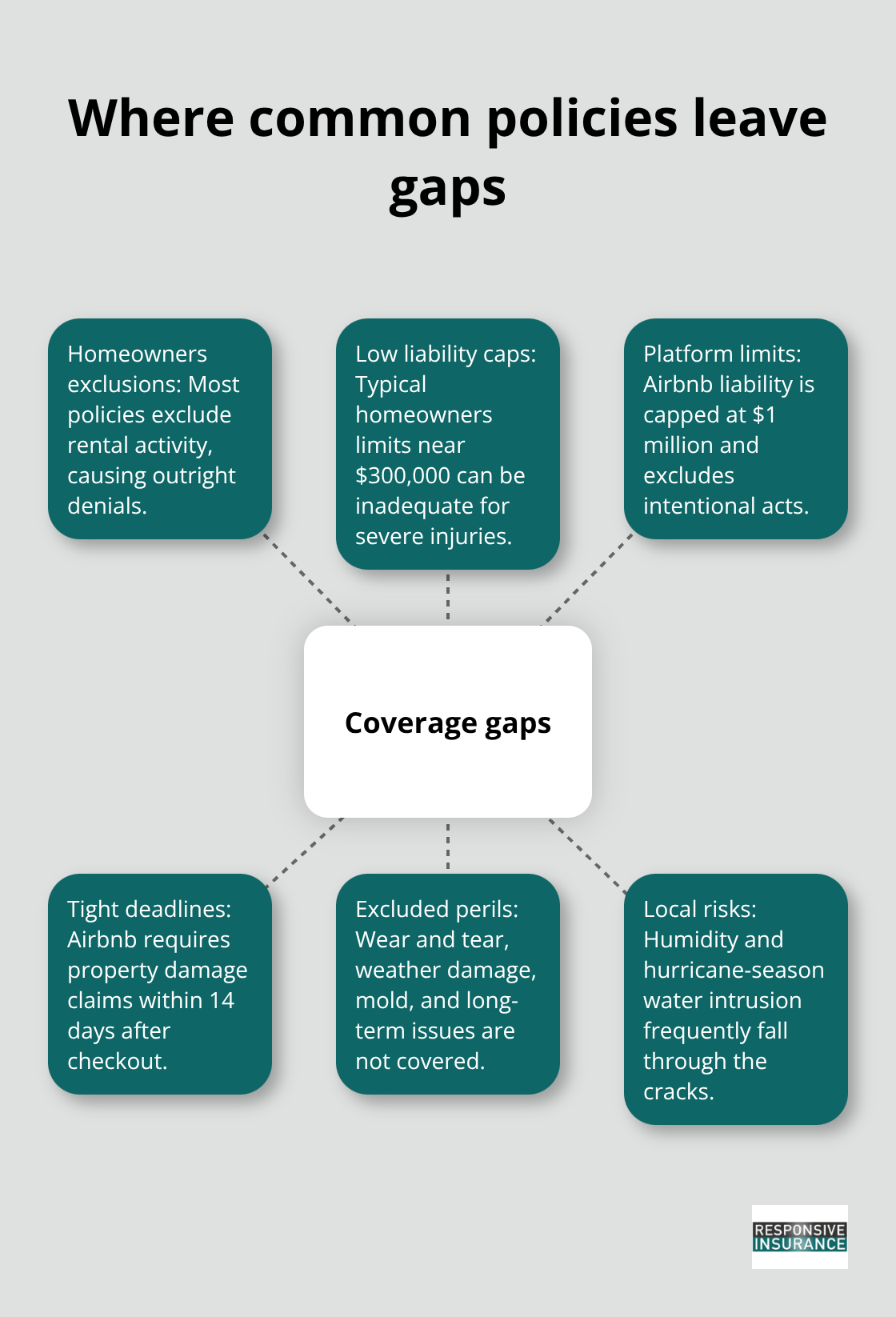
Standard homeowners liability typically caps at $300,000 or less, which sounds sufficient until a serious injury occurs. Platform coverage like Airbnb’s Host Protection Insurance provides only $1 million in liability protection and excludes intentional acts, meaning if a guest claims negligence on your part, you face exposure. Many Naples hosts discover too late that their coverage has gaps-the injury happened during a rental period that their policy explicitly excludes.
Income Loss From Cancellations and Disputes Strains Cash Flow
When a guest cancels last-minute or a dispute erupts, your rental income evaporates while your mortgage, property taxes, and maintenance costs continue. A serious incident-guest damage requiring repairs or a safety issue forcing closure-can sideline your property for weeks. Without loss-of-income coverage, you absorb the full financial hit.
Naples hosts who rely on rental income to cover property expenses face immediate cash flow problems. Cancellation disputes with guests rarely favor hosts, and platform refund policies often prioritize guest satisfaction over your lost revenue. Specialized short-term rental policies include loss-of-income protection that reimburses your daily rental rate during covered downtime, but standard policies and platform coverage do not. Understanding which risks your current insurance actually covers determines whether you stay profitable or face financial hardship after a single claim.
What Insurance Actually Covers Your Rental Property
Standard Homeowners Policies Reject Rental Claims
Your standard homeowners policy treats short-term rental activity as a dealbreaker. Most insurers in Florida will deny claims outright if they discover you’re hosting guests for payment, and some will cancel your entire policy without warning. The exclusion exists because homeowners policies assume owner occupancy and low turnover risk, neither of which applies to rental properties with constant guest traffic. You cannot rely on your existing coverage, and you absolutely should not assume platform protection like Airbnb’s Host Protection Insurance will fill the gap.
Platform Coverage Falls Short of Real Protection
Airbnb caps liability at $1 million per occurrence and excludes intentional acts, meaning a guest claiming you failed to maintain safe conditions might fall outside that coverage. Property damage claims to Airbnb must be reported within 14 days after checkout or they face automatic denial, and the program explicitly excludes wear and tear, weather damage, mold, and long-term liability. That leaves enormous gaps for Naples hosts facing water intrusion from humidity, hurricane season exposure, or gradual deterioration that guests blame on existing conditions.
Specialized Short-Term Rental Insurance Fills Critical Gaps
Specialized short-term rental insurance covers commercial liability, guest damage, and lost income coverage. Unlike homeowners policies, these programs expect rental activity and price accordingly. Coverage typically includes replacement-cost protection for furnishings and electronics, meaning you receive full replacement value rather than depreciated amounts. Loss-of-income coverage reimburses your daily rental rate for the number of days your property sits vacant due to a covered loss, protecting your cash flow during peak season when downtime costs the most. Liability limits often reach $300,000 to $1 million, and many policies include guest screening assistance and risk management resources.
Add-Ons Address Specific Property Risks
Additional endorsements and add-ons address specific risks unique to your property. Pool and hot tub liability coverage is essential if you offer those amenities, since guest injuries around water create outsized lawsuit exposure. Pet liability protection covers injuries or damage caused by guest pets, which standard rental policies often exclude. Liquor liability covers injuries or property damage resulting from alcohol served at your property, a real concern for Naples hosts hosting parties or events. Vandalism and theft coverage protects against intentional guest damage and stolen items, addressing the exact scenarios that standard policies exclude. Bed bug and pest infestation coverage reimburses treatment and lost income if an infestation forces closure, a growing concern in high-turnover properties. Umbrella insurance adds an extra layer of liability protection above your base policy limits, protecting personal assets if a judgment exceeds your underlying coverage. For Naples hosts with multiple properties or high annual rental income, commercial property insurance may provide broader protection and higher limits than residential short-term rental policies.
Deductibles, Vacancy Coverage, and Property Valuation Matter
When you evaluate options, compare deductibles carefully because they directly impact your out-of-pocket cost after a claim. A $2,500 deductible reduces your premium but means you pay $2,500 before coverage begins, which matters significantly for minor damage claims. Higher deductibles suit hosts with cash reserves who can absorb small losses; lower deductibles suit hosts who cannot afford unexpected costs. Verify whether your policy covers vacancy periods, which matters for Naples hosts during off-season months when the property sits empty. Some policies reduce or eliminate coverage during extended vacancies, leaving you exposed during summer months. Confirm that your coverage applies to your specific property type and rental model, since coverage restrictions sometimes apply to condos, multi-unit properties, or rental arbitrage setups. Document your property value accurately by creating a detailed replacement-cost inventory of furnishings, appliances, electronics, and décor, then set coverage limits accordingly. Underinsuring your property leaves you absorbing the gap after a major loss, and overinsuring wastes premium dollars on coverage you don’t need. As an independent agency based in Naples, Responsive Insurance, Inc. works with multiple A-rated insurance companies to compare coverage options and find the best fit for your short-term rental needs. The next step involves understanding which specific risks your property faces and how to minimize exposure through proactive management practices.
How to Reduce Guest Risk Before Problems Start
Screen Guests to Filter Out Problem Bookings
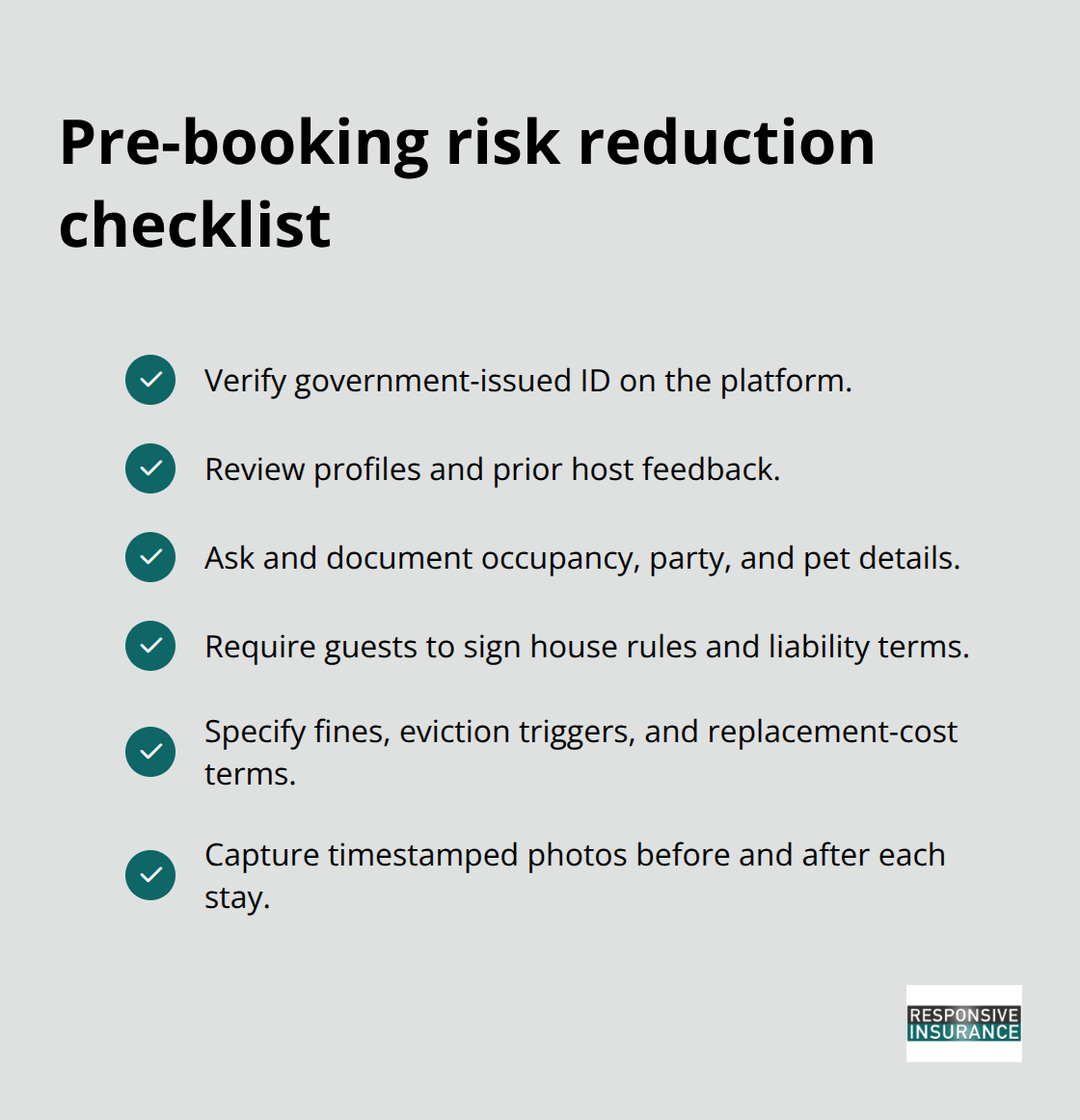
Screening guests before they arrive is the single most effective way to prevent damage and liability claims. Naples hosts who skip this step invite trouble-bad guests cost thousands in repairs, lost income, and legal fees. Start by requiring government-issued ID verification through your rental platform, then cross-reference the guest’s name against public records for eviction history, criminal charges, or civil judgments. Airbnb and VRBO provide some automated screening, but you should manually review guest profiles, read previous host reviews, and look for patterns that signal risk. Hosts report that guests with zero reviews, vague responses to pre-booking questions, or multiple cancellations in their history create disproportionate claim frequency.
Ask direct questions during booking: How many guests will actually occupy the property? Will there be parties or events? Do they have pets? Guests who dodge these questions or provide evasive answers warrant rejection.
A strict cancellation policy and upfront house rules filter out guests seeking to exploit your property. One Naples host added a requirement for guests to acknowledge specific house rules in writing and reduced damage claims by 40% over two years, simply because problem guests self-selected out rather than book.
Create Specific, Enforceable House Rules
Your rental agreement and house rules must be specific, enforceable, and documented in writing before guests arrive. Generic rules like no smoking or no parties lack teeth because enforcement requires proof that the guest actually violated them. Instead, spell out exactly what constitutes a violation: smoking anywhere inside the property triggers a $500 fine; parties with more than six guests result in immediate eviction and forfeiture of remaining rent; damage to furnishings requires full replacement cost reimbursement. Include language requiring guests to report damage within 24 hours, prohibiting alterations to locks or appliances, and banning hazardous items like candles or fireworks.
Require guests to sign an acknowledgment that they reviewed the house rules and understand the damage liability policy. When disputes arise, this signed document becomes your evidence in claim defense.
Document Property Condition With Timestamped Photos
Document the property condition before each guest arrives with timestamped photos of every room, focusing on furniture condition, appliance functionality, and any existing damage. After checkout, photograph the same areas again and compare. This creates an objective record that protects you when guests dispute damage claims. One Miami-area host successfully defended a $3,000 damage claim by producing timestamped photos showing pre-arrival condition and a signed guest agreement specifying damage liability-the guest’s claim was denied because the documentation proved the damage occurred during their stay and violated explicit house rules.
Final Thoughts
Short-term rental liability protection requires three concrete actions: securing specialized insurance coverage, screening guests rigorously, and documenting everything. Standard homeowners policies will not protect your Naples rental business, and platform coverage alone leaves dangerous gaps when claims arise. A dedicated short-term rental policy covers guest damage, liability claims, and lost income-the exact exposures that destroy unprepared hosts financially.
Guest damage depletes reserves fast, injuries trigger lawsuits exceeding $100,000, and income loss from cancellations or disputes strains cash flow immediately. These scenarios happen regularly to Naples hosts, and they happen fast. The hosts who survive them financially invested in proper coverage before problems started, screened guests by verifying ID and reviewing booking history, created specific house rules that guests signed before arrival, and photographed their property before and after each checkout to establish objective damage records.
Contact Responsive Insurance, Inc. to compare short-term rental insurance options from multiple A-rated carriers. As an independent agency based in Naples, we work with several insurers to find coverage matching your property type, rental frequency, and risk profile. Your rental venture depends on protecting it properly-waiting until after a loss occurs leaves you exposed to financial devastation that insurance could have prevented.


