

Florida Flood Policy Basics: Understand Your Coverages
Florida flood policy basics matter more than most homeowners realize, especially in Naples where water risk is a constant concern. Your standard homeowners insurance won’t protect you from flooding, which is why understanding your coverage options is essential.
We at Responsive Insurance, Inc. help Naples residents navigate flood insurance so you know exactly what’s covered and what gaps exist in your protection.
What Flood Insurance Actually Covers
Building Damage Protection
Flood insurance protects two distinct areas of your property: the structure itself and everything inside it. The National Flood Insurance Program covers building damage up to $250,000 for single-family homes, which includes structural elements like walls, ceilings, floors, stairs, and built-in appliances damaged by floodwater. This also extends to wall-to-wall carpeting, tile, and other flooring surfaces, plus the cost of debris cleanup after the water recedes.
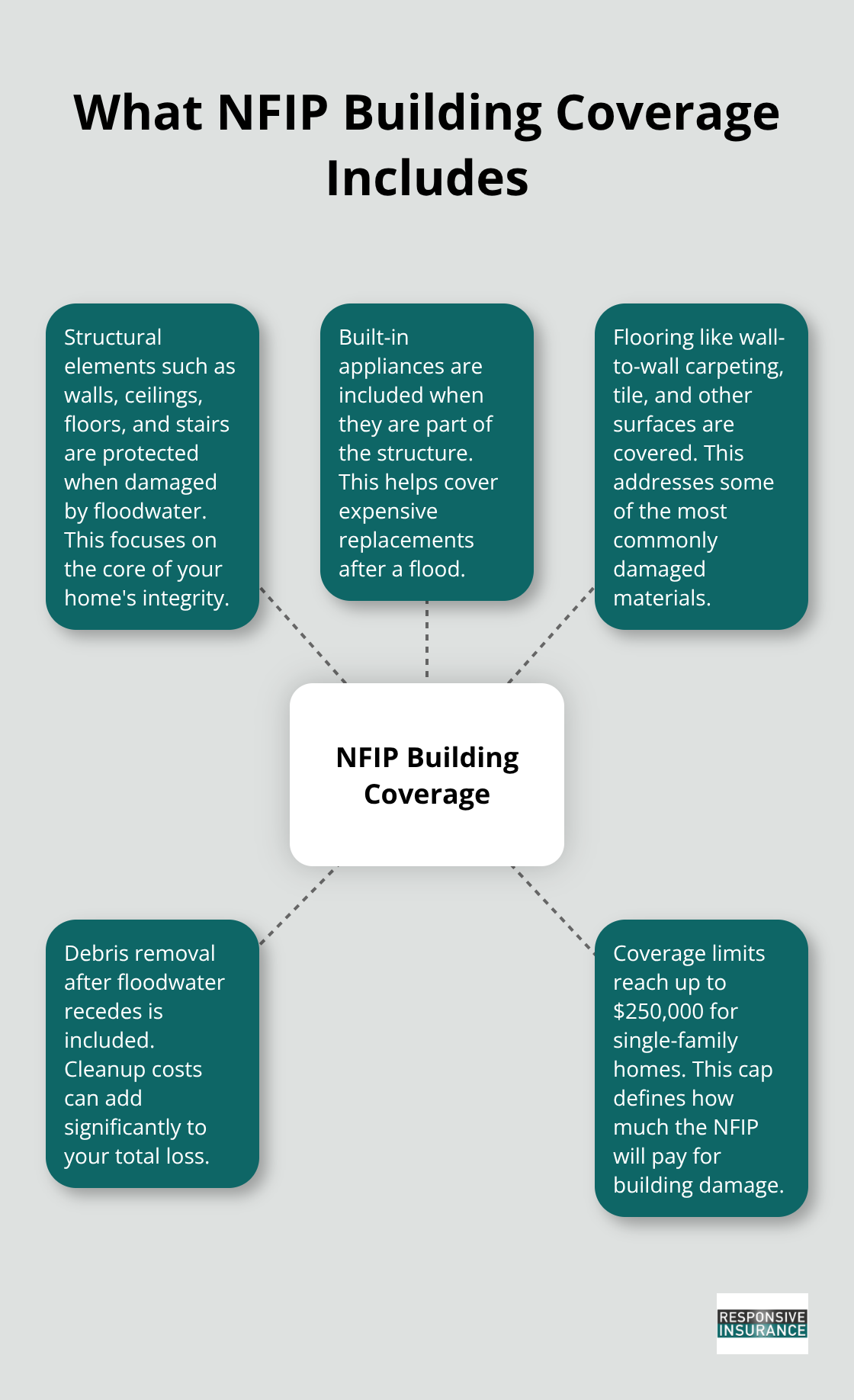
Many homeowners underestimate how quickly flood damage adds up-flood damage can easily total $25,000 or more, making this building coverage genuinely valuable when water enters your home.
Contents Coverage and Recovery Expenses
Your personal belongings receive separate protection through contents coverage, which the NFIP covers up to $100,000 for most residential policies. This includes furniture, collectibles, clothing, jewelry, and other personal items damaged by floodwater. Contents coverage also pays for dislocation expenses like temporary rent, hotel stays, and meal costs while your home becomes habitable again-a practical benefit many people overlook during recovery.
The Critical Gap in Standard Homeowners Policies
Standard homeowners insurance explicitly excludes flood damage entirely, which is why most households remain uninsured against floods. Your homeowners policy will reject any claim related to water damage from rising water, heavy rainfall, or storm surge, no matter how catastrophic the loss. This gap exists because flood coverage is almost never included in standard homeowners policies, making it impossible for standard policies to price accurately across entire regions.
Why You Need a Separate Flood Policy
The NFIP exists specifically to fill this coverage gap, and you qualify to apply regardless of your flood zone. You need a separate flood policy-there’s no workaround through your homeowners coverage. One critical detail: policies include a 30-day waiting period before coverage starts, so waiting for a storm to purchase protection won’t work. Understanding these two coverage types (building and contents) sets the stage for determining whether you need additional protection beyond standard NFIP limits, which varies based on your property’s flood risk and your lender’s requirements.
Why Florida Demands Flood Insurance
Florida’s geography makes flooding inevitable rather than unlikely. The state sits at an average elevation of just six feet above sea level, and Naples specifically benefits from proximity to the Gulf of Mexico-a feature that brings tourism dollars but also constant water risk. With over 8,400 miles of coastline and frequent hurricanes combined with intense rainfall events, flooding affects nearly every part of Florida.
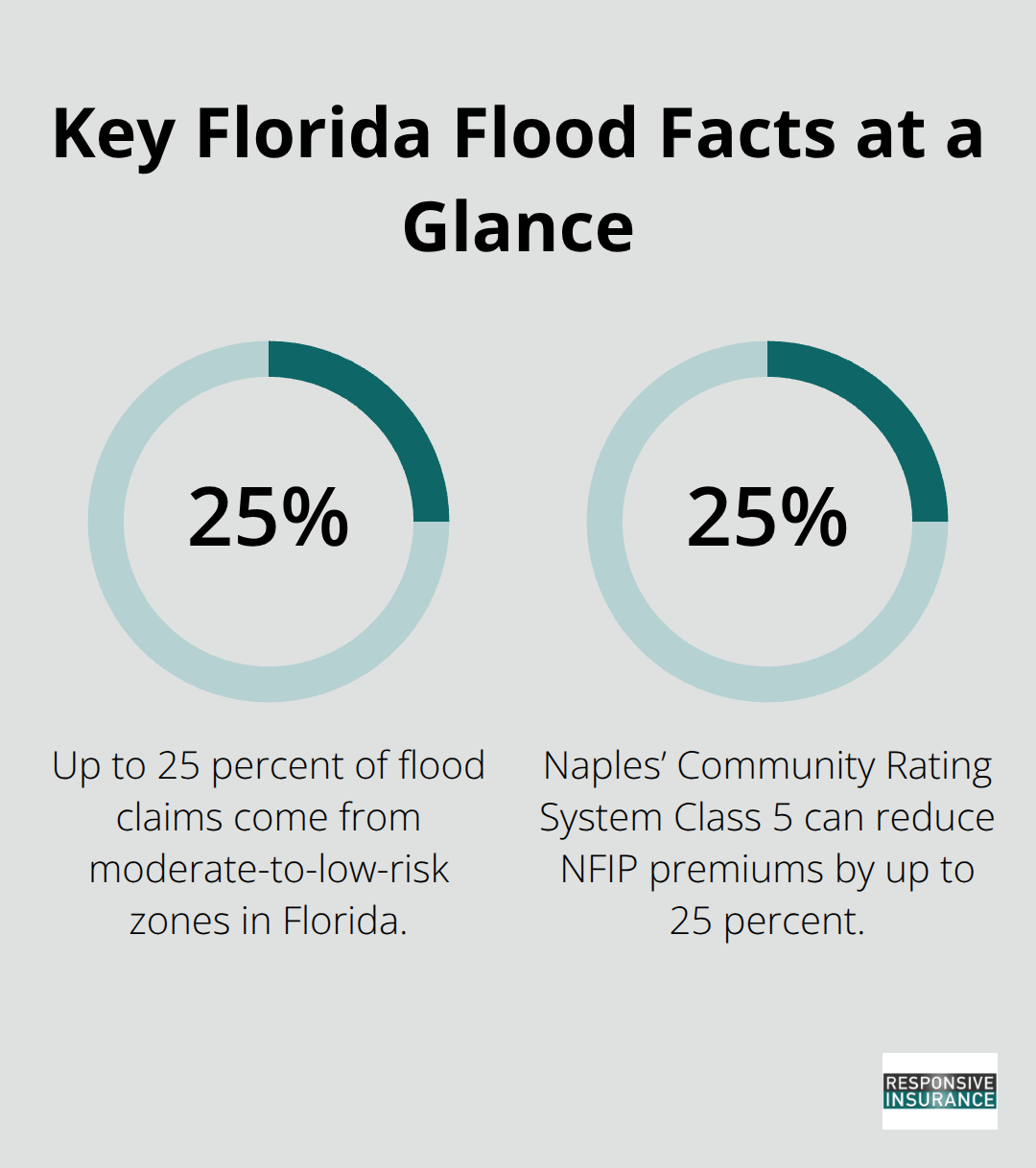
The National Flood Insurance Program reports that up to 25 percent of flood claims come from people in moderate-to-low-risk flood zones, which means your neighborhood’s official risk designation tells only part of the story. Even properties outside Special Flood Hazard Areas experience serious water damage. This reality explains why eight out of ten households lack flood insurance despite living in a state where flooding is the most common and costliest natural disaster. Your lender likely won’t require coverage if you’re outside a high-risk zone, but that absence of a requirement doesn’t mean your property is safe.
Lender Requirements and Your Mortgage
If you have a federally backed mortgage or an FDIC-insured loan on a building located in a Special Flood Hazard Area, flood insurance becomes mandatory-not optional. Your lender won’t close on the property without proof of coverage. This requirement exists because federal agencies recognize that uninsured flood losses directly threaten their loan portfolios. If you’ve previously received a federal grant for flood losses and want to qualify for future disaster assistance, flood insurance may be required or strongly recommended. The waiting period matters here: coverage doesn’t activate until 30 days after purchase, so you can’t buy a policy the day before closing. Many Naples homeowners discover this timing issue too late and face delays in their closing process.
Finding Your Flood Zone and What It Means
Determining your property’s flood zone requires checking FEMA’s flood maps, which classify areas by risk level. You can access these maps through FloodSmart or contact the City of Naples Floodplain Coordinator at 239-213-5039 for local guidance on your specific property’s designation. Naples participates in the Community Rating System at Class 5, which means qualifying residents can receive up to a 25 percent discount on standard NFIP flood insurance policies-a concrete savings that many property owners overlook.
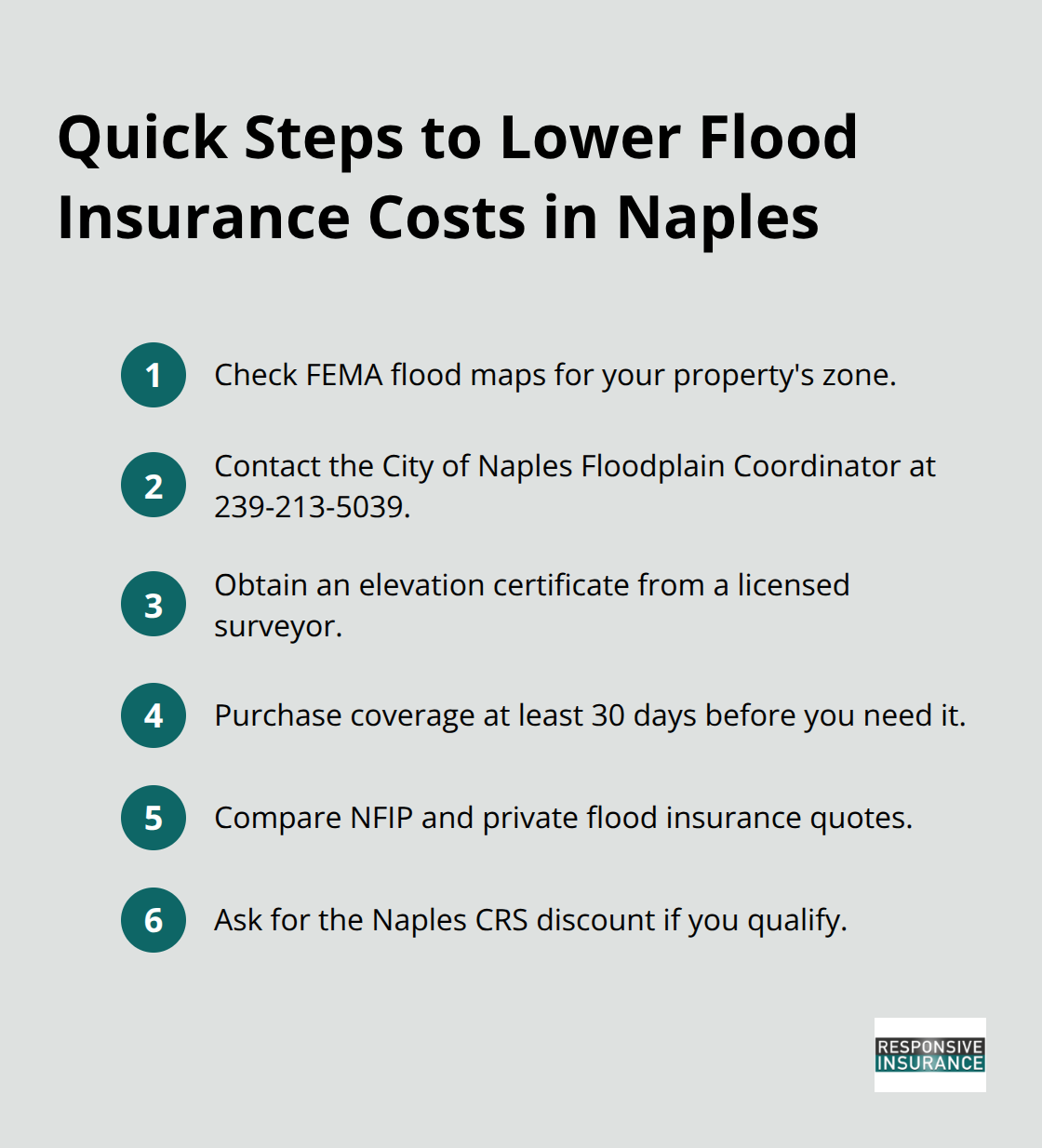
If you’re in a high-risk zone, an elevation certificate prepared by a licensed surveyor becomes important for underwriting and pricing accuracy. This certificate can lower your premiums significantly because it documents your property’s exact elevation relative to the base flood elevation. Even if you’re outside a mandatory insurance zone, obtaining this certificate and understanding your property’s precise flood risk positions you to make informed decisions about coverage limits and whether private flood insurance might offer better rates than the NFIP.
Coverage Options Tailored to Your Risk Profile
Your flood zone designation and property characteristics determine which coverage options make sense for your situation. The NFIP offers a Preferred Risk policy for lower-risk areas, providing the same protection at substantially lower rates than standard policies. Properties in higher-risk zones may benefit from private flood insurance alternatives, which have expanded significantly in recent years and sometimes offer competitive pricing or higher limits. An elevation certificate not only supports accurate pricing but also helps you understand whether you need coverage above the federally subsidized NFIP limits. This information allows you to compare what the NFIP provides against what private insurers offer in your specific flood zone. With this understanding of your flood zone, lender requirements, and available discounts, you’re ready to explore the specific policy types and coverage limits that protect your Naples property.
Your Florida Flood Insurance Options
The National Flood Insurance Program in Florida
The National Flood Insurance Program dominates the Florida flood insurance market, serving about 4.7 million policyholders nationwide according to FEMA. The NFIP offers straightforward building coverage up to $250,000 for single-family homes and contents coverage up to $100,000, with the average monthly premium around $53 for standard policies. However, the NFIP’s pricing structure bases rates on your flood zone designation rather than your individual property’s elevation or specific risk factors. This one-size-fits-all approach works against property owners in low-to-moderate risk areas who pay the same rate regardless of whether their home sits on a hill or in a flood-prone neighborhood.
Naples residents qualify for the Community Rating System discount at Class 5, which reduces NFIP premiums by up to 25 percent, but you must verify your property qualifies and request this discount explicitly when purchasing. The NFIP also offers Preferred Risk policies for lower-risk areas at substantially reduced rates, which often cost less than $400 annually for basic building coverage. The 30-day waiting period remains non-negotiable with NFIP policies except in rare cases where a lender mandate or flood map change overrides the waiting period, so you should purchase coverage months before hurricane season rather than waiting until August.
Private Flood Insurance Alternatives
Private flood insurance has expanded dramatically in recent years, with more than 47 private companies now offering alternatives to the NFIP through agents and brokers. Private policies sometimes offer higher coverage limits, more flexible deductibles, and competitive pricing in moderate-risk areas where NFIP rates feel excessive. Private insurers also underwrite based on individual property characteristics rather than broad zone designations, meaning an elevated home in a high-risk zone might qualify for lower rates than the NFIP would charge.
The trade-off involves complexity: private policies vary significantly in what they cover, with some excluding basement water intrusion or ground seepage while others provide broader protection. Deductibles typically range from $500 to $5,000, and higher deductibles reduce your premium but increase your out-of-pocket costs after a flood event. Your property’s elevation certificate becomes valuable when shopping private insurance because it documents your exact risk profile, helping insurers quote accurately and potentially offering better rates than the NFIP provides for elevated properties.
Comparing Coverage and Finding Your Best Option
You should compare both NFIP and private flood insurance options to identify which approach saves money while delivering adequate protection for your Naples property. An elevation certificate (prepared by a licensed surveyor) documents your property’s exact elevation relative to base flood elevation, which private insurers use to assess your individual risk more precisely than zone-based pricing allows. This certificate helps you understand whether private insurance might offer competitive advantages over the NFIP in your specific situation, particularly if your home sits on elevated ground within a high-risk zone.
Final Thoughts
Florida flood policy basics require action before hurricane season arrives, not after a storm threatens your home. Standard homeowners insurance won’t cover flooding, the NFIP provides affordable baseline protection, and private alternatives sometimes offer better rates for elevated properties. Your flood zone designation, elevation certificate, and lender requirements determine which coverage approach makes financial sense for your Naples home.
Contact the NFIP at 1-888-CALL-FLOOD or use the FloodSmart quote tool to understand your baseline costs and compare options. If you own an elevated property in a high-risk zone, obtain an elevation certificate from a licensed surveyor to potentially lower your rates through private insurers. Verify whether you qualify for Naples’ Community Rating System discount, which reduces NFIP premiums by up to 25 percent.
We at Responsive Insurance, Inc. help Naples residents navigate these decisions by comparing coverage options across multiple A-rated insurance companies. Contact us to discuss your flood insurance needs and receive a personalized recommendation based on your property’s flood zone, elevation, and lender requirements. We work with both NFIP and private flood insurers to find the approach that delivers adequate protection at the lowest cost for your specific situation.


