
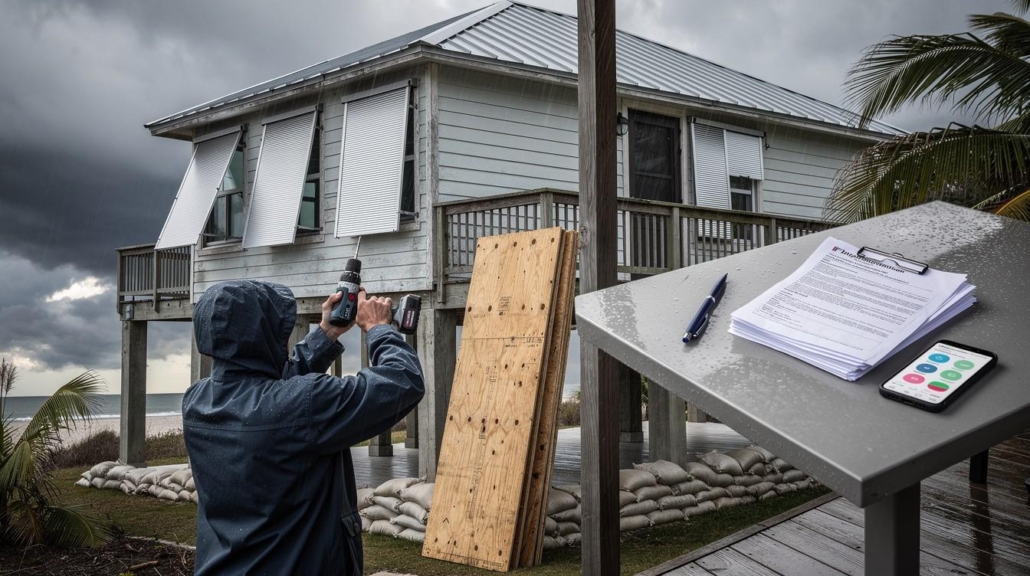
Coastal Naples Home Insurance: Strategies To Weather Storm Season
Living on the coast near Naples means your home faces unique weather threats that standard homeowners policies often don’t fully cover. Hurricane season brings real financial risk, and gaps in your coastal Naples home insurance can leave you exposed when you need protection most.
At Responsive Insurance, Inc., we help homeowners in this area understand exactly what coverage they need and how to build a strategy that actually works. This guide walks you through the essential steps to protect your property before the next storm arrives.
What Threatens Your Coastal Naples Home During Storm Season
Hurricane Season and Historical Impact
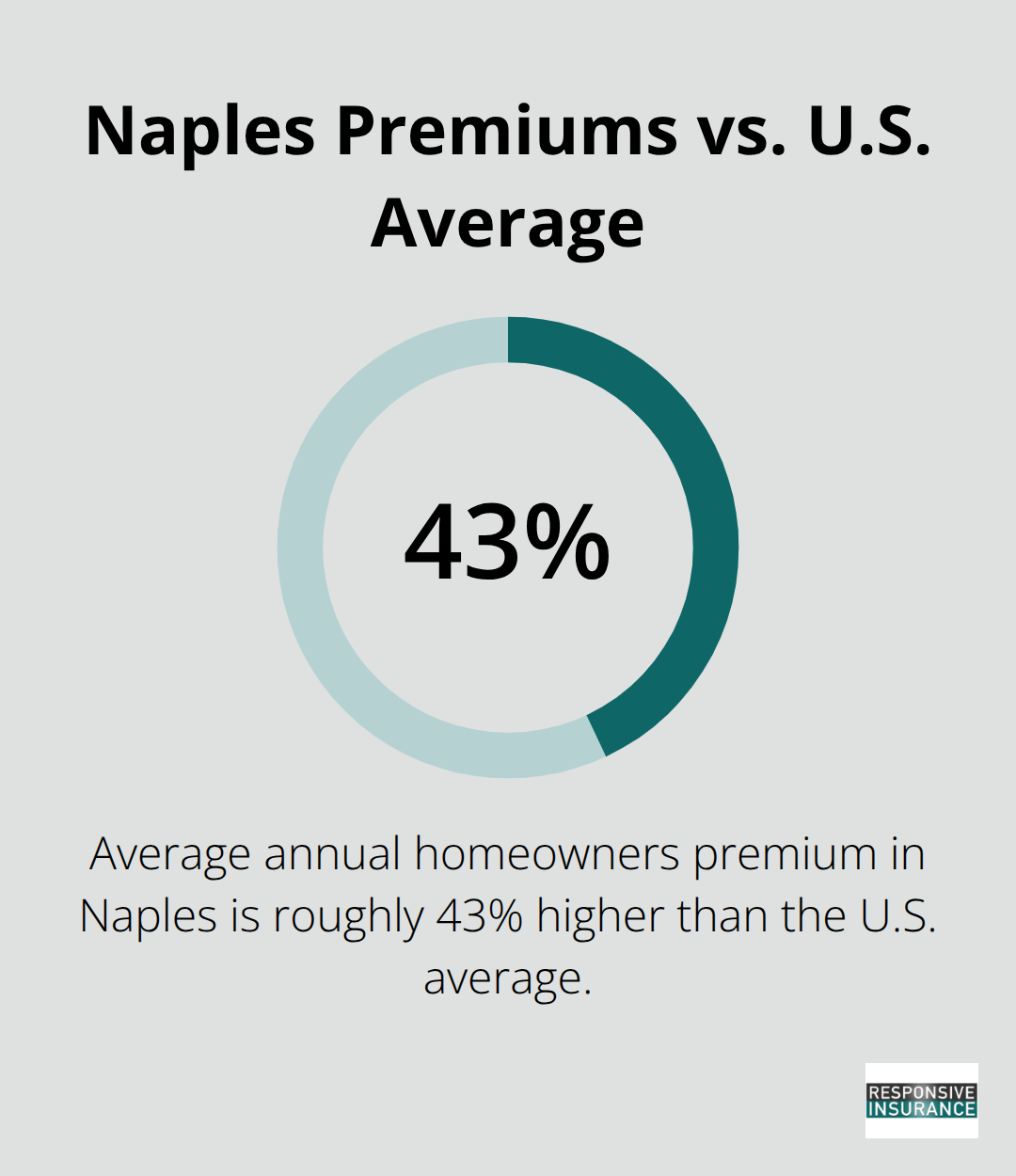
Hurricane season in Southwest Florida runs from June through November, with peak activity typically occurring between August and October. Naples has experienced multiple major hurricanes over the past two decades, including Hurricane Irma in 2017 and Hurricane Ian in 2022, both of which caused significant wind and water damage across the region. The financial impact is substantial: homes in Naples average annual insurance premiums around $2,502, roughly 43% higher than the national average, reflecting the genuine risk that coastal properties face.
Wind Coverage Gaps and Hurricane Deductibles
Standard homeowners insurance policies create dangerous gaps in protection that many Naples residents don’t fully understand until a claim is denied. Your typical homeowners policy covers wind damage from hurricanes, but it comes with a separate hurricane deductible that typically ranges from 2% to 10% of your home’s insured value. On a $400,000 home with a 5% deductible, you would pay $20,000 out of pocket before your wind coverage kicks in. This deductible structure means that even with wind coverage, you face substantial out-of-pocket costs when a hurricane strikes.
The Flood Insurance Imperative
Even more critical is the flood exclusion: standard homeowners insurance does not cover flood damage at all, period. This is where most Naples homeowners face financial disaster. Flood insurance is not optional if you live in a coastal area-it is a financial necessity that protects against storm surge, heavy rainfall, and water intrusion.
The National Flood Insurance Program offers building coverage up to $250,000 for residential properties, with separate contents coverage available up to $100,000 for belongings kept inside your home. However, NFIP policies carry a 30-day waiting period after purchase, meaning you cannot buy coverage once a hurricane warning is issued. Private flood insurance options like those offered by Tower Hill can provide additional coverage and sometimes offer better rates than NFIP, particularly for lower-risk properties.
Maximizing Flood Coverage and Discounts
Naples qualifies for a Community Rating System Class 5 designation, which can reduce NFIP premiums by up to 25%, but you must actively verify that your policy includes this discount. The average cost of NFIP flood insurance in Florida runs around $700 annually, though high-risk flood zones can exceed $2,000 per year depending on elevation and flood zone designation.
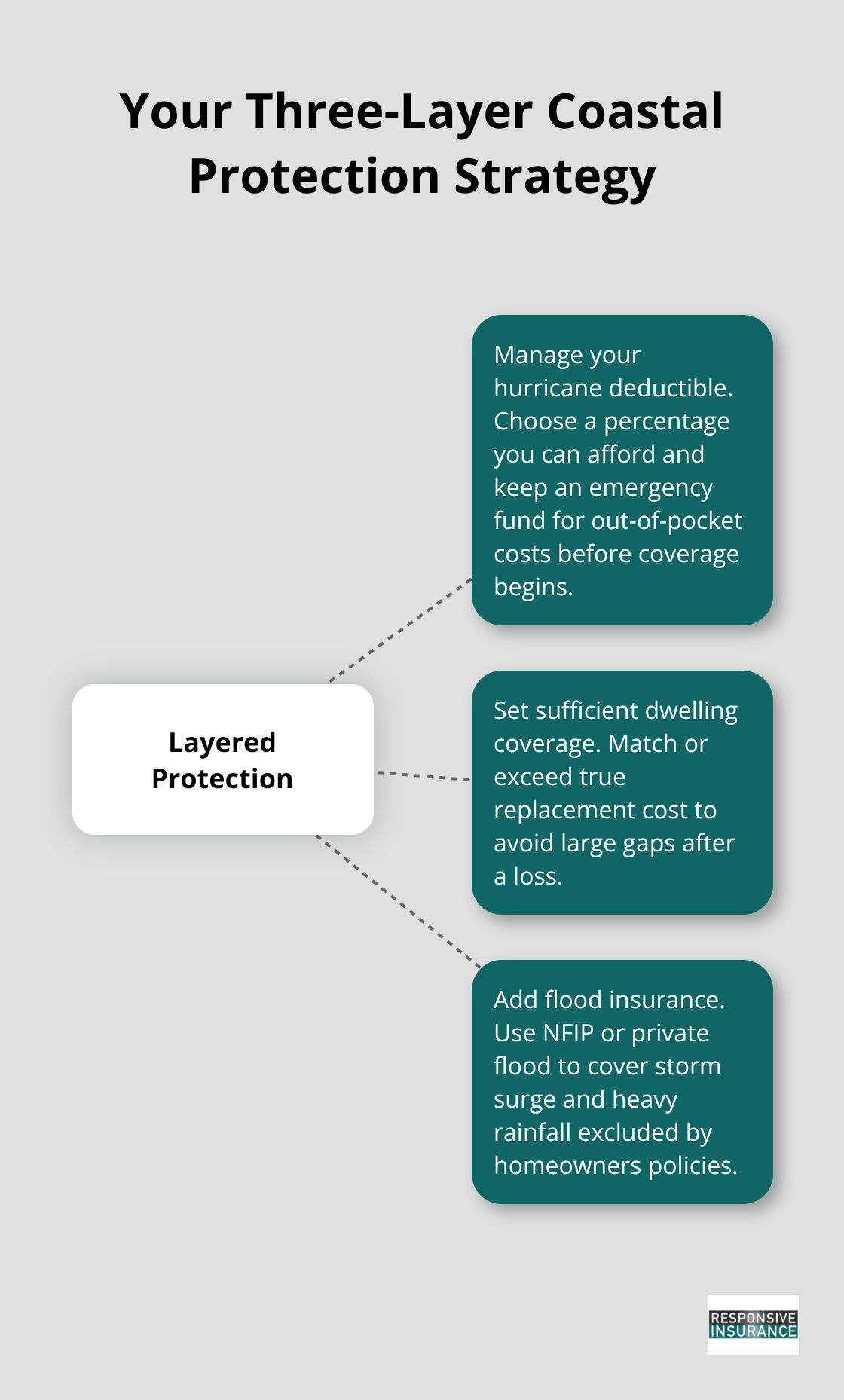
The combination of adequate hurricane deductibles, sufficient dwelling coverage limits, and proper flood insurance creates a real financial safety net when storms arrive. Understanding how these three elements work together-rather than treating them as separate purchases-positions you to make informed decisions about your protection strategy. With the right coverage layers in place, you can move forward to selecting the specific limits and policy options that match your home’s actual value and your family’s financial situation.
How Much Coverage Do You Actually Need
Calculate Your Home’s True Replacement Cost
Your home’s replacement value determines everything about your insurance strategy, and most Naples homeowners severely underestimate this number. If your home is worth $500,000 to rebuild but you only carry $350,000 in dwelling coverage, you face a massive gap that insurance won’t fill. You need a professional home valuation specifically for rebuilding costs, not market value. The National Association of Insurance Commissioners recommends covering 100% of your home’s replacement cost, but in coastal areas with higher labor and material expenses, you may need 110% to 125% of estimated rebuild costs to account for inflation and supply chain delays.
Hurricane Ian hit in 2022 and increased rebuilding costs in Southwest Florida significantly due to material shortages and contractor demand. This reality makes accurate cost calculations even more critical. Your insurance agent should provide a detailed cost estimate based on your home’s square footage, construction type, roof age, and location. On a $400,000 home, the difference between adequate and inadequate coverage could mean $50,000 to $100,000 in out-of-pocket losses after a hurricane.
Protect Your Personal Belongings with Contents Coverage
Contents coverage protects your furniture, appliances, clothing, and personal items inside your home. Most policies limit contents to 70% of your dwelling coverage, which frequently falls short for families with significant belongings. If you own jewelry, electronics, or artwork, these typically have sub-limits of $1,500 to $2,500 per category unless you add scheduled personal property endorsements. This gap means you could lose thousands in uninsured valuables during a storm.
Stack Savings Through Bundling and Deductible Strategy
Bundling your homeowners insurance with auto insurance produces immediate savings on both policies. In Naples specifically, moving from a $500 deductible to a $1,000 deductible can save you money annually, but only if you have emergency savings to cover that higher out-of-pocket cost when a claim happens. This trade-off works well for homeowners with solid financial reserves.
Compare Rates Across Multiple Carriers
Your credit score influences premiums significantly, so improving your credit profile yields long-term savings on every renewal. Shopping multiple quotes reveals substantial price differences that can save you thousands over time.
An independent agency compares quotes from multiple A-rated carriers rather than pushing you toward one company’s products. This approach helps you find the right balance between cost, financial strength, and coverage options that match your specific situation. With the right coverage limits and policy structure in place, you can move forward to selecting the specific deductible levels and additional protections that align with your financial capacity and risk tolerance.
Storm Season Preparation Starts Before Hurricane Warnings
The difference between financial recovery and financial ruin after a hurricane often comes down to preparation that happens months before the first storm warning. Homeowners make critical mistakes in August and September that cost them tens of thousands of dollars when claims arrive in October. The first step is creating a detailed home inventory with photographs and receipts that document everything you own. Walk through your house room by room and photograph furniture, electronics, appliances, and valuables. Store this inventory digitally in cloud storage or email it to yourself so it survives a disaster. When you file a flood or wind claim, insurers require proof of what you lost, and most homeowners cannot remember what they owned without documentation. This inventory also reveals whether your contents coverage limits are adequate. If you own $150,000 in belongings but your policy covers only $105,000 in contents (70% of a $150,000 dwelling limit), you have a $45,000 gap that insurance will not fill.
Review Your Policy Documents Before Storm Season
Next, review your actual policy documents line by line before storm season arrives. Most Naples homeowners have never read their hurricane deductible clause and discover at claim time that they owe $15,000 to $25,000 before coverage begins. Know your exact deductible percentage, your dwelling coverage amount, whether flood coverage is included, and what your policy excludes. Call your agent and ask specifically whether your coverage includes flood damage from storm surge or heavy rainfall. If your agent says standard homeowners covers flood, that agent is wrong and you need a new agent immediately. High-risk flood zones in Naples require NFIP flood insurance or private flood coverage, and that purchase cannot wait until September.
Install Impact-Resistant Windows and Storm Shutters
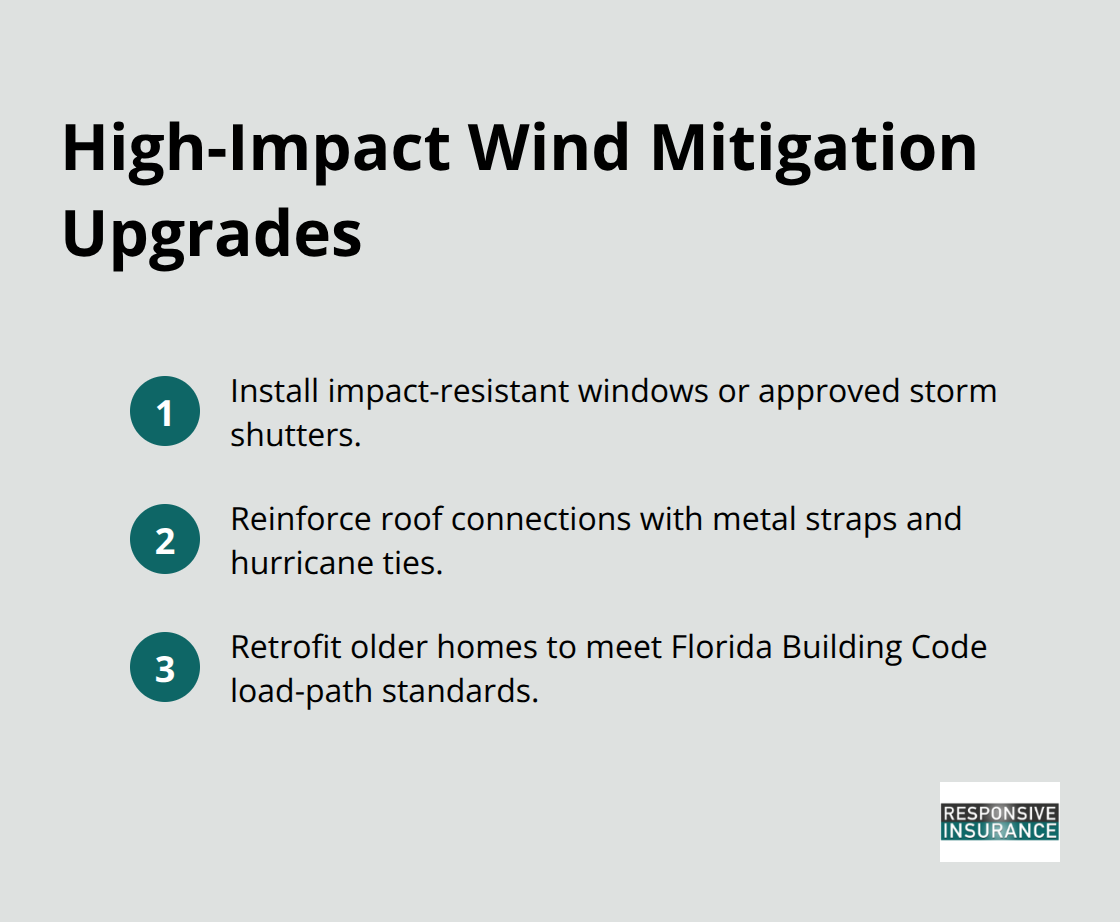
Physical improvements to your home reduce both damage risk and insurance premiums. The Florida Building Code requires impact-resistant windows or approved storm shutters in coastal areas, and homes meeting these standards qualify for wind mitigation discounts of 10% to 25% on premiums. Impact-resistant windows cost $8,000 to $15,000 for a typical home but can lower your annual homeowners premium by $1,000 to $2,500 depending on your current rates and carrier.
Reinforce Roof Connections and Replace Aging Roofs
Reinforcing roof connections with metal straps and hurricane ties prevents catastrophic roof failure during high winds. If your roof is 15 years old or older, a professional inspection costs $300 to $500 and reveals whether you need replacement or reinforcement. A new roof installed to current Florida Building Code standards costs $12,000 to $25,000 but qualifies for wind mitigation discounts and reduces insurance risk substantially.
Retrofit Older Homes for Code Compliance
Older homes built before 2002 lack the continuous load path required by current code, meaning roof-to-wall and wall-to-foundation connections fail more easily in strong winds. Retrofitting these connections typically costs $2,000 to $5,000 and can save you $500 to $1,500 annually in premiums. Your insurer may offer a wind mitigation inspection at no cost, which identifies exactly which improvements qualify for discounts.
Schedule this inspection in June or July, not in August when inspectors are booked solid. Document all improvements with contractor receipts and photos, then provide these to your insurance agent so the discounts appear on your next renewal.
Final Thoughts
Protecting your coastal Naples home requires three concrete actions that work together. First, you need adequate dwelling coverage that matches your home’s actual replacement cost, not its market value. Second, you must carry separate flood insurance because standard homeowners policies exclude water damage entirely. Third, you should implement physical improvements like impact-resistant windows or roof reinforcement that reduce both damage risk and insurance premiums.
The financial stakes are real-a $20,000 hurricane deductible combined with inadequate dwelling coverage can leave you facing $50,000 to $100,000 in out-of-pocket losses after a single storm. Flood damage from storm surge or heavy rainfall can total $200,000 or more without proper coverage. These scenarios happen regularly in coastal Naples, and they happen to homeowners who thought they were protected.
Schedule a comprehensive policy review before August arrives and pull out your current homeowners and flood insurance documents to verify your exact coverage limits, deductible amounts, and exclusions. Rate variation in Naples is substantial, with some carriers charging $700 annually while others charge $6,000 for similar homes, so obtain quotes from multiple A-rated carriers and bundle your homeowners and auto policies to unlock additional savings. We at Responsive Insurance, Inc. work with multiple A-rated insurance companies to compare coverage options and find the best fit for your specific situation, so contact us for a comprehensive insurance review that covers your home, flood, and additional protection needs before storm season arrives.


