

Florida Property Insurance Tips: What Homeowners Should Know
Homeowners in Naples, FL face insurance challenges that don’t exist in most other parts of the country. Hurricane season, strict state regulations, and rising costs make Florida property insurance a complex topic worth understanding.
At Responsive Insurance, Inc., we’ve helped countless Florida homeowners navigate these waters. This guide covers the Florida property insurance tips you need to protect your home and your wallet.
Why Florida’s Insurance Market Works Differently
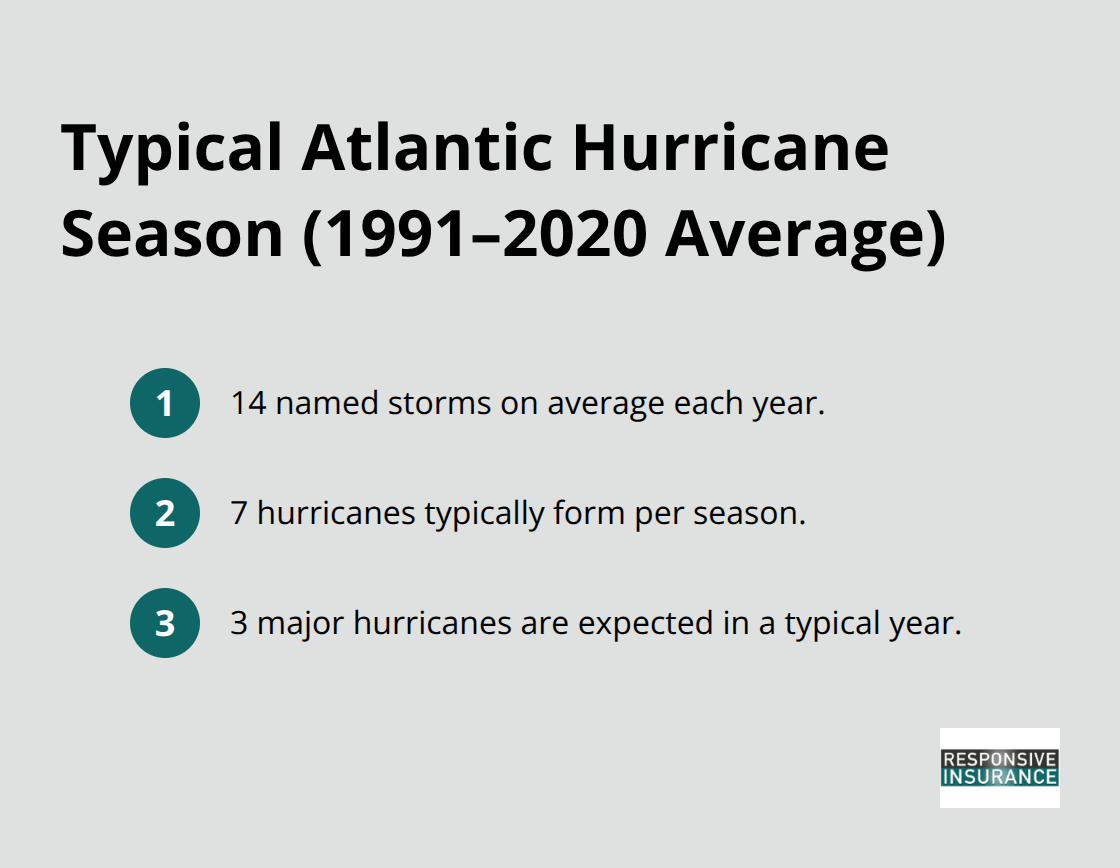
Florida’s property insurance landscape operates under pressures that most other states simply don’t face. The state sits directly in the Atlantic hurricane belt, meaning homeowners confront annual storm threats from June through November. Based on a 30-year climate period from 1991 to 2020, an average Atlantic hurricane season has 14 named storms, 7 hurricanes, and 3 major hurricanes. This isn’t theoretical risk-it’s a documented pattern that shapes every insurance decision in the state.
How State Finances Drive Insurance Costs
Florida has no state income tax, which means the state relies heavily on property tax revenue. When insurance companies face major losses from hurricanes, they often exit the market entirely, leaving homeowners with fewer options and higher premiums. Since 2022, multiple insurers have stopped writing new policies in Florida, and several have gone insolvent after major hurricane seasons. This creates a domino effect where remaining carriers raise rates to compensate for increased risk exposure.
Why Florida Premiums Exceed Neighboring States
A homeowner in Tampa paying $1,200 annually for property insurance might pay $700 for the same coverage in Georgia or $600 in South Carolina. The difference comes down to catastrophic risk concentration. Florida has over 9 million residential properties, with a significant portion located in high-risk coastal zones. Hurricane damage claims in Florida regularly exceed $1 billion per event, and the state’s Citizens Property Insurance Pool-the insurer of last resort-now holds over 12 billion dollars in potential liability.
Regulatory Constraints That Paradoxically Raise Rates
When traditional insurers face this magnitude of risk, they price accordingly. Florida also has unique regulatory constraints. The state’s Office of Insurance Regulation caps how much insurers can raise rates year-over-year, creating a mismatch between actual risk and allowable premiums. This regulatory limitation paradoxically drives up costs because insurers must compensate for constrained pricing by raising base rates when they can.
Homeowners shopping for coverage should understand that higher premiums reflect genuine exposure to hurricane damage, flooding, and wind damage that occurs more frequently in Florida than almost anywhere else in the country. Understanding these market forces helps you make informed decisions about which coverage types matter most for your situation.
What Coverage Do Florida Homeowners Actually Need
Dwelling Coverage: Getting Your Limits Right
Dwelling coverage forms the foundation of any Florida homeowner’s insurance policy, but most homeowners set the limits incorrectly. You need replacement cost value, not actual cash value. The difference matters enormously. If your home costs $400,000 to rebuild today, that’s your dwelling coverage limit. Actual cash value subtracts depreciation, meaning a 15-year-old roof might only recover $15,000 instead of $45,000 when damaged.
According to the National Association of Insurance Commissioners, underinsured homes represent the single biggest mistake Florida homeowners make. Calculate replacement costs by multiplying your home’s square footage by current local construction costs, which in Southwest Florida average $150 to $200 per square foot for standard residential construction. This isn’t about overinsuring-it’s about matching your coverage to actual rebuild expenses. Many policies include limits that haven’t been updated in years, leaving homeowners exposed when hurricane damage occurs.
Wind and Hail Coverage: Understanding the Separate Policy
Wind and hail coverage separates from standard homeowners policies in Florida, and this distinction costs homeowners thousands annually. Your standard homeowners policy typically excludes wind damage from hurricanes and named tropical storms. A separate windstorm policy covers these events, but deductibles run 2 to 5 percent of your home’s value instead of the standard $500 or $1,000. On a $400,000 home, that means an $8,000 to $20,000 deductible for wind damage.
The National Hurricane Center documented that between 2017 and 2022, Florida experienced three major hurricanes causing over $50 billion in combined damages, with wind damage comprising the majority. This pattern shows why wind coverage matters more in Florida than in most other states.
Flood Insurance: A Separate and Essential Policy
Flood insurance requires its own policy because homeowners policies explicitly exclude water damage from flooding. Even homes outside designated flood zones face risk-heavy rainfall events in Naples regularly cause localized flooding that standard policies won’t cover. The National Flood Insurance Program charges approximately $600 to $1,200 annually for basic coverage on a $400,000 home in moderate-risk areas, though private flood insurers now offer competitive rates.
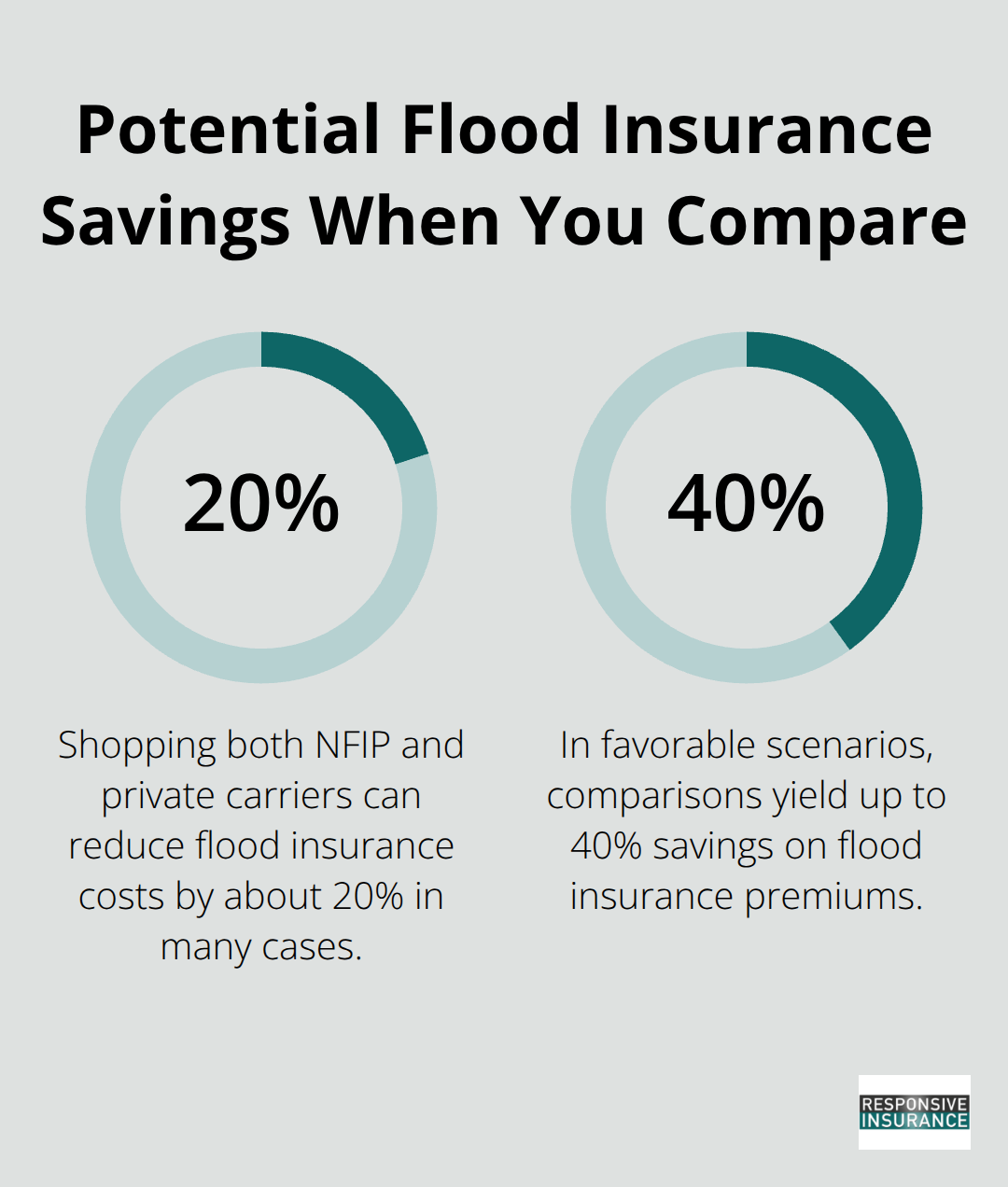
Shopping both NFIP and private carriers can reduce your flood insurance costs by 20 to 40 percent based on current market comparisons. Your location, home elevation, and flood zone designation all affect pricing, so comparing quotes across multiple carriers makes financial sense. Once you understand these three coverage pillars (dwelling, wind, and flood), you can then focus on additional protections that address your specific property risks and financial situation.
How to Reduce Your Florida Property Insurance Costs
Bundle Policies for Immediate Savings
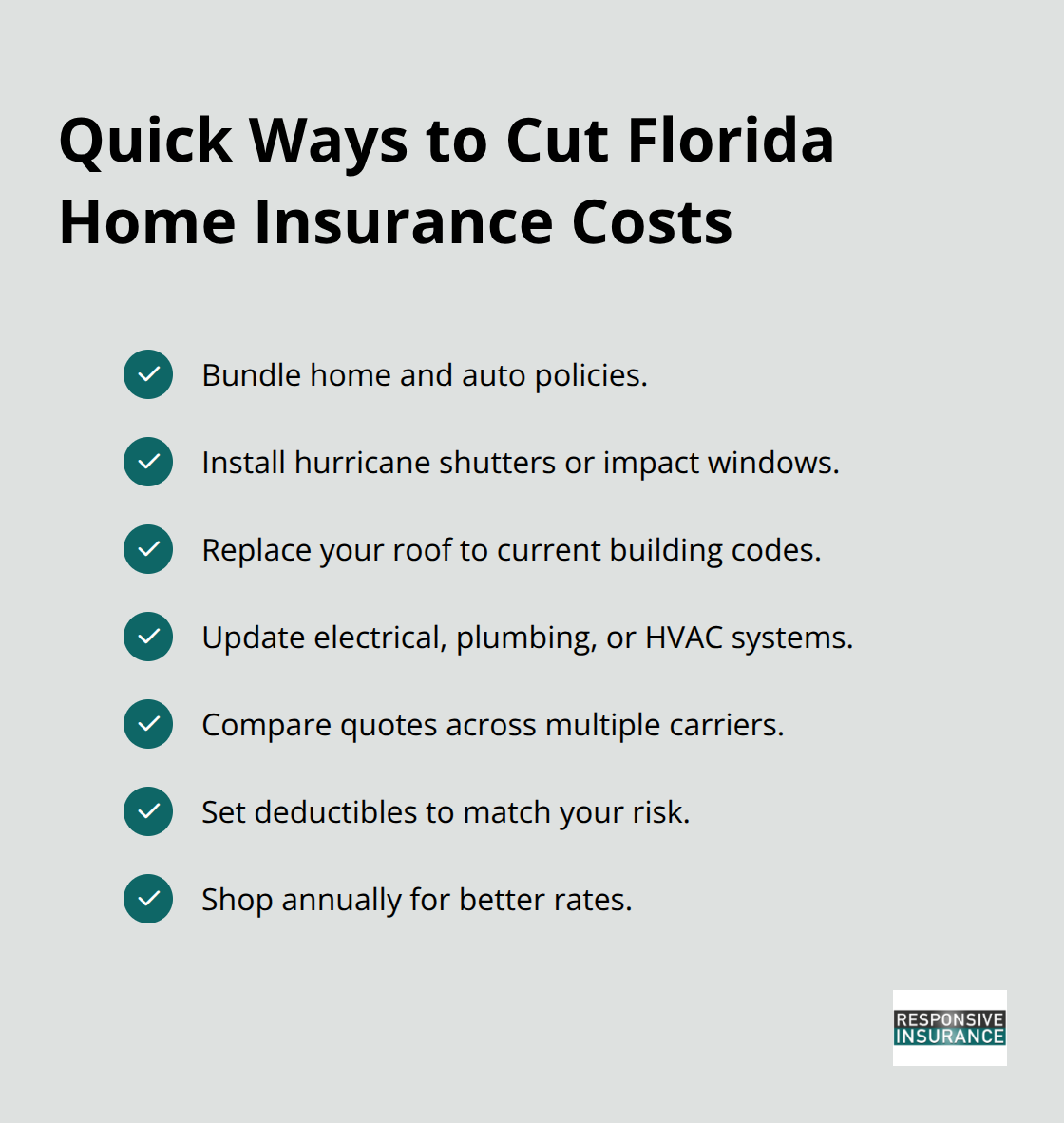
Florida homeowners typically waste between $300 and $800 annually by overlooking straightforward cost-reduction strategies. Bundle policies with auto insurance generates discounts because carriers reward you with substantial savings when you consolidate multiple policies with one carrier. When you consolidate multiple policies with one carrier, insurers reward you with substantial discounts because they reduce administrative costs and increase customer lifetime value.
Invest in Home Improvements That Lower Premiums
Specific home improvements directly lower your premiums. Installing hurricane shutters or impact-resistant windows typically reduces wind damage claims costs, prompting carriers to offer discounts. A new roof installed to current building codes can generate savings since modern roofing materials resist wind and hail damage far better than older materials. Homes with updated electrical systems, plumbing, or HVAC units installed within the last ten years often qualify for additional discounts because these systems present lower risk profiles. Swimming pools increase premiums due to liability exposure, but proper fencing and safety features can offset some of these increases.
Compare Quotes Across Multiple Carriers
The most impactful strategy involves shopping quotes across multiple carriers because rates vary dramatically for identical coverage. A homeowner in Naples might receive quotes ranging from $1,100 to $2,400 annually for the same dwelling coverage limit from different insurers. This variance exists because carriers weigh hurricane risk, construction type, and loss history differently.
Comparing wind and flood insurance separately from your homeowners policy amplifies savings further since private flood insurers now undercut the National Flood Insurance Program in many Southwest Florida locations.
Adjust Deductibles to Match Your Risk Profile
Requesting higher deductibles on standard coverage while maintaining lower deductibles on wind and flood insurance aligns your out-of-pocket costs with actual risk patterns in Florida. A $1,000 standard deductible paired with a 2 percent wind deductible and $1,000 flood deductible typically costs less than lower deductibles across all coverage types while protecting you against the most likely claims in this region.
Shop Annually for Rate Changes
Shopping annually rather than accepting renewal quotes captures rate changes and new carrier entries into the Florida market, which happen frequently as competitive dynamics shift. Rates vary significantly year to year, and new insurers regularly enter the Florida market, creating fresh opportunities to reduce your costs.
Final Thoughts
Florida property insurance requires active management, not passive acceptance of renewal quotes. You must calculate your home’s true replacement cost, separate wind and flood coverage from your standard policy, and shop annually across multiple carriers to apply these Florida property insurance tips effectively. Many homeowners discover that bundling auto and home policies combined with hurricane-resistant improvements generates savings exceeding $500 annually.
Working with a local agent who understands Florida’s unique insurance landscape makes this process significantly simpler. An independent agency like Responsive Insurance, Inc. works with multiple A-rated insurance companies to compare coverage options and find solutions tailored to your specific property and financial situation. Local agents know which carriers actively write policies in Naples, which ones offer the best rates for your home’s characteristics, and how to structure coverage that protects you without overpaying.
Your home represents your largest financial asset, and the right insurance strategy protects that investment while keeping your premiums reasonable. Take control of your coverage decisions rather than accepting default options, and contact a local agent to review your current protection against the specific risks that matter in Southwest Florida.


