

Florida Home Insurance Guide: What Every Policyholder Should Read
Owning a home in Florida comes with insurance challenges you won’t find anywhere else. Hurricane season, flooding, and state-specific requirements make navigating coverage decisions complicated and expensive.
We at Responsive Insurance, Inc. created this Florida home insurance guide to cut through the confusion. You’ll learn what coverage actually protects your investment and which mistakes could cost you thousands.
Why Florida Home Insurance Costs So Much More
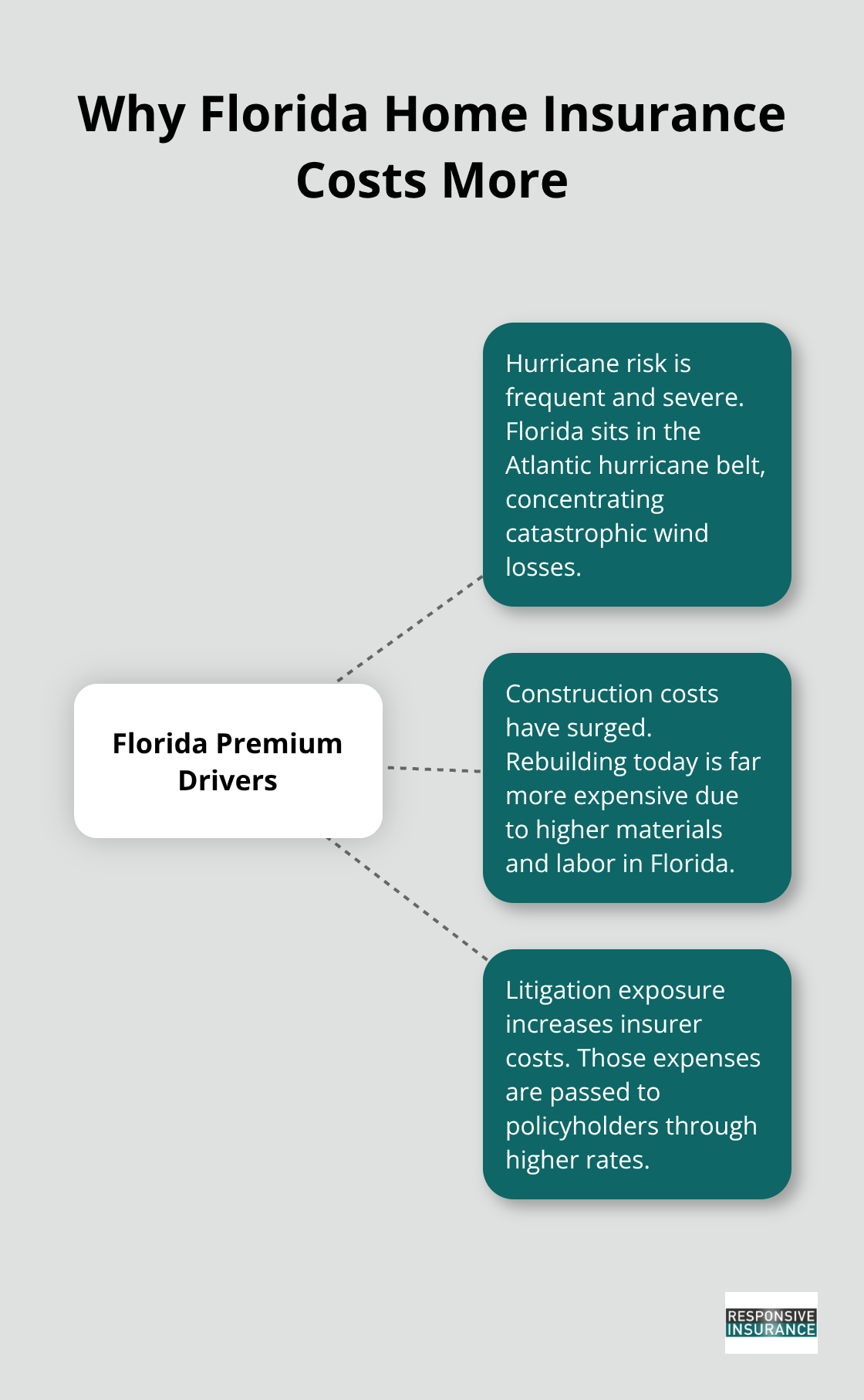
Florida homeowners pay among the highest insurance premiums in the nation, and the numbers tell a stark story. According to the Insurance Information Institute, Florida’s homeowners insurance premiums rank among the most expensive in the U.S., driven by three compounding factors that don’t affect most other states equally. First, hurricane risk is genuine and frequent-Florida sits directly in the Atlantic hurricane belt, meaning your home faces real exposure to catastrophic wind damage year after year. Second, construction costs in Florida have climbed significantly, so rebuilding after a major storm costs far more than it did a decade ago. Third, the state faces ongoing litigation exposure in the insurance market, which insurers pass directly to policyholders through higher rates.
When you combine these three pressures, you get premiums that can be double or triple what homeowners pay in inland states. This reality shapes every insurance decision you make as a Naples resident.
Hurricane Season Reshapes Your Coverage Options
Hurricane season fundamentally changes how you must insure your home. From June through November, insurers tighten underwriting standards, and many stop accepting new policies altogether because the risk window is open. If you wait until August to shop for coverage, you’ll face limited options and potentially higher rates. More importantly, hurricane exposure drives specific coverage requirements that are non-negotiable in Florida.
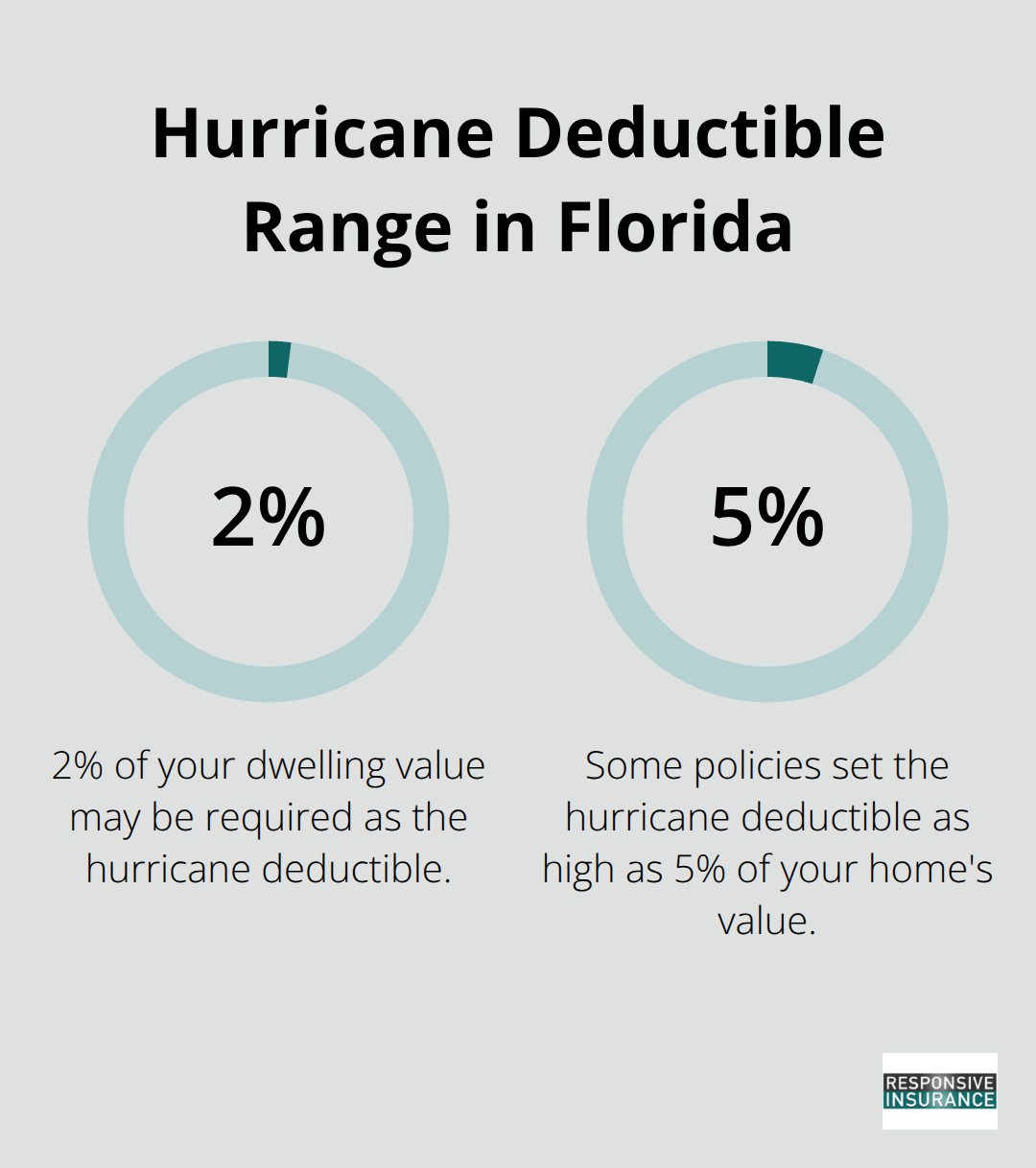
Standard homeowners policies include wind coverage for hurricanes, but many insurers add a separate windstorm or hurricane deductible expressed as a percentage of your dwelling value rather than a fixed dollar amount. According to the National Association of Insurance Commissioners, this percentage-based deductible can mean you pay 2 to 5 percent of your home’s value out of pocket after a hurricane. On a $400,000 home, that’s $8,000 to $20,000 before insurance pays anything. This structure exists because hurricane losses are so severe and concentrated that standard fixed deductibles wouldn’t adequately protect insurers.
The Citizens Property Insurance Corporation Creates a Bottleneck
When private insurers exit the Florida market or restrict new business, homeowners get pushed toward the Citizens Property Insurance Corporation, the state’s insurer of last resort. According to the Florida Office of Insurance Regulation, Citizens exists specifically to serve customers who can’t find coverage in the private market-and it has become a massive backstop. Citizens rates are generally lower than private market rates, which sounds good until you realize it’s because Citizens operates at a loss and the state legislature hasn’t kept rates high enough to cover actual hurricane losses.
This creates instability; when a major hurricane hits, Citizens absorbs catastrophic losses that get passed to all policyholders through surcharges. For Naples homeowners specifically, your insurance future depends partly on decisions made by state regulators and partly on whether a major hurricane makes landfall nearby. The strategic advantage is clear: securing coverage with a private insurer now is smarter than waiting to be assigned to Citizens later.
Why Coverage Gaps Matter Right Now
The pressure from these three factors-hurricane risk, construction costs, and litigation exposure-means you can’t afford to leave coverage gaps in your policy. Many homeowners think their standard policy covers everything, but Florida’s unique environment requires you to actively choose additional protections. Your next step involves understanding exactly what coverage types actually protect your investment and which gaps could cost you thousands.
Coverage Types and What You Actually Need
Dwelling Coverage: Get the Math Right
Dwelling coverage forms the foundation of your homeowners policy, and calculating the correct amount is non-negotiable in Florida. This coverage pays to rebuild your home if it suffers damage or destruction, but most Naples homeowners make a costly mistake: they base their dwelling coverage on what they paid for the house, not what it would cost to rebuild it today. The National Association of Insurance Commissioners warns that market value and replacement cost are completely different numbers. A home worth $400,000 on the market might cost $550,000 to rebuild because construction materials and labor in Florida have skyrocketed. If you insure for market value, you’ll face severe underinsurance when you need to rebuild.
Obtain a professional replacement cost appraisal from your insurer or hire an independent appraiser to determine what it would actually cost to reconstruct your home with current materials and labor rates. Update this figure every two to three years because Florida construction costs continue climbing. Your policy should reflect replacement cost, not market value, or you’re gambling with your financial security.
Personal Property Coverage and Documentation
Personal property coverage protects the contents inside your home-furniture, electronics, clothing, and everything else you own. Standard policies typically cover personal property at 50 to 70 percent of your dwelling coverage amount, which sounds reasonable until your home floods or a hurricane destroys your belongings. The Insurance Information Institute reports that homeowners significantly underestimate the value of their possessions, often by 30 to 50 percent.
Start now by photographing every room, every closet, and every storage area, and keep receipts for major purchases. Create a detailed inventory with model numbers and serial numbers for electronics and appliances; this documentation speeds claims processing dramatically and proves ownership to your insurer. When a loss occurs, this inventory becomes your most valuable asset in recovering what you’ve lost.
Water Damage, Wind Damage, and Special Coverages
Water damage and wind damage deserve special attention in Florida because they’re not automatically included in standard coverage the way you’d expect. Flood damage requires a completely separate flood insurance policy through the National Flood Insurance Program or a private flood carrier-your homeowners policy will not cover it under any circumstances. Wind damage is covered under your standard policy, but many Florida insurers add that separate windstorm deductible (expressed as a percentage of your dwelling value rather than a fixed dollar amount), which can make wind claims extremely expensive.
Ask your agent whether your policy includes water backup coverage for sewer or drain overflow, since Florida’s high water table makes this a real risk. Additional living expenses coverage is often overlooked but invaluable; it pays for temporary housing, meals, and other costs while your home is being repaired after a covered loss, which protects you from financial strain during recovery. These targeted coverages transform your policy from basic protection into comprehensive security.
Common Mistakes Florida Homeowners Make
Underinsuring Your Home’s Replacement Cost
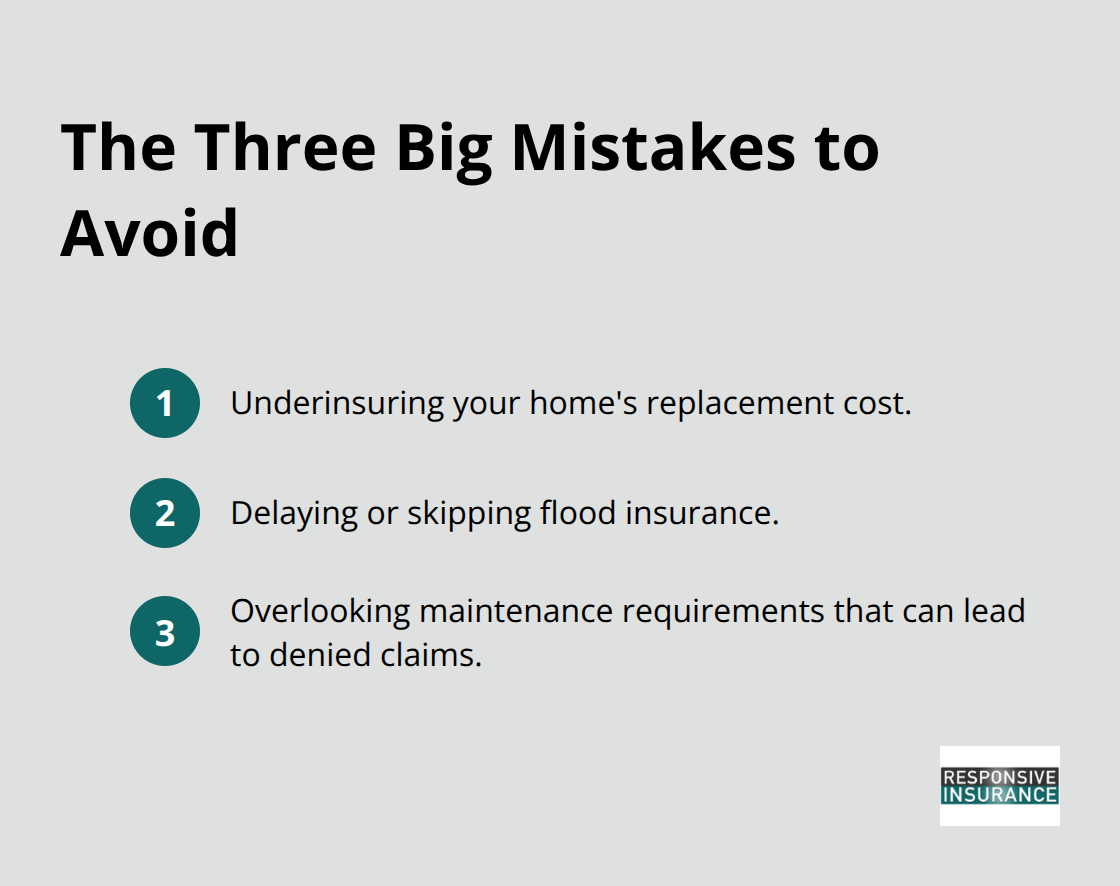
Most Naples homeowners make the same preventable errors that leave them financially exposed when disaster strikes. The first mistake is underinsuring your home’s replacement cost, which happens because homeowners confuse what their house is worth on the market with what it actually costs to rebuild. According to the National Association of Insurance Commissioners, dwelling coverage should equal your home’s full replacement cost, not its market value. A $400,000 home might cost $550,000 to rebuild in today’s Florida market because labor and materials have climbed significantly.
If you insure for $400,000 and your home suffers major damage, you’ll face a substantial gap between what insurance pays and what reconstruction actually costs. Many homeowners discover this gap only after filing a claim, when it’s far too late to adjust coverage. Obtain a professional replacement cost appraisal every two to three years and adjust your dwelling coverage to match. Your insurer can provide this appraisal or you can hire an independent appraiser, and the cost of that appraisal is negligible compared to the protection it provides.
Ignoring Flood Insurance Until It’s Too Late
The second mistake is ignoring flood insurance until hurricane season arrives or a storm warning appears on the forecast. According to FEMA, more than 20 percent of flood claims come from properties outside designated flood zones, which means your risk is higher than you probably think. Flood damage requires a completely separate policy through the National Flood Insurance Program or a private carrier, and your standard homeowners policy will never cover it. An inch of floodwater causes $25,000 or more in damage to a typical home, and Naples residents face elevated flood risk from both storm surge and inland flooding during heavy rainfall.
The timing problem is critical: if you wait until a hurricane approaches to purchase flood insurance, you’ll face waiting periods that prevent immediate coverage. Purchase flood insurance now while you have time to evaluate options and lock in rates. This proactive step protects your property when you need it most.
Overlooking Maintenance Requirements in Your Policy
The third mistake involves overlooking maintenance requirements in your policy, which many homeowners ignore until their claim gets denied. Insurers require you to maintain your home in good condition, and specific maintenance items vary by policy but typically include roof inspections, gutter cleaning, and plumbing maintenance. If your roof is in poor condition and a hurricane causes water damage, your insurer may deny your claim entirely because you failed to maintain the property.
Document your maintenance activities with photos and receipts, and address any issues your insurer flags during inspections. These three mistakes-underinsuring replacement cost, delaying flood insurance, and skipping maintenance-are entirely within your control, and fixing them now prevents thousands in losses later. Talk with an insurance professional to review your current coverage and identify any gaps that need attention.
Final Thoughts
Florida home insurance demands active management and regular attention, not a passive approach. The three mistakes we covered-underinsuring replacement cost, delaying flood insurance, and skipping maintenance-are entirely preventable, and addressing them now protects your financial security when storms hit. Your dwelling coverage must reflect what reconstruction actually costs in today’s Florida market, your flood insurance must be in place before hurricane season arrives, and your maintenance records must document that you’re keeping your property in good condition.
Three concrete steps move you forward immediately. First, obtain a professional replacement cost appraisal and adjust your dwelling coverage to match current rebuild expenses in Naples. Second, purchase flood insurance through the National Flood Insurance Program or a private carrier, understanding that waiting creates coverage gaps you cannot close once a storm approaches. Third, review your policy documents carefully to identify any maintenance requirements your insurer specifies, then document your compliance with photos and receipts.
We at Responsive Insurance, Inc. work with multiple A-rated insurance companies to compare coverage and find solutions tailored to your specific situation. As an independent agency based in Naples, we understand the unique challenges Southwest Florida homeowners face and provide timely responses to your questions and concerns. Contact Responsive Insurance, Inc. today to review your current coverage, identify gaps, and build a comprehensive protection plan that aligns with this Florida home insurance guide and keeps pace with Florida’s rising construction costs and hurricane exposure.


