

Florida Flood Insurance Rates: What You Can Expect This Year
Florida flood insurance rates have climbed significantly in 2026, and homeowners in Naples need practical strategies to manage these costs. We at Responsive Insurance, Inc. understand the pressure rising premiums place on your budget.
This guide walks you through current rate trends, concrete ways to reduce what you pay, and how to evaluate your options between NFIP and private coverage.
Florida Flood Insurance Rates: What You Can Expect This Year
Rate Increases Hit Naples Hard in 2026
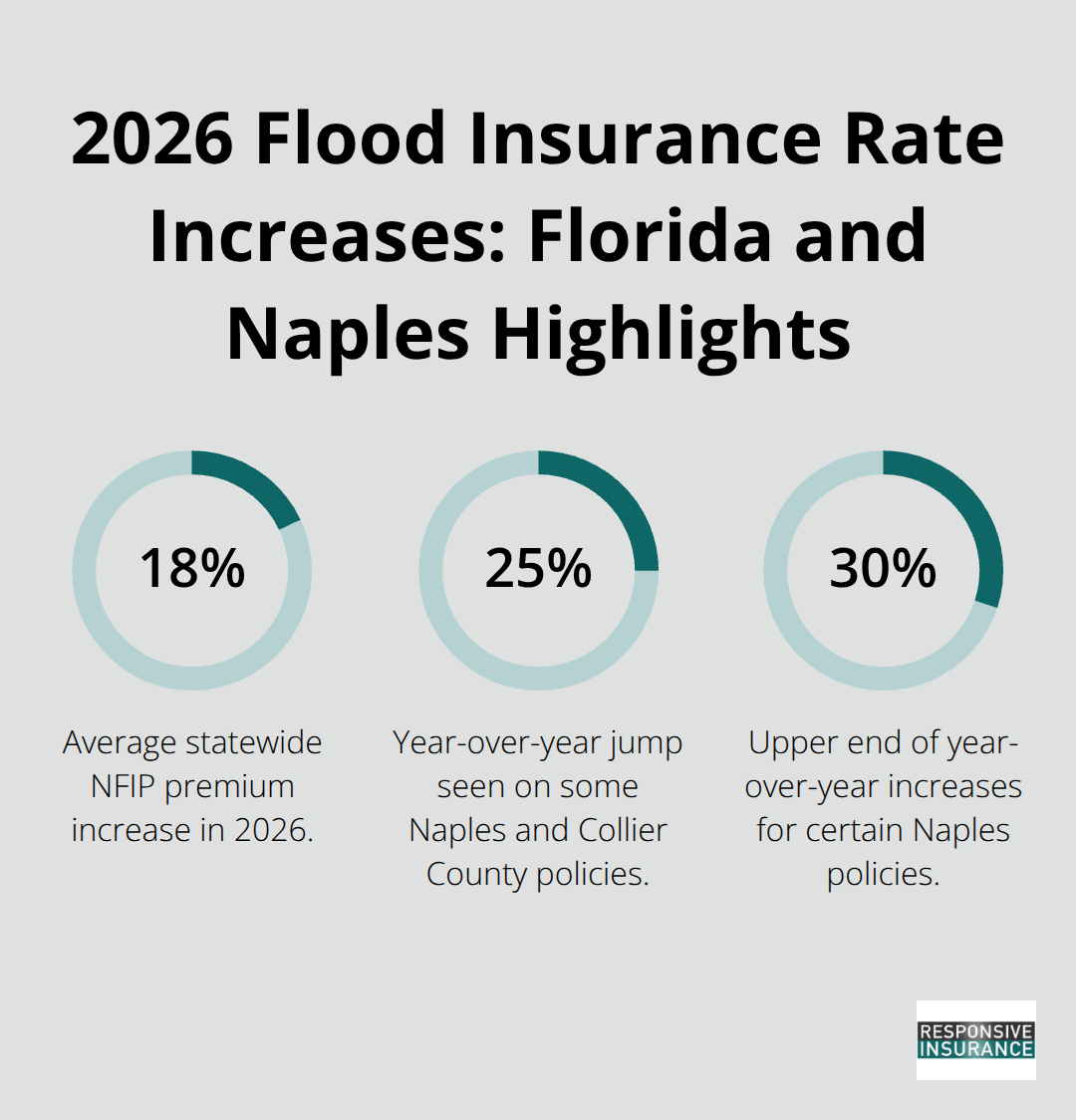
Florida homeowners faced substantial rate increases in 2026, with the National Flood Insurance Program raising premiums by an average of 18% across the state according to FEMA’s Risk Rating 2.0 methodology. Naples and Collier County properties experienced particularly steep jumps, with some policies climbing 25% to 30% year-over-year. The private flood insurance market matched this aggression, with carriers like Heritage Insurance and Avatar Insurance adjusting rates upward to account for increased hurricane risk exposure and accumulated losses from recent storm seasons. Industry analysts project continued rate pressure throughout 2027 as insurers recalibrate their risk models based on climate data showing rising sea levels and increased flooding frequency in Southwest Florida.
What’s Driving These Premium Increases
The underlying drivers behind these increases are concrete and measurable. FEMA’s updated flood maps now classify more Naples properties as higher-risk zones, which directly translates to steeper premiums regardless of your insurer. The reinsurance market has tightened significantly following the 2023 and 2024 hurricane seasons, which forced primary insurers to pay more for catastrophic loss coverage and pass those costs down to policyholders. Claims data shows that flood losses in Southwest Florida have exceeded historical averages by 40% over the past five years, according to the Insurance Information Institute. Private carriers have also factored in the NFIP’s growing debt, signaling that federal flood insurance will likely continue raising rates to achieve solvency. Each increase reflects actual risk calculations based on your property’s specific elevation, distance from water bodies, and historical flood patterns.
Geographic Variation Across Collier County
Naples homeowners should understand that rate increases vary dramatically by location within Collier County. Properties in flood zones A and AE (which include much of downtown Naples and areas near Naples Bay) saw premium jumps of 28% to 35%, while properties in higher elevation zones outside the traditional floodplain experienced more modest 12% to 15% increases. The Naples coastal corridor from Vanderbilt Beach south to Lely Resort has been hit hardest because these areas sit in the highest-risk categories used by both FEMA and private insurers. Inland properties in areas like Immokalee and eastern Collier County experienced relatively smaller rate increases, though they still climbed between 8% and 12%. Your address determines your baseline cost more than any other factor, which makes understanding your specific zone critical as you evaluate your options.
Cutting Your Flood Insurance Costs in 2026
Compare Quotes Across Multiple Carriers
With rates climbing across Naples, you need concrete strategies to reduce what you pay. Shopping aggressively across multiple carriers makes a measurable difference because private insurers price flood risk differently than FEMA’s NFIP. You can save money by comparing quotes from multiple options side by side. Private carriers often offer better rates for properties in moderate-risk zones or those with strong mitigation features, while NFIP remains competitive for higher-risk coastal properties. Request quotes from at least three different carriers before renewing, because rate variability in the current market is substantial. Your current insurer’s renewal quote is rarely your best option in 2026.
Invest in Flood Mitigation Improvements
Flood mitigation improvements deliver immediate premium reductions from most insurers. Installing flood vents in foundation walls or raising utilities above the base flood elevation can reduce premiums, according to FEMA’s documentation on mitigation credits. Private insurers often offer discounts for similar improvements.
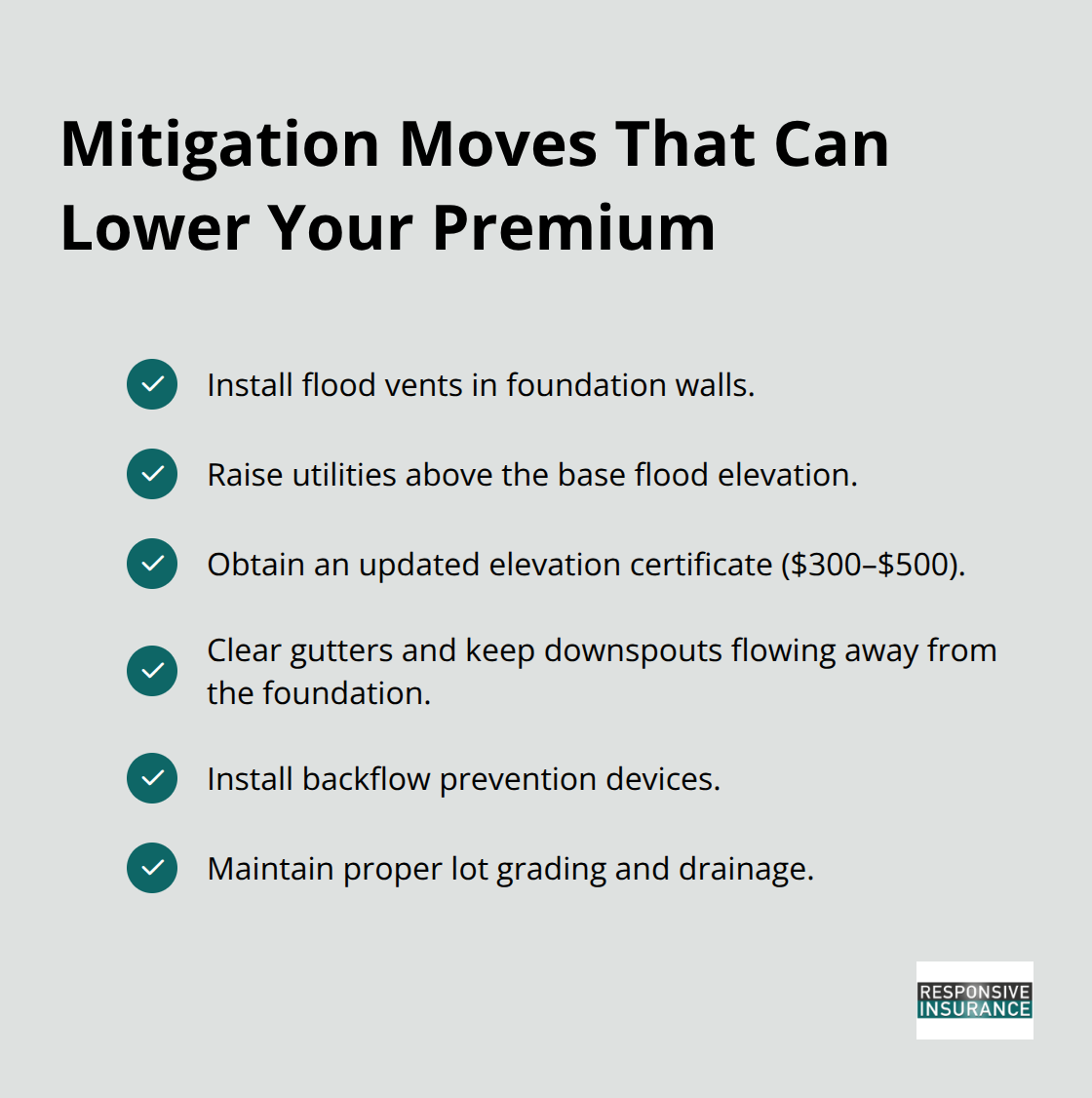
Elevation certificates matter significantly-if your property sits above the base flood elevation, you qualify for lower rates, and obtaining an updated certificate costs between $300 and $500 but pays for itself within one or two renewal periods. Clearing gutters, installing backflow prevention devices, and maintaining proper drainage away from your foundation also qualify for discounts with most carriers.
Adjust Your Coverage Limits to Match Your Home’s Value
You should review your current coverage limits annually because many Naples homeowners carry inadequate limits relative to their home’s replacement cost, leaving themselves exposed to substantial out-of-pocket losses. Underinsurance creates a false sense of savings that evaporates the moment a flood event occurs. An independent insurance agency can help you calculate appropriate coverage limits based on your specific property and financial situation. Getting this calculation right now prevents costly gaps in protection when you need it most.
NFIP or Private Coverage: Which Works for Naples Properties
How NFIP and Private Insurers Structure Coverage Differently
The National Flood Insurance Program and private flood insurers operate under fundamentally different structures, and understanding these differences shapes whether you’ll overpay in Naples this year. NFIP policies are standardized across the country with identical coverage limits and deductibles, while private carriers customize policies based on individual property risk. NFIP caps dwelling coverage at $250,000 and contents at $100,000, which leaves many Naples homes significantly underinsured given current replacement costs.
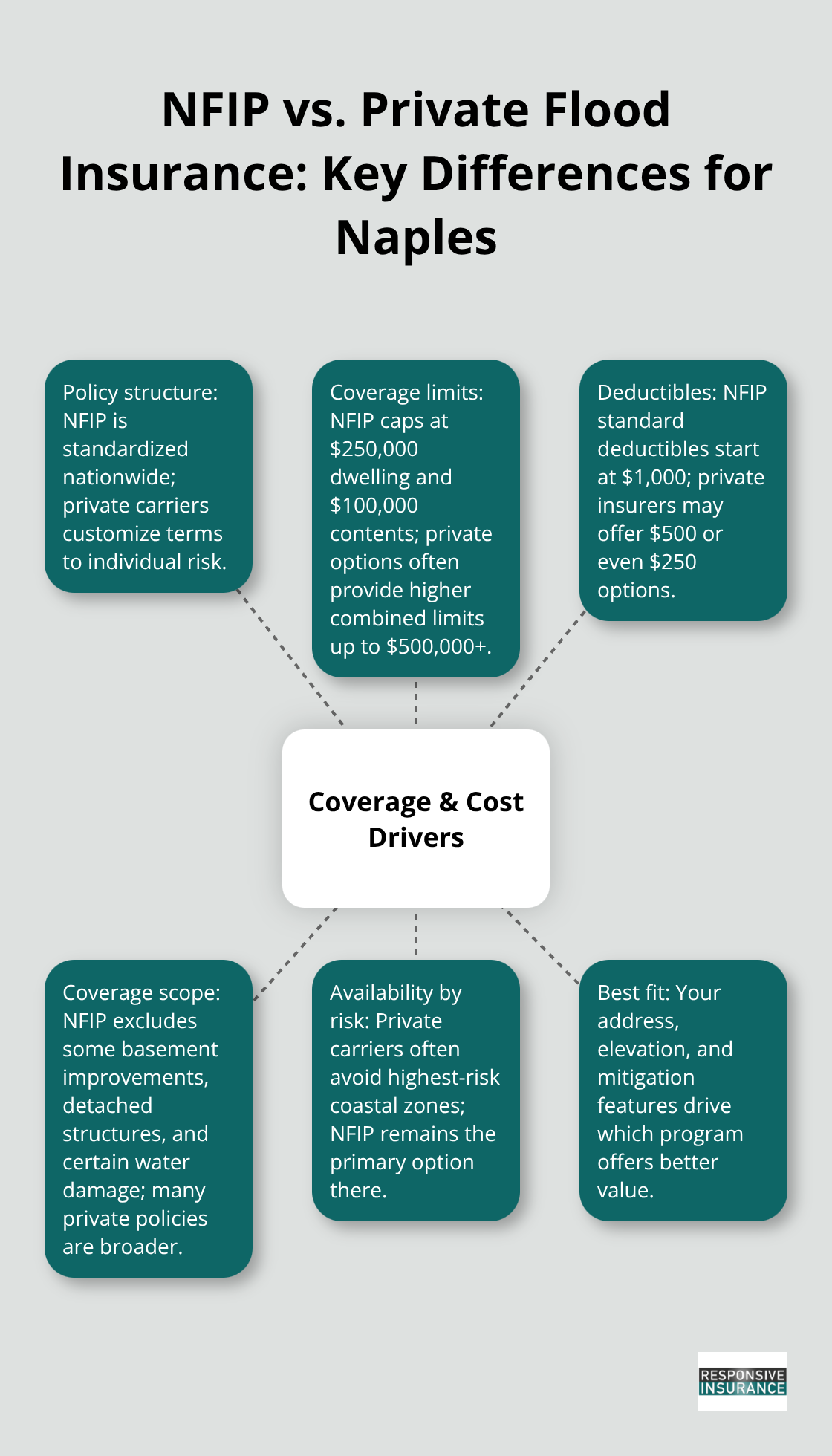
Private insurers typically offer higher limits, with some carriers providing coverage up to $500,000 or more on dwelling and contents combined. NFIP deductibles start at $1,000 for standard policies, but private carriers frequently offer $500 or even $250 deductibles, reducing your out-of-pocket exposure when a flood occurs. The coverage itself differs meaningfully too: NFIP excludes basement improvements, detached structures, and certain types of water damage, while many private policies provide broader protection.
Location Determines Your Best Option
Your location within Naples determines whether private or NFIP makes financial sense because private carriers avoid the highest-risk coastal zones where NFIP remains your only practical option. Properties in flood zones A and AE (downtown Naples and areas near Naples Bay) find NFIP substantially cheaper because private insurers charge premiums reflecting actual risk, not federally subsidized rates. A Naples property in flood zone X (outside the 100-year floodplain) might pay $800 annually with NFIP but only $550 with a private carrier, according to rate comparisons across multiple policies. Conversely, coastal properties face limited private market availability and must rely on NFIP for affordable coverage. Your address determines your baseline cost more than any other factor, which makes understanding your specific zone critical as you evaluate your options.
Eligibility Requirements and Switching Between Programs
Eligibility requirements matter significantly: NFIP accepts all properties in mapped flood zones regardless of condition, while private carriers decline coverage on older homes with poor maintenance or properties with recent flood claims. You can switch from NFIP to private coverage immediately once a private insurer approves your application, but switching back to NFIP involves a 30-day waiting period for most new coverage. Properties with recent mitigation improvements often qualify for private coverage after being rejected previously, since carriers reassess risk based on updated elevation certificates and structural improvements. This timing matters because waiting periods can leave you temporarily uninsured if you’re not strategic about your transition.
Comparing Costs Across Both Programs
Pricing between these programs has inverted in 2026 for moderate-risk properties outside the highest flood zones. The strategic move for most Naples homeowners involves obtaining quotes from both NFIP and at least two private carriers, then choosing based on your specific property’s risk profile, coverage needs, and actual out-of-pocket costs over the next three to five years. Rate variability in the current market is substantial, and your current insurer’s renewal quote is rarely your best option. We at Responsive Insurance, Inc. recommend comparing multiple quotes side by side because private insurers price flood risk differently than FEMA’s NFIP, and the savings can be significant for properties in moderate-risk zones.
Final Thoughts
Florida flood insurance rates in 2026 demand immediate action from Naples homeowners. The 18% to 30% premium increases across the state reflect genuine risk changes, not temporary market fluctuations, which means waiting to address your coverage will only cost you more money. Obtain quotes from at least three different carriers within the next 30 days, comparing both NFIP and private options side by side. Request updated elevation certificates if your property hasn’t been surveyed recently, since this single document often qualifies you for meaningful discounts.
The difference between shopping strategically and accepting your renewal quote can easily exceed $1,500 annually for Naples properties. Private carriers now offer competitive rates for moderate-risk properties outside the highest flood zones, while NFIP remains your best option for coastal homes in zones A and AE. Mitigation improvements like flood vents or utility elevation deliver immediate premium reductions, making these investments financially sensible even if you never experience a flood event.
A local agent who understands Naples’ specific flood risks and the nuances of both NFIP and private coverage eliminates guesswork from this process. Responsive Insurance, Inc. serves Southwest Florida families and businesses with expertise in comparing coverage across multiple insurers to find the best fit for your specific property and budget. Your location, elevation, and flood zone determine your baseline costs, but your choices about coverage limits, mitigation improvements, and carrier selection determine whether you overpay or get genuine value.


