
Business Owners Policy Florida: How a BOP Fits Your Florida Business
Running a business in Florida means facing unique risks-from hurricanes to liability claims that can derail your operations overnight. A business owners policy in Florida combines the essential protections you need under one affordable package.
At Responsive Insurance, Inc., we’ve seen too many business owners scramble after a loss because their coverage had gaps. This guide walks you through how a BOP works and why it matters for your Florida business.
What a Business Owner’s Policy Actually Covers
The Three Essential Protections in a BOP
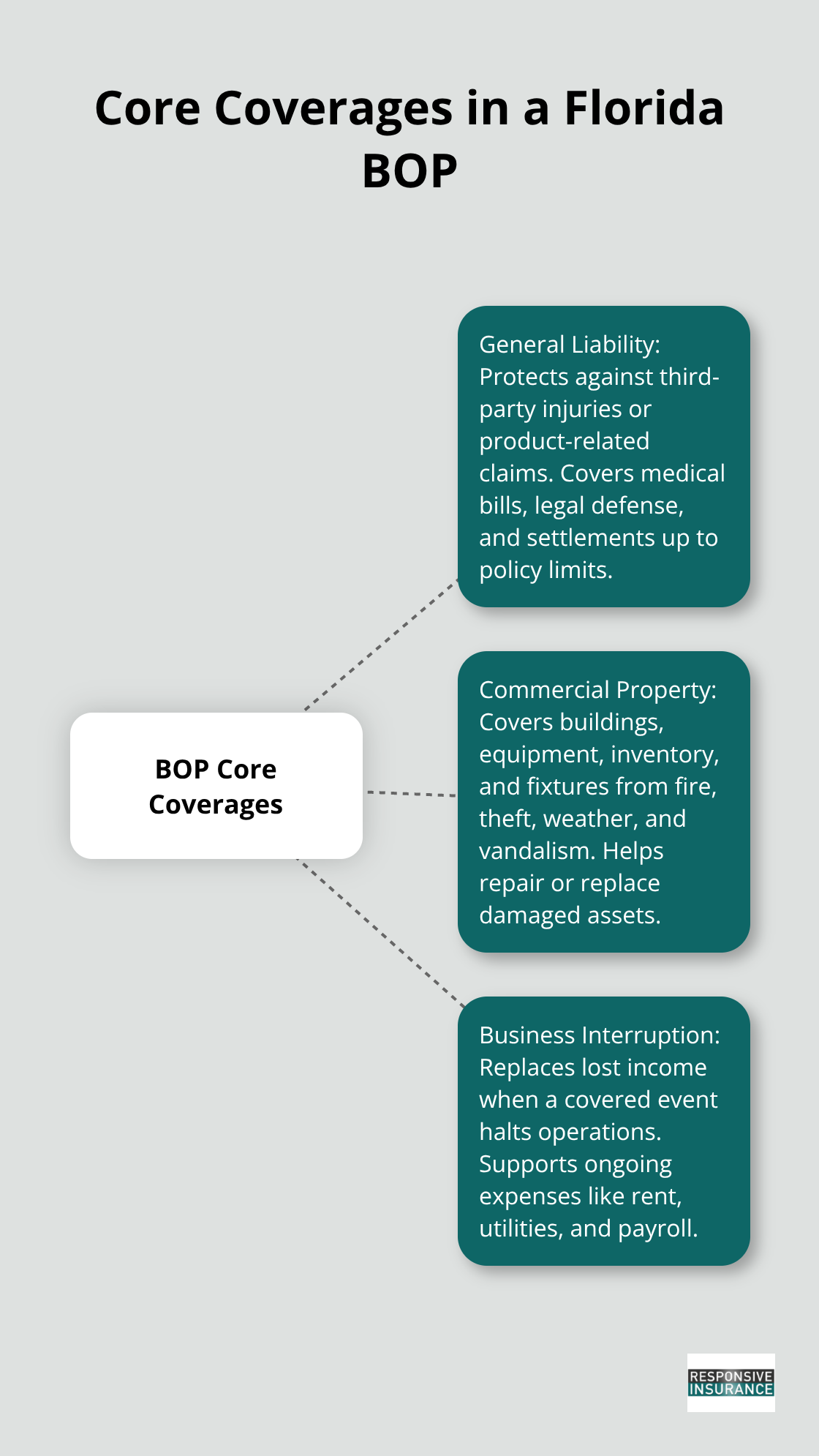
A business owner’s policy combines three essential coverages into one package: general liability, commercial property, and business interruption. General liability protects you when a customer or third party gets injured on your premises or from your products, covering medical bills and legal fees up to your policy limit. Commercial property covers your building, equipment, inventory, and fixtures against damage from fire, theft, weather, and vandalism. Business interruption coverage replaces lost income if you cannot operate due to a covered event like a fire or hurricane.
Why Florida’s Specific Threats Demand This Combination
Florida businesses face specific threats that make this combination essential. According to the National Hurricane Center, Florida experiences hurricane-force winds roughly every 2.5 years on average, and tropical storms hit even more frequently. The state also ranks high for commercial property claims related to water damage and theft. Without a BOP, most business owners carry only general liability, leaving their physical assets and income stream completely exposed.
The Real Cost of Incomplete Coverage
The gaps in coverage without a BOP create real financial risk that many Florida business owners underestimate. A general liability policy alone will not cover damage to your own building or equipment, your inventory loss, or the rent and payroll you still owe while your business sits idle after a disaster.
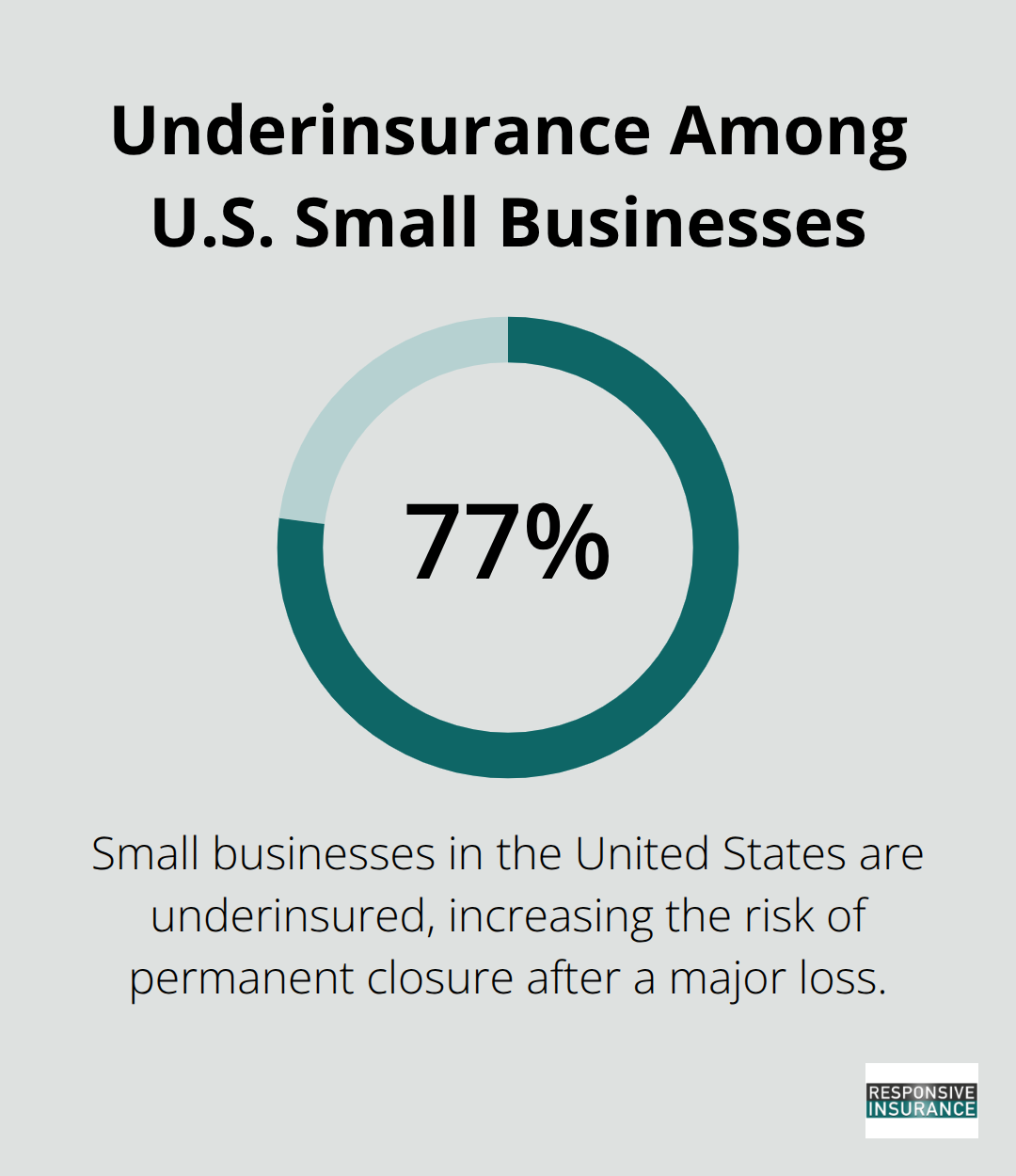
77 percent of small businesses in the United States are underinsured, leaving them vulnerable to permanent closure following a significant loss.
Consider a restaurant flooded during heavy rains. The owner faces not only the cost to repair the kitchen and dining area but also weeks of lost revenue while repairs happen. That lost revenue can exceed the repair costs significantly. A BOP addresses this by bundling these three critical protections at a cost typically 15% to 30% lower than buying each coverage separately.
Tailoring Coverage to Florida’s Coastal Environment
Florida’s specific environment means your business faces hurricane damage, flooding, and coastal liability risks that standard policies often exclude or limit. A properly structured BOP tailored to your industry and location protects your investment and keeps your business operational through whatever Florida’s weather throws at you. The next step involves assessing which specific coverage limits and deductibles actually fit your operation.
How a BOP Actually Protects Your Florida Business
General Liability Coverage Stops Financial Damage
General liability coverage stops the financial bleeding when someone gets hurt at your business or claims your product caused them harm. A customer slips on a wet floor at your retail shop, or a client develops an allergic reaction to a service you provided-these situations land you with medical bills, legal defense costs, and potential settlements. Your general liability coverage handles these expenses up to your policy limit, which typically ranges from $300,000 to $2 million depending on your industry and business size. Without this protection, a single lawsuit wipes out months or years of profits. Florida courts award higher damages than many states, making this coverage non-negotiable for any business with customer interaction.
Commercial Property Protection Keeps Your Assets Safe
Commercial property protection covers the physical assets that keep your business running: your building, equipment, inventory, fixtures, and sometimes even outdoor property like signage or HVAC units. When a hurricane damages your roof or a fire destroys your equipment, this coverage pays to repair or replace these items minus your deductible. Most Florida businesses should carry replacement cost coverage rather than actual cash value, since replacement cost reflects what you actually need to spend to restore your operation, while actual cash value deducts depreciation and leaves you short. A manufacturing facility with $500,000 in equipment cannot restart operations with a check for $300,000 after depreciation gets applied.
Business Interruption Coverage Replaces Lost Income
Business interruption coverage fills the gap that most business owners never think about until disaster strikes. When a covered event forces you to close temporarily, this coverage replaces your lost income and covers continuing expenses like rent, utilities, and payroll for a specified period. Between 30-40% of small business owners carry business interruption insurance, yet many still fail to reopen after a disaster strikes. A BOP with business interruption coverage typically reimburses lost income for three to twelve months depending on your policy, giving your business actual time to rebuild rather than forcing immediate reopening under pressure.
Assessing Your Coverage Needs
The right coverage limits depend on your specific operation, location, and industry risk profile. A retail store in downtown Naples faces different exposures than a construction company or professional services firm. Understanding these differences helps you select a BOP that actually protects your business rather than leaving gaps that create false security.
Choosing the Right BOP for Your Florida Business
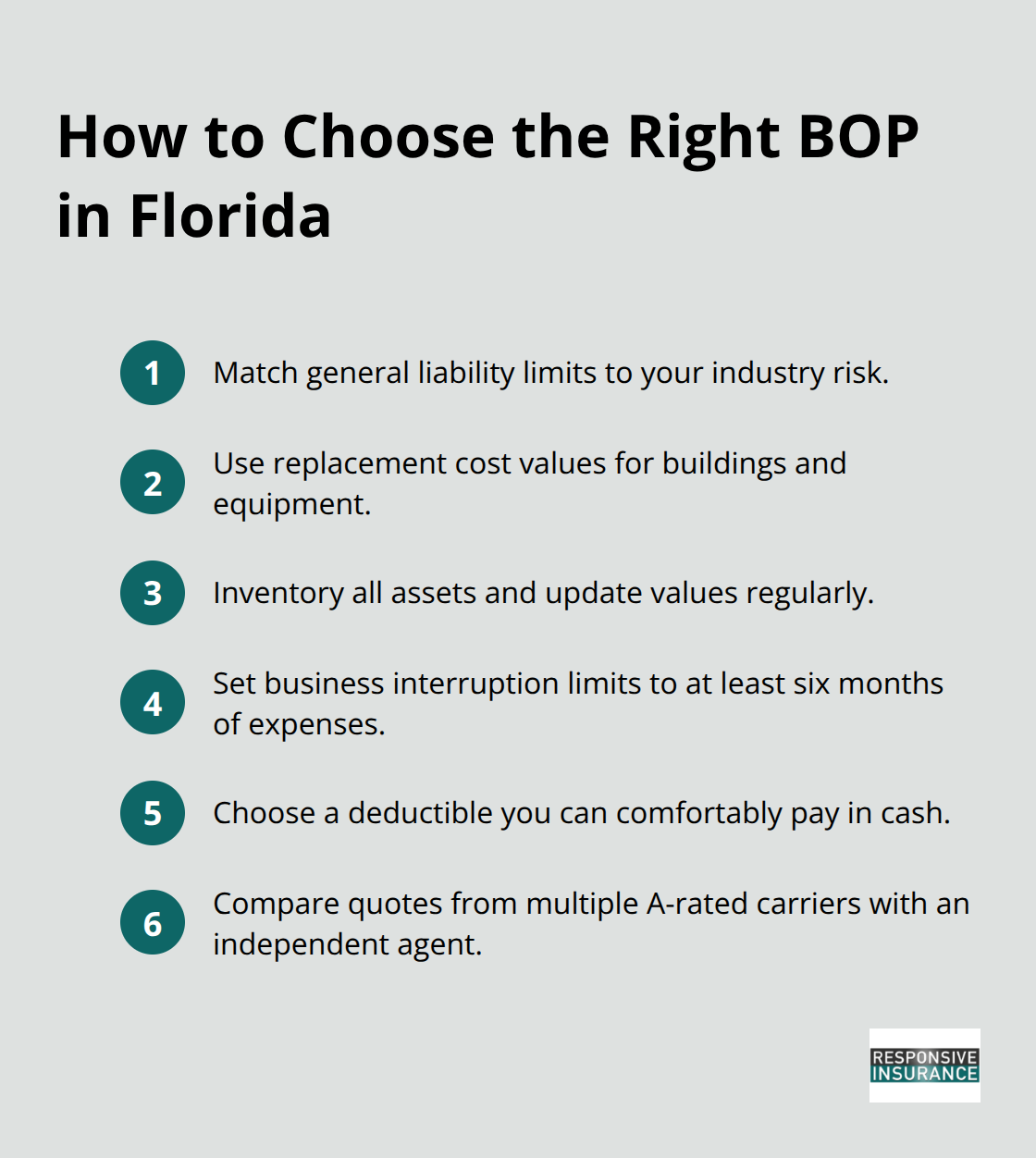
Match Coverage Limits to Your Actual Industry Risk
Your industry determines which coverage limits actually make sense, and guessing wrong leaves you either overpaying or dangerously exposed. A boutique salon in Naples needs different general liability limits than a construction contractor, yet many business owners simply accept whatever their agent suggests without understanding why. General liability limits typically range from $300,000 to $2 million, but your specific business activities should drive this number. A salon with minimal customer interaction and low injury risk operates differently than a restaurant where slip-and-fall claims happen regularly. Florida courts award higher damages than national averages, so your coverage limits should reflect this reality rather than match some national standard that underestimates local risk.
Calculate Your True Replacement Costs
Commercial property coverage should equal your actual replacement cost, not depreciated value, because you cannot restart operations with money that does not cover rebuilding expenses. Many Florida business owners underestimate their inventory value or fail to account for equipment they added after initially purchasing their policy, creating hidden gaps that surface only after a loss occurs. Walk through your facility and list every asset-machinery, furniture, technology, signage, and outdoor equipment-then obtain current replacement prices rather than relying on old purchase receipts. This exercise typically reveals that your initial coverage estimate was significantly low.
Structure Business Interruption Coverage for Florida’s Hurricane Season
Business interruption coverage should span at least six months of operating expenses since Florida hurricane season runs from June through November, and recovery timelines often extend beyond the immediate repair period. Calculate your monthly operating costs (rent, utilities, payroll, loan payments) and multiply by six to determine your minimum coverage need. Many business owners who reopen too quickly after a hurricane face additional damage from incomplete repairs or customer hesitation, making extended coverage protection valuable.
Select Your Deductible Based on Cash Reserves
Your deductible represents the money you pay out-of-pocket before insurance kicks in, and selecting this figure requires honest assessment of your cash reserves rather than defaulting to whatever sounds reasonable. A $2,500 deductible saves premium dollars but only if you can actually write that check without jeopardizing payroll or operations. A $1,000 deductible costs more annually but protects your cash flow when claims happen.
Work with an Independent Agent to Compare Actual Quotes
An independent agent who understands Florida’s specific environment transforms this process from overwhelming to actionable. Independent agents work with multiple A-rated insurance companies to compare how different carriers structure their BOP offerings, because one company’s $500,000 property limit costs dramatically more than another carrier’s identical limit due to underwriting philosophies and local loss history. An independent agent pulls quotes from several companies simultaneously rather than locking you into one carrier’s options, giving you actual pricing comparison rather than theoretical choices.
Agents who work in Florida year-round understand which industries face elevated risk and why, allowing them to recommend limits grounded in real loss patterns rather than generic formulas. Your agent should ask specific questions about your business operations, customer volume, location within Naples, equipment values, and revenue to justify every coverage limit they recommend. If an agent cannot explain why your general liability limit should be $1 million rather than $500,000, they have not completed the work required to protect your business.
Update Your Coverage as Your Business Evolves
The customization process involves reviewing your current operations and identifying what changed since your last policy renewal, because business growth, new equipment, or expanded services shift your actual risk profile. An independent agent also monitors your coverage annually to verify your policy keeps pace with your business evolution rather than remaining static while your operation grows into gaps you did not anticipate.
Final Thoughts
A business owners policy in Florida protects what you have built by combining the three coverages that actually matter: general liability, commercial property, and business interruption. Without this combination, a single event-a hurricane, a customer injury, a fire-forces permanent closure because your coverage has gaps you did not anticipate. Seventy-seven percent of small businesses remain underinsured, and Florida’s higher damage awards and frequent weather events make this gap particularly dangerous for your operation.
Getting quotes requires working with someone who understands your specific business and Florida’s unique environment. An independent agent pulls quotes from multiple A-rated carriers simultaneously, revealing how dramatically pricing varies between companies for identical coverage. One carrier’s $500,000 property limit might cost significantly more than another’s due to their underwriting approach and local loss history, so comparison shopping matters far more than accepting the first quote you receive.
Contact Responsive Insurance, Inc. to discuss your coverage needs with an agent who knows Naples and your industry. We work with multiple A-rated insurance companies to compare coverage options and find the best fit for your business owners policy in Florida. Provide details about your business and request quotes from multiple carriers to see how your actual risk profile translates into the protection you need.


