

Florida Flood Coverage Options: What It Covers and Why It Matters
Flooding is the most expensive natural disaster in Florida, with homeowners facing tens of thousands in damages that standard homeowners insurance won’t cover. At Responsive Insurance, Inc., we know that understanding your Florida flood coverage options is the first step toward protecting your home and finances.
This guide walks you through what flood insurance actually covers, how to compare your options, and how to select the right policy for your property’s specific risk level.
Why Florida Homeowners Need Flood Insurance Now
Rising Flood Risk Demands Action
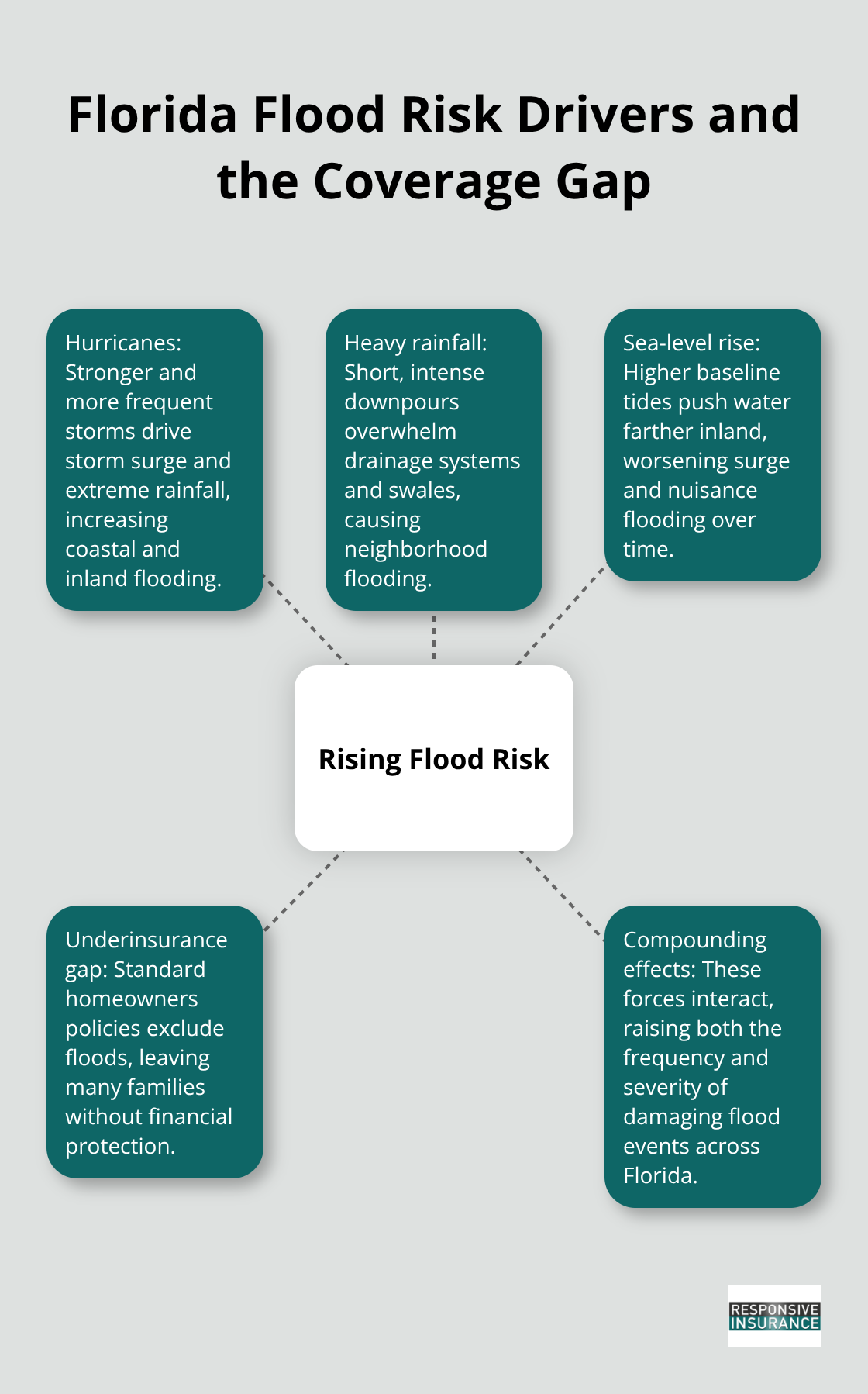
Florida’s flood risk has intensified dramatically over the past decade, and the numbers tell a stark story. NOAA and FEMA data confirm that Florida faces elevated flood risk from hurricanes, heavy rainfall, and ongoing sea-level rise. Rising sea-level and increased hurricane activity in Florida create compounding risks for homeowners in flood-prone areas. Most homeowners remain dangerously underinsured for flood damage because standard homeowners insurance policies explicitly exclude flood coverage. This gap between what people think they’re covered for and what they actually are covered for leaves families exposed to catastrophic financial loss when water damage occurs.
What Standard Insurance Leaves Unprotected
The financial impact of flooding on Florida properties extends far beyond the initial water damage. FEMA estimates that a single foot of floodwater in an average home causes between $20,000 and $40,000 in damage, while basement flooding alone averages $43,000 in repairs and restoration costs. For Naples homeowners, whose properties often sit in or near high-risk flood zones, this exposure proves particularly acute.
Flooding disrupts lives for months or even years after water recedes. Families face temporary housing costs, mold remediation, electrical system replacement, and foundation repairs that standard insurance won’t cover. The real vulnerability lies in the fact that flood insurance through the National Flood Insurance Program and private flood insurers remains optional for most homeowners, yet the financial consequences of going without it are irreversible.
Why Flood Insurance Matters in Florida’s Climate
In Florida’s climate, flood insurance isn’t a luxury add-on-it’s an essential financial protection that separates homeowners who recover quickly from those who face years of financial hardship. The choice to carry flood coverage or skip it determines whether a family rebuilds their home or struggles with debt for decades. This reality makes understanding your flood coverage options not just practical advice, but a critical step toward protecting both your property and your financial future.
Your Two Main Flood Insurance Options
NFIP Coverage: The Federal Foundation
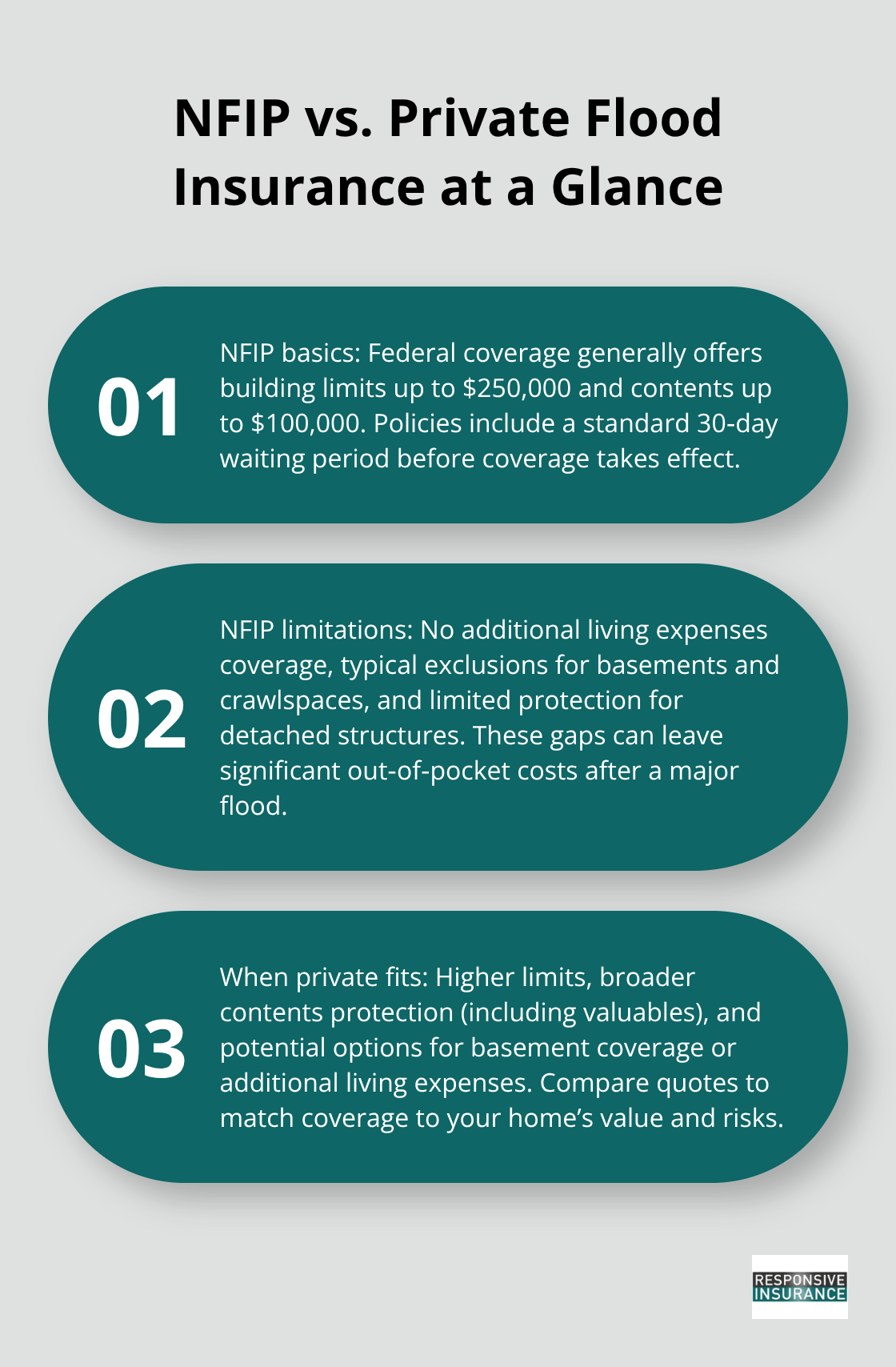
The National Flood Insurance Program, administered by FEMA, covers the structure of your home up to $250,000 and your personal belongings up to $100,000, with standard deductibles ranging from $1,000 to $30,000 depending on your choice. NFIP policies include a mandatory 30-day waiting period before coverage becomes effective, so Naples homeowners must apply well before hurricane season arrives. The program serves as the insurer of last resort in areas where private markets won’t offer coverage, making it the only option for properties in high-risk flood zones.
However, NFIP has significant limitations that leave many homeowners underprotected. The program doesn’t cover living expenses if your home becomes uninhabitable, offers no coverage for detached structures like garages, and excludes basements and crawlspaces in most standard policies. These gaps create real financial exposure for families who experience major flooding events.
Private Flood Insurance: Enhanced Protection
Private flood insurance fills the gaps that NFIP leaves behind. These policies provide higher building limits up to $500,000 or more, broader coverage including valuables and additional living expenses, and often more flexible terms that NFIP cannot match. For Naples properties with higher values or exposure not fully covered by NFIP limits, private policies deliver the protection that federal coverage leaves behind.
The real advantage of private flood insurance emerges when you compare actual quotes side by side with NFIP quotes, as premiums, exclusions, and available limits vary significantly between carriers and depend heavily on your property’s specific flood zone and characteristics.
Flood Risk Zones Shape Your Costs and Options
Your home’s flood risk category, which FEMA flood maps determine, directly influences your premium costs and available options. Higher-risk zones pay substantially more for NFIP coverage, making private insurance increasingly competitive for properties in Zones AE or VE. Many Naples homeowners benefit from carrying both NFIP and supplemental private flood insurance to reach adequate limits, since NFIP’s $250,000 building limit often falls short for homes valued above $400,000.
Mitigation Measures Reduce Premiums
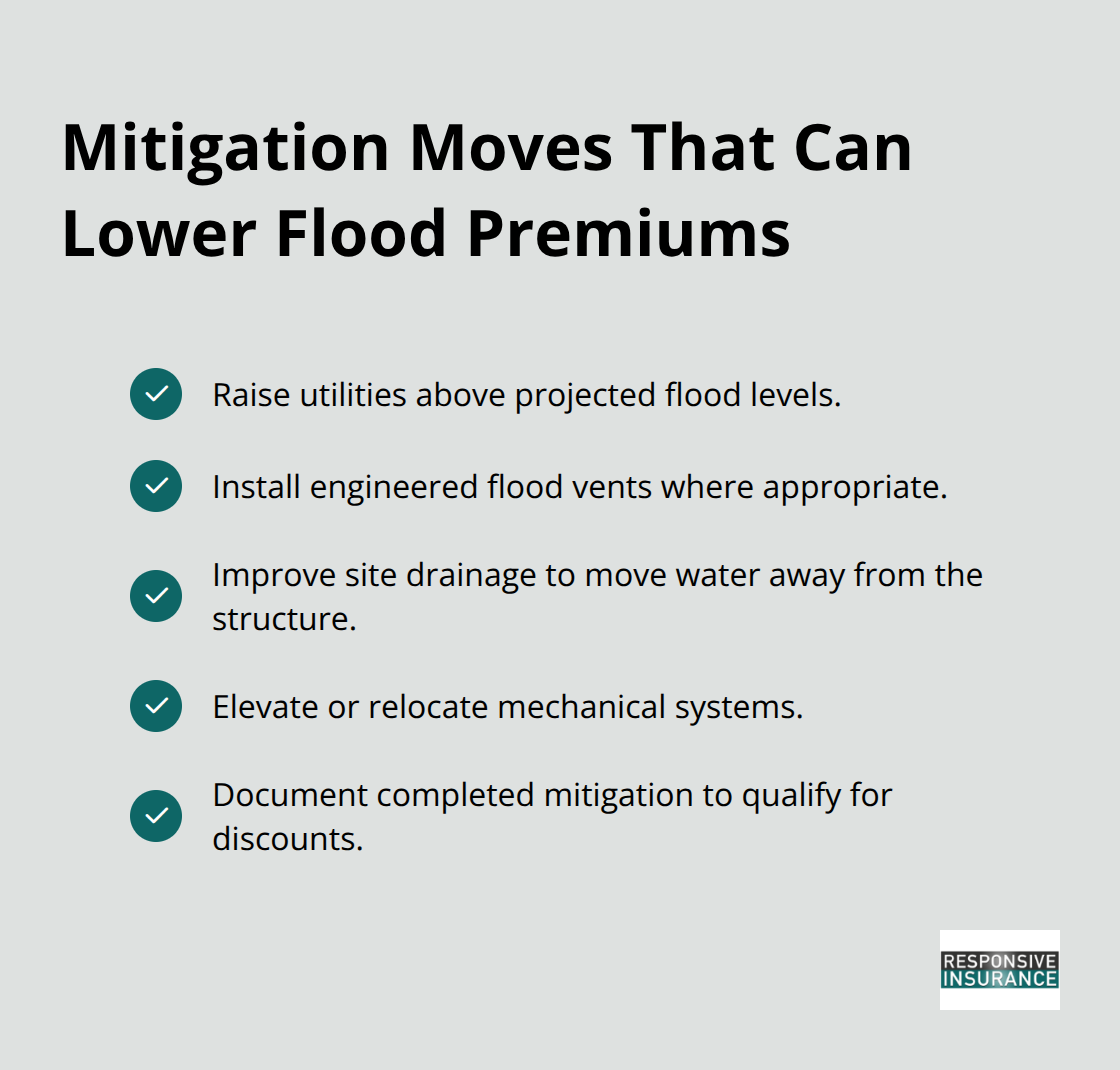
Mitigation measures like raising utilities, installing flood vents, improving drainage, and elevating mechanical systems reduce your actual flood damage risk and may qualify you for premium discounts from either NFIP or private carriers. When you compare options, request detailed quotes that show coverage limits, deductibles, exclusions for specific areas like basements, and any available discounts for mitigation work.
Making Your Decision
Your mortgage lender may require flood insurance if your property sits in a high-risk zone, but even without that requirement, the financial exposure from skipping coverage far outweighs the premium cost. The choice between NFIP and private coverage depends on your home’s value, your flood zone, and the specific protection you need. With multiple options available and significant differences in what each covers, the next step involves assessing your property’s actual risk level and calculating the coverage limits that match your home’s true value.
Selecting Coverage That Matches Your Home’s Real Risk
Know Your FEMA Flood Zone First
Start with your FEMA flood map, which determines everything about your coverage options and costs. Visit the FEMA Flood Map Service Center to enter your Naples address and identify your specific flood zone. Properties in Zones AE or VE pay significantly higher premiums because they sit in high-risk areas where flooding occurs more frequently. Your FEMA flood zone classification isn’t just a number-it directly dictates whether your mortgage lender requires flood insurance, what NFIP charges you, and whether private carriers will even quote your property. Once you know your zone, you have concrete information to compare actual policy quotes rather than making assumptions. NFIP premiums for high-risk zones often exceed $2,000 annually, while private carriers may offer competitive rates for the same property depending on other risk factors like elevation and construction type.
Calculate Coverage Limits Based on Actual Home Value
Most Naples homeowners underestimate the coverage limits they actually need. NFIP’s $250,000 building limit sounds substantial until you price foundation repair, electrical system replacement, and full interior restoration after serious flooding. A single foot of floodwater causes between $20,000 and $40,000 in damage according to FEMA data, and homes with basements or crawlspaces face even higher exposure. Calculate your replacement cost by listing structural components: foundation repairs ($15,000–$50,000), electrical and HVAC systems ($10,000–$25,000), flooring and walls ($8,000–$20,000), and contents replacement. If your home’s replacement cost exceeds $250,000, NFIP coverage alone leaves you significantly exposed. Private flood insurance becomes practical for homes valued above $400,000 because it provides higher limits-often $500,000 or more-without the federal program’s restrictions on basements and crawlspaces. Many Naples homeowners benefit from carrying both NFIP and supplemental private coverage to reach adequate limits, creating a layered approach that covers the structure fully while protecting personal belongings more comprehensively.
Compare Detailed Quotes Across Multiple Carriers
Request complete quote documents from at least three carriers-including NFIP through your agent and two private flood insurers-and compare the same specific information across all three. Deductible options range from $1,000 to $30,000, and choosing a higher deductible substantially reduces your premium. However, the real differences emerge in coverage details: ask whether basements are covered, whether crawlspaces are included, which mechanical systems are protected, and whether contents coverage includes valuables or only basic household items. NFIP policies typically exclude basement coverage entirely, while private carriers may offer it with specific limitations. Some private policies cover additional living expenses if your home becomes uninhabitable, while NFIP does not. Request itemized quotes showing your specific premium calculation, available discounts for mitigation measures like raised utilities or flood vents, and the exact waiting period before coverage activates. An independent agent can access multiple carriers simultaneously and explain these differences in practical terms rather than forcing you to interpret policy language alone.
Conclusion
Flood damage in Florida isn’t a possibility you can ignore or hope won’t happen to your home. The financial reality is straightforward: a single flooding event costs between $20,000 and $40,000 in damage for an average home, and your standard homeowners insurance won’t cover any of it. Understanding your Florida flood coverage options and selecting the right policy before disaster strikes makes the difference between recovering quickly and facing years of financial hardship.
Start with your FEMA Flood Map Service Center to identify your property’s flood zone, which determines your costs and available options. Calculate your home’s actual replacement cost by pricing structural repairs, systems replacement, and contents restoration, then compare that number against NFIP’s $250,000 building limit to see if you need supplemental private coverage. Request detailed quotes from multiple carriers and compare deductibles, coverage limits, exclusions for basements and crawlspaces, and available discounts for mitigation measures like raised utilities or improved drainage.
We at Responsive Insurance, Inc. work with multiple A-rated insurance companies to compare your coverage options and find the policy that matches your home’s specific risk level and value. Contact us to discuss your flood coverage needs and get quotes that protect your property and financial security.


