

Naples Commercial Property Policy: What Small Businesses Need to Know
Small business owners in Naples often underestimate what their commercial property policy actually covers-and what it doesn’t. At Responsive Insurance, Inc., we’ve seen too many local businesses face unexpected gaps in coverage that cost them thousands when disaster strikes.
This guide walks you through the real protections you need, the common blind spots to avoid, and how to build a policy that matches your actual assets and risks.
What Your Commercial Property Policy Actually Covers
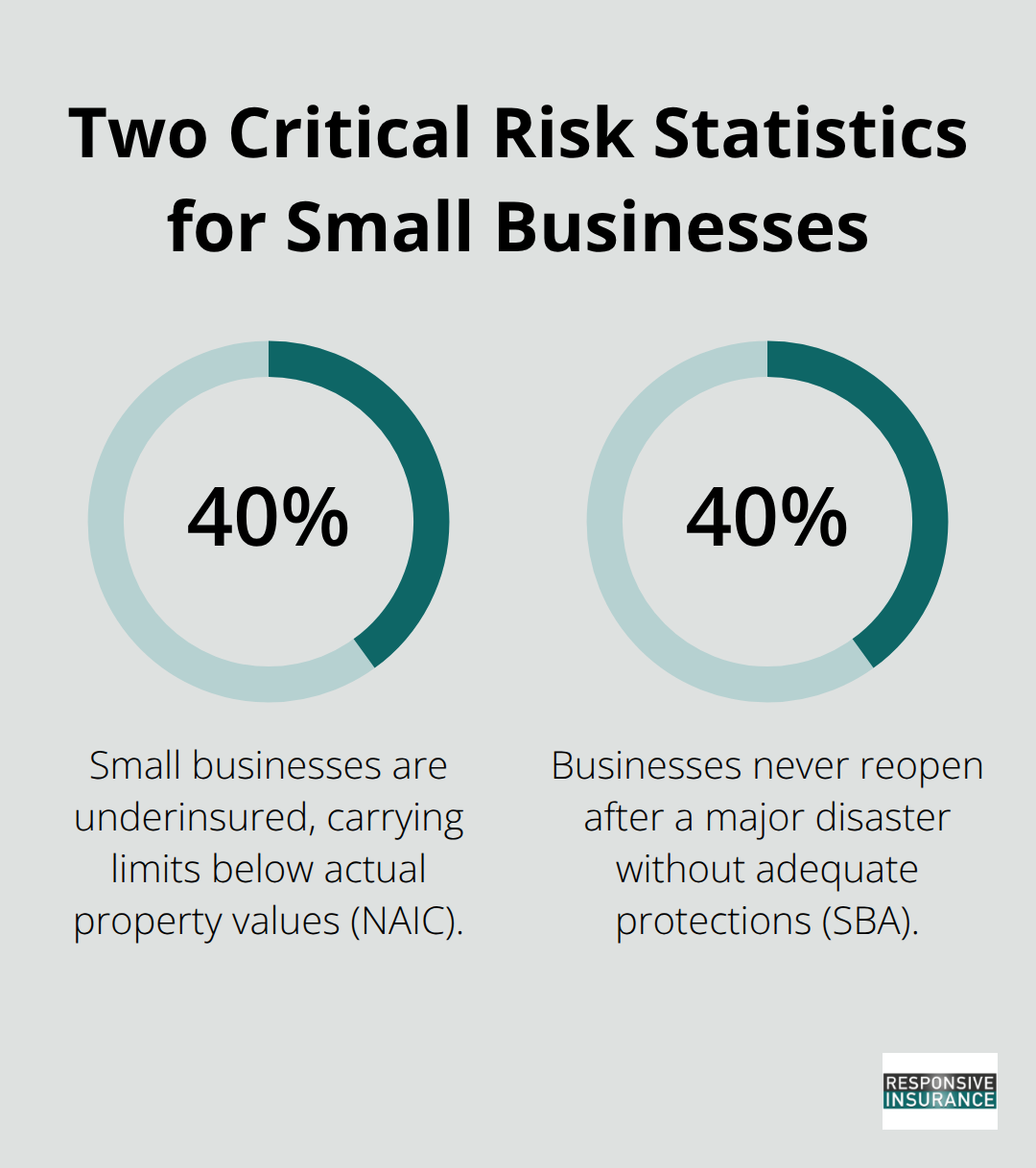
Your commercial property policy protects specific assets, but Naples business owners frequently misunderstand which ones. Most policies cover your building structure, including the roof, walls, floors, and permanent fixtures like HVAC systems and electrical wiring. They also cover business equipment and inventory-your machinery, computers, furniture, and stock. However, the coverage limits matter enormously. The National Association of Insurance Commissioners reports that underinsurance affects approximately 40% of small businesses, meaning they carry limits far below their actual property values. This gap becomes catastrophic when a hurricane, fire, or theft occurs.
You need replacement cost coverage, not actual cash value, because replacement cost pays what it actually costs to rebuild or replace items today, while actual cash value deducts depreciation and leaves you short. In Naples, where hurricane exposure is significant, this distinction determines whether you recover fully or face substantial losses.
Building and Equipment Coverage Specifics
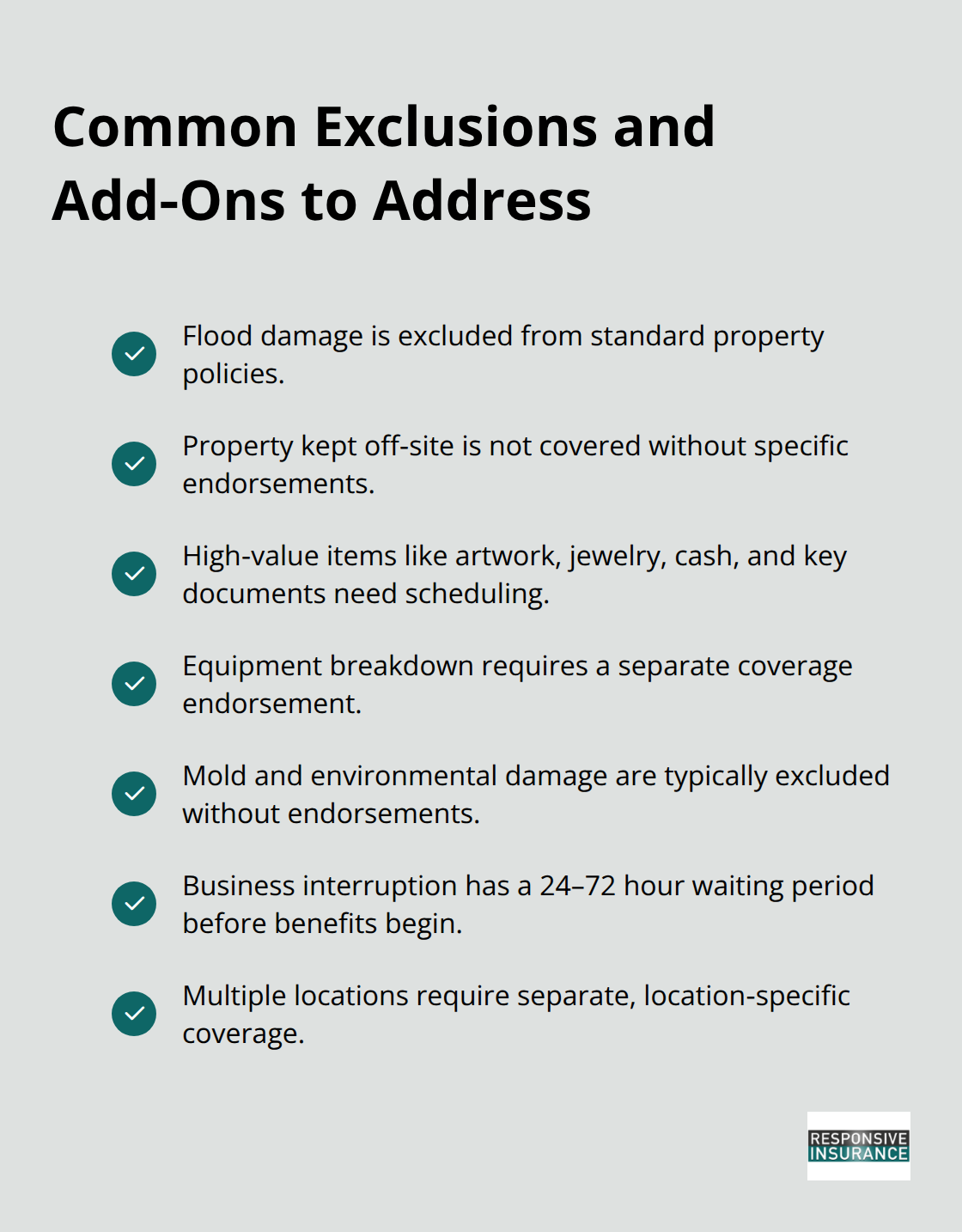
Your building coverage extends to attached structures like covered porches and detached garages, but only if your policy explicitly includes them. Equipment coverage includes HVAC units, electrical systems, plumbing, and built-in appliances. Inventory coverage protects raw materials, work-in-progress items, and finished goods. However, standard policies exclude certain high-value items-artwork, jewelry, cash, and irreplaceable documents typically require separate coverage through scheduled personal property endorsements. Equipment breakdown coverage is separate and protects machinery that fails mechanically, which standard property insurance does not cover. Many Naples businesses, especially those in hospitality and retail, overlook this gap. If your business relies on refrigeration, commercial ovens, or specialized machinery, you should add equipment breakdown coverage. The cost is minimal compared to the expense of replacing a failed commercial HVAC system or walk-in cooler, which can exceed $15,000 to $20,000 in Southwest Florida’s climate.
Additional Protections Beyond the Standard Policy
Loss of income coverage, sometimes called business interruption insurance, compensates you when a covered event forces temporary closure. This covers lost profits, continuing expenses like rent and payroll, and relocation costs if you operate from a temporary location. However, this coverage is optional and must be added to your base policy. According to the Small Business Administration, businesses that close for more than a few days due to disaster often never reopen-loss of income protection makes the difference between temporary disruption and permanent failure. You should also evaluate whether you need coverage for property you keep off-site, such as inventory stored at a warehouse or equipment at job sites. Standard commercial property policies typically cover only property at your declared business location. If you operate multiple locations or store items elsewhere, each location requires specific coverage.
Identifying Your Coverage Gaps
The real challenge lies in matching your policy limits to your actual assets. Many business owners accept whatever limits their agent suggests without verifying whether those limits reflect current replacement costs. Property values in Naples have shifted significantly over the past five years, and older policies often fail to account for inflation and construction cost increases. You should conduct a physical inventory of all business property, photograph equipment and inventory, and obtain replacement cost estimates from vendors. This documentation protects you during claims and prevents disputes over what you actually owned. Additionally, property stored off-site or in transit between locations frequently falls outside standard coverage. If your business model involves multiple work sites or temporary storage locations, those gaps need explicit attention when you review your policy.
Next Steps for Your Coverage Review
Your current policy may leave substantial exposure unaddressed. The gaps between what you think you’re covered for and what your policy actually covers can cost your business tens of thousands of dollars when disaster strikes. Understanding your building structure coverage, equipment protection, and additional options positions you to make informed decisions about your actual risk exposure. The next section examines the common gaps that catch most Naples business owners off guard and explains how to identify whether your current policy leaves you vulnerable.
Common Gaps in Commercial Property Coverage
Most Naples business owners discover their coverage gaps only after disaster strikes, which is far too late. Underinsurance represents the single largest problem we observe, and it stems directly from how businesses calculate their property values. The National Association of Insurance Commissioners found that 40% of small businesses carry insufficient limits, but the real damage occurs when replacement costs spike. A commercial roof in Southwest Florida costs $8 to $12 per square foot to replace, and that price has climbed steadily since 2021. If your policy limits haven’t been updated in three years, they almost certainly fall short of current replacement expenses.
Obtain written replacement cost estimates from at least two local contractors for your building structure, HVAC systems, roofing, and any specialized equipment. Many business owners rely on rough mental calculations or decade-old estimates, which creates a false sense of security. When hurricane damage or fire occurs, the adjuster measures your actual loss against your policy limits, and underinsurance means you absorb the difference personally.
Actual Cash Value Versus Replacement Cost
The difference between actual cash value and replacement cost coverage becomes catastrophic when you file a claim. Actual cash value deducts depreciation from your payout, so a ten-year-old HVAC system worth $20,000 new might receive only $8,000 in actual cash value coverage. Replacement cost pays what it costs to install a new system today, which protects your business from being undercompensated due to age-related depreciation.
The Business Interruption Trap
Business interruption coverage protects your income when a covered loss forces temporary closure, yet most Naples businesses either skip this coverage entirely or purchase limits far too low. The Small Business Administration reports that roughly 40% of businesses never reopen after a major disaster, and inadequate income protection accelerates that outcome. This coverage compensates for lost profits, continuing expenses like payroll and rent, and temporary relocation costs while you rebuild.
However, the waiting period matters enormously. Standard policies include a 24 to 72-hour deductible, meaning your business must remain closed for that duration before coverage begins. In Naples, where hurricane season creates widespread simultaneous damage, insurers face massive claims and adjust properties slowly. A business forced to close for three weeks might wait two weeks before adjustment begins, losing ten days of income that your policy won’t cover.
Your coverage limit should reflect at least four to eight weeks of operating expenses, not just a fraction of monthly revenue. Many business owners purchase limits that sound adequate until they calculate actual ongoing costs. A restaurant with $50,000 in monthly expenses needs at least $200,000 to $400,000 in business interruption coverage, yet many carry $50,000 limits that cover only one week of operations.
Flood and Environmental Exclusions
Standard commercial property policies exclude flood damage entirely, and this exclusion applies regardless of how severe the flood or how close your business sits to water. The Federal Emergency Management Agency estimates that one in four insured properties experience water damage during any five-year period, yet most business owners believe their standard policy covers this risk. Naples sits in a high-risk flood zone, with properties near Gulf Shore Boulevard, the Naples Pier area, and inland neighborhoods all vulnerable to storm surge, heavy rainfall, and stormwater backup.
Flood insurance requires a separate policy purchased through the National Flood Insurance Program or private flood insurers, and coverage must be in place before a loss occurs. Many business owners delay purchasing flood coverage until hurricane season approaches, then find policies unavailable or coverage limits already sold out.
Environmental damage including mold, contamination, and gradually occurring water intrusion also falls outside standard property coverage. Mold remediation in commercial spaces costs between $5,000 and $30,000 depending on the affected area, and standard policies classify this as maintenance rather than covered loss. If your business operates in a climate-controlled space like a restaurant, medical office, or retail location, moisture damage from HVAC failure or roof leaks creates mold exposure that your standard policy won’t cover. You need explicit environmental coverage or mold endorsements added to your policy to address this gap.
These coverage failures leave most Naples businesses exposed to losses that could have been prevented with proper planning. The next section explains how to assess your actual property values and select the right coverage limits for your specific situation.
How to Choose the Right Commercial Property Policy for Your Naples Business
Assess Your Actual Property Values and Assets
Selecting the right commercial property policy requires three concrete steps that most Naples business owners skip, which explains why so many end up underinsured. Start with an actual inventory of what your business owns, not a rough estimate. Walk through your building with a camera or smartphone and photograph every piece of equipment, furniture, inventory, and fixture. Note the age and condition of major items like HVAC systems, roofing, electrical panels, and specialized machinery. Then contact local vendors and obtain written replacement cost quotes for each category. A commercial kitchen needs quotes from restaurant equipment suppliers. A medical office needs quotes from medical equipment providers. A retail operation needs quotes from furniture and fixture suppliers. These quotes become your policy limits baseline.
Too many Naples business owners rely on insurance agents to estimate values, which inevitably underestimates actual replacement costs in today’s market. Construction costs in Southwest Florida have increased approximately 8-12% annually since 2021, meaning a roof estimate from 2022 is already significantly outdated. Update your inventory and quotes annually, especially if you’ve added equipment or expanded your inventory.
Compare Coverage Limits Across Multiple Insurers
Insurance companies calculate property values differently, and their underwriting guidelines produce dramatically different coverage recommendations. Obtain quotes from at least three insurers and specify that you want replacement cost coverage, not actual cash value. Ask each insurer exactly what their recommended building coverage limit is and what their recommended equipment and inventory limits are. Request they explain how they calculated those recommendations. If one insurer recommends significantly lower limits than others, ask why. Sometimes it reflects different risk assessment; sometimes it reflects inadequate underwriting.
The variation between insurers often surprises business owners who assumed all companies used identical formulas. One insurer might recommend $500,000 in building coverage while another suggests $650,000 for the same property. That $150,000 difference could mean the gap between full recovery and substantial out-of-pocket losses when disaster strikes.
Work with a Local Agent to Identify Your Specific Risks
A local agent who understands Naples-specific risks provides far more value than online quotes or national companies unfamiliar with Southwest Florida conditions. Hurricane exposure, flood zones, coastal salt corrosion, and construction cost inflation in this area require local knowledge that national underwriting standards cannot provide. A business located near Naples Bay faces different flood and storm surge exposure than one located inland near I-75.
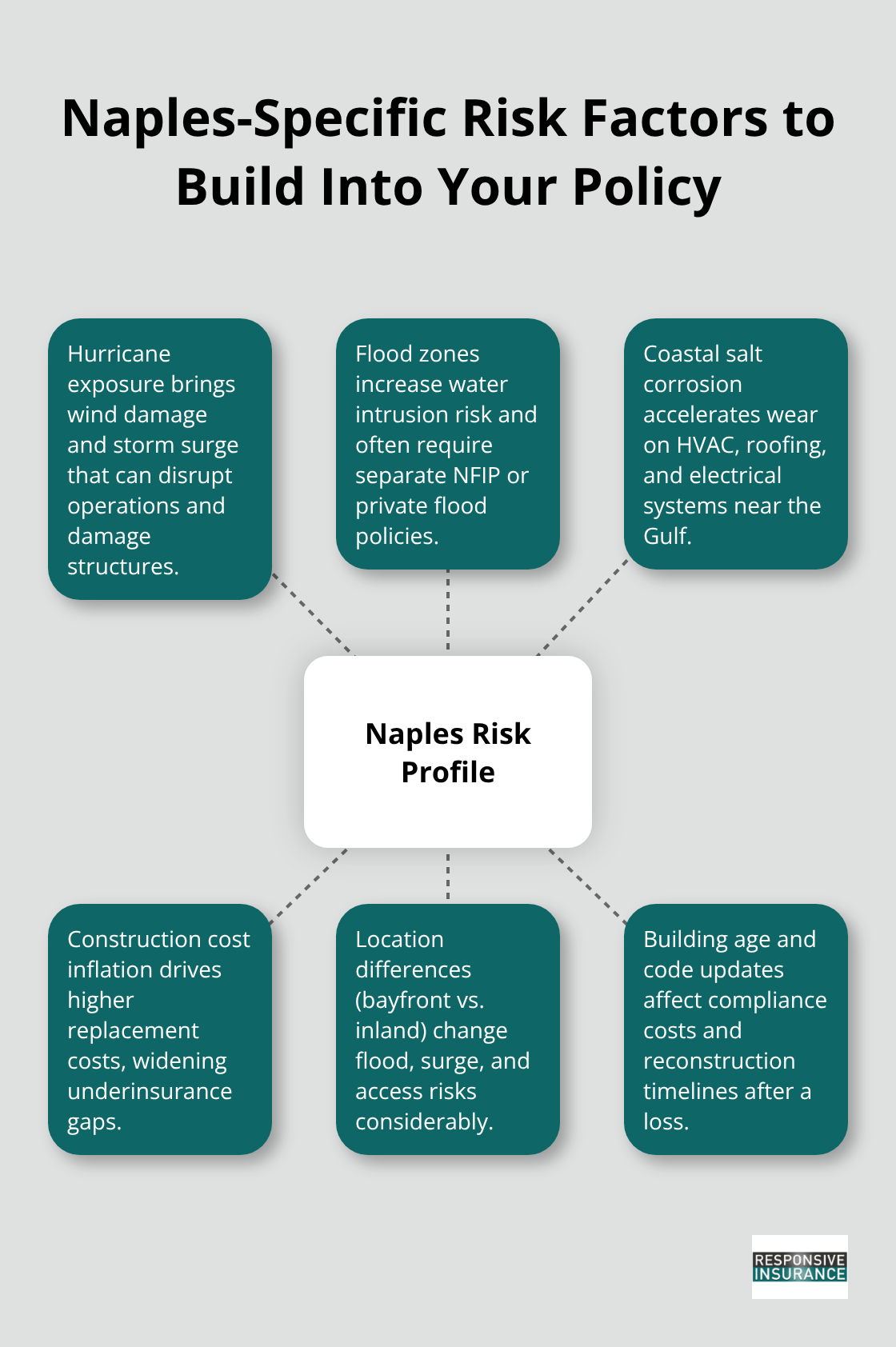
A building constructed in 1985 presents different risk than one rebuilt in 2015. Your policy should reflect these specifics, not generic national standards.
An independent agency works with multiple A-rated insurance companies to compare coverage options and identify the specific risks your business faces based on its location, construction type, and operations. This approach ensures you receive recommendations tailored to your actual situation rather than standardized coverage that may leave critical gaps unaddressed.
Final Thoughts
Your Naples commercial property policy protects your business only when coverage limits match your actual assets and risks. Start with a physical inventory of everything your business owns, photograph equipment, and obtain replacement cost quotes from local vendors. Construction costs in Southwest Florida continue climbing, and policies that haven’t been reviewed in two or three years almost certainly underestimate your actual replacement expenses.
Business interruption coverage deserves special attention in Naples, where hurricane season creates widespread simultaneous damage and slow claims adjustment. Your coverage limit should reflect four to eight weeks of operating expenses, not a fraction of monthly revenue. Flood insurance requires immediate action since standard policies exclude water damage entirely, and coverage must be in place before loss occurs.
A local Naples agent understands the specific risks your business faces based on location, construction type, and operations. Hurricane exposure, flood zones, and coastal conditions require knowledge that national underwriting standards cannot provide. Contact Responsive Insurance, Inc. to review your current Naples commercial property policy and identify coverage gaps that generic policies miss.


