
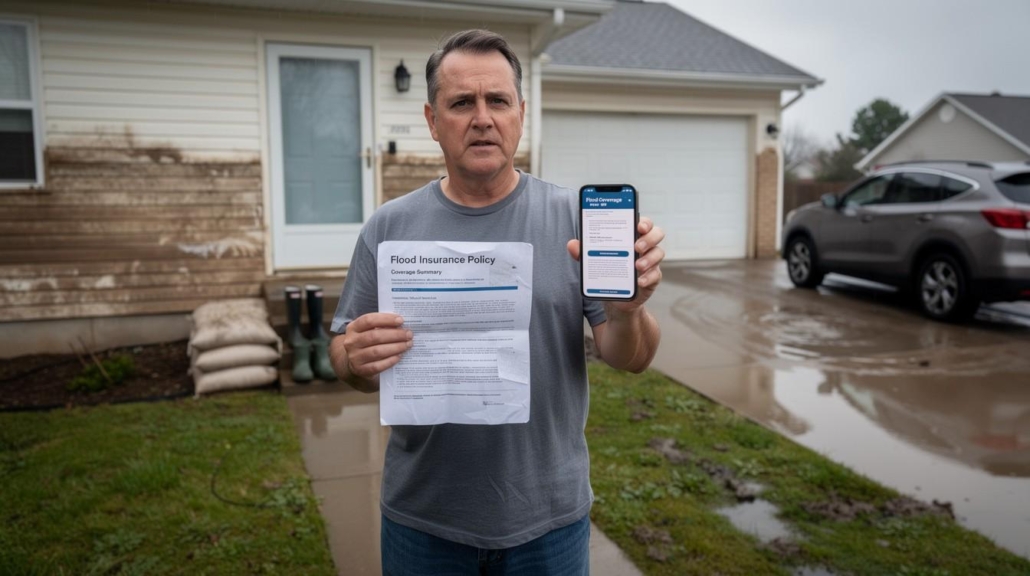
Naples Flood Policy Awareness: What Local Homeowners Should Know
Naples sits in one of Florida’s most flood-prone regions, where heavy rainfall, storm surge, and rising water levels create serious risks for homeowners. Standard homeowners insurance won’t protect your property from flood damage, which is why Naples flood policy awareness matters now more than ever.
At Responsive Insurance, Inc., we help local homeowners understand their coverage options and take action before the next hurricane season arrives. This guide walks you through your flood risk, available policies, and the steps to get properly protected.
Why Naples Homeowners Face Unique Flood Risks
Geographic Location and Storm Surge Vulnerability
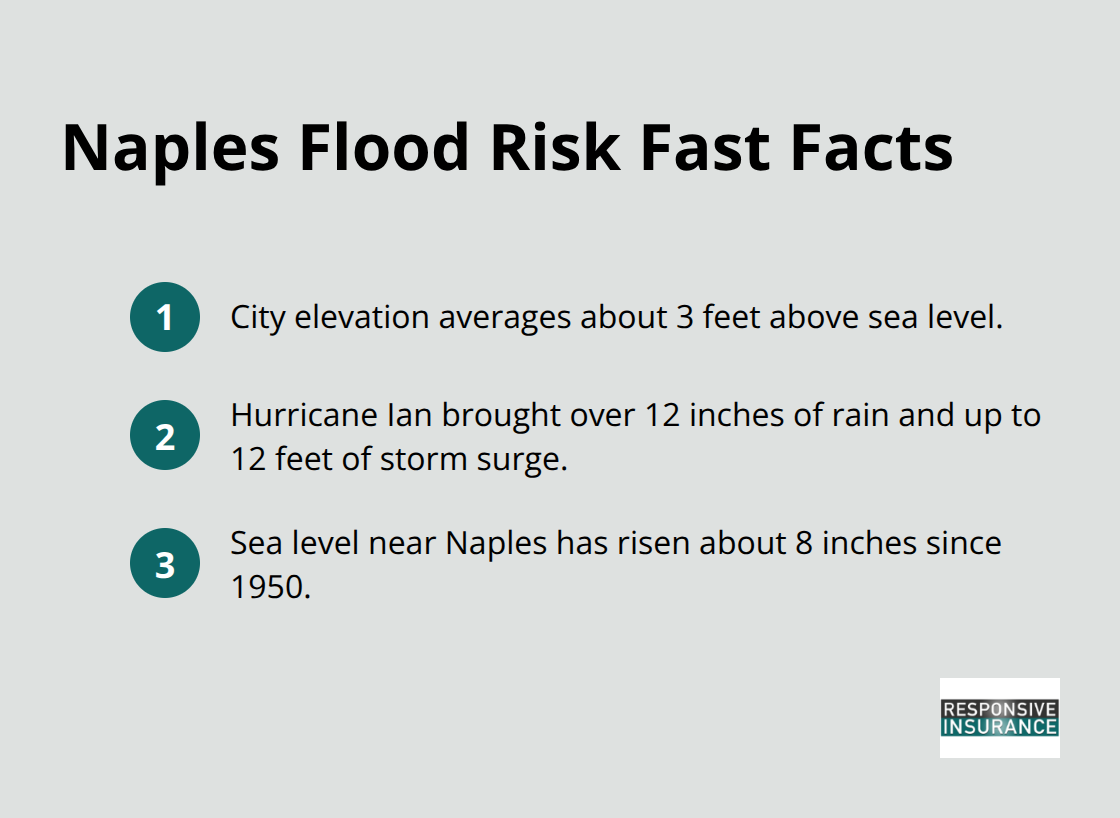
Naples sits directly in the path of Atlantic hurricane season, and the geography makes this especially dangerous. The city’s elevation averages just 3 feet above sea level, with some neighborhoods even lower. Storm surge from hurricanes pushes ocean water miles inland, overwhelming drainage systems and flooding homes that aren’t near the coast. Hurricane Ian in 2022 dumped over 12 inches of rain on Collier County in a single day, and the National Weather Service recorded storm surge that reached 12 feet in some areas. This isn’t theoretical risk-it happens regularly, and the pattern accelerates.
Rising Water Levels and Increased Flood Frequency
Water levels in Southwest Florida rise faster than the global average. NOAA data shows sea levels near Naples have climbed about 8 inches since 1950, and the rate of increase has nearly doubled in the last two decades. This means even moderate rainfall now causes flooding in areas that stayed dry 20 years ago. The combination of storm surge, heavy rainfall, and rising baseline water levels creates a perfect storm for property damage.
Standard Homeowners Insurance Does Not Cover Flood Damage
Standard homeowners insurance explicitly excludes flood damage-this is the critical gap that catches most Naples homeowners unprepared. Your homeowners policy covers fire, theft, and wind damage from hurricanes, but the moment water floods your home from any source, your coverage stops. Federal law prohibits homeowners insurers from covering flood, which means you need a separate flood insurance policy.
This isn’t optional in high-risk areas. If you have a mortgage in a flood zone designated by FEMA, your lender will require you to carry flood insurance. If you’re in a moderate-risk zone or own your home outright, the decision falls to you, but the financial consequences of being uninsured are devastating. A single flood event can cost $30,000 to $100,000 or more in repairs and replacement, according to the Insurance Information Institute.
Understanding what coverage options actually exist-and which one fits your specific situation-requires looking at both federal and private flood insurance programs. The differences between these options matter significantly for your wallet and your protection level.
Understanding Flood Insurance Coverage Options
National Flood Insurance Program Policy Details
The National Flood Insurance Program, or NFIP, remains the most accessible option for Naples homeowners, but it’s far from your only choice. The NFIP operates as a federal program that makes flood insurance available to homeowners, renters, and business owners when private insurers won’t cover them. In Florida, the NFIP insures over 800,000 policies statewide, and Collier County alone has approximately 28,000 active NFIP policies. The program offers coverage up to $250,000 for building damage and $100,000 for personal property, which sounds substantial until you factor in actual repair costs from recent hurricanes.
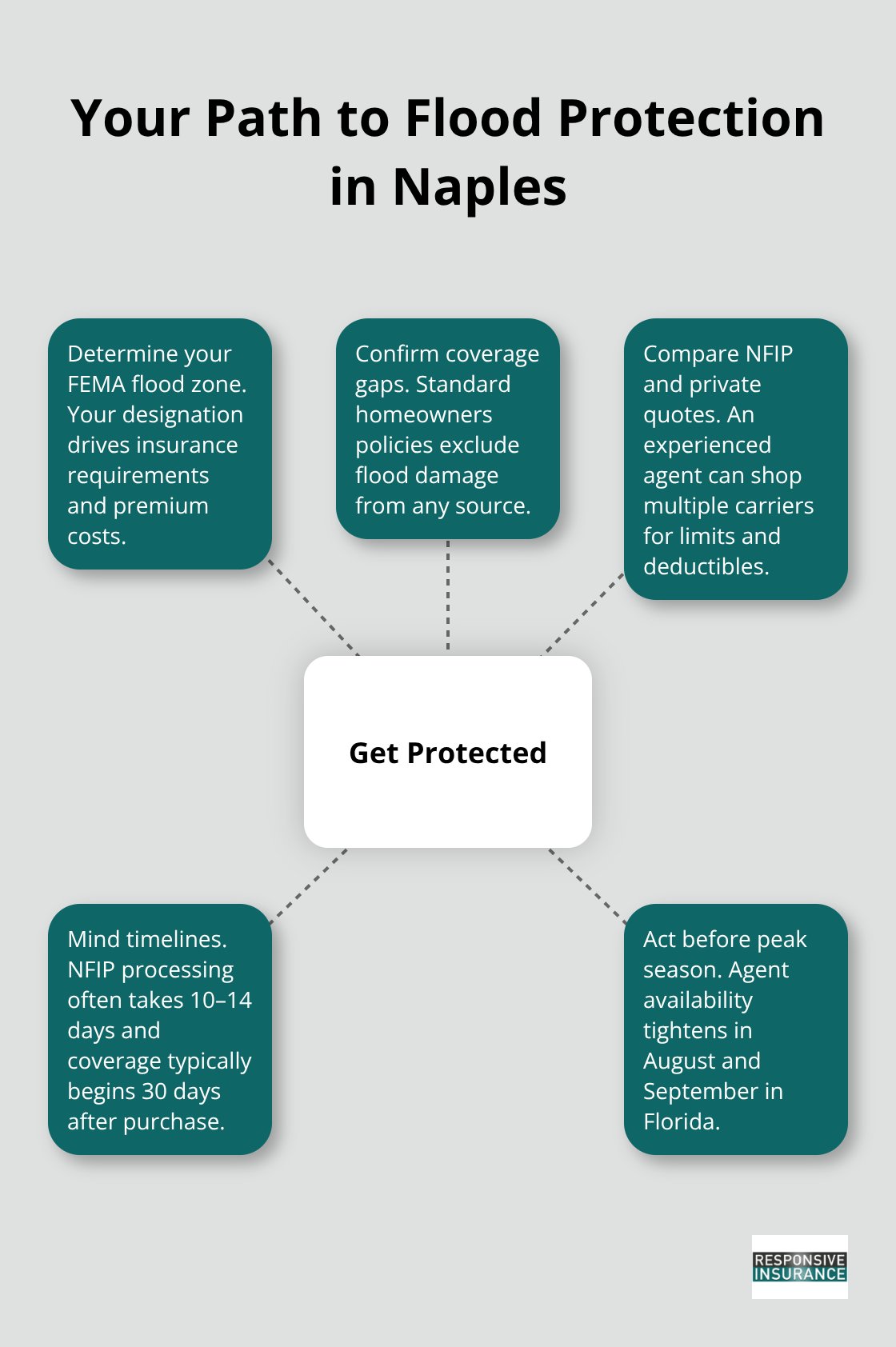
NFIP policies carry deductibles ranging from $500 to $5,000, depending on your chosen level. The critical limitation is that NFIP rates are based on your flood zone designation, not your individual property’s risk. This means a home at the top of a hill in a high-risk zone pays the same rate as a home in a valley, which creates pricing that doesn’t always match reality. Processing times for NFIP policies typically run 10 to 14 days, and coverage begins 30 days after purchase, so timing matters during hurricane season.
Private Flood Insurance Alternatives
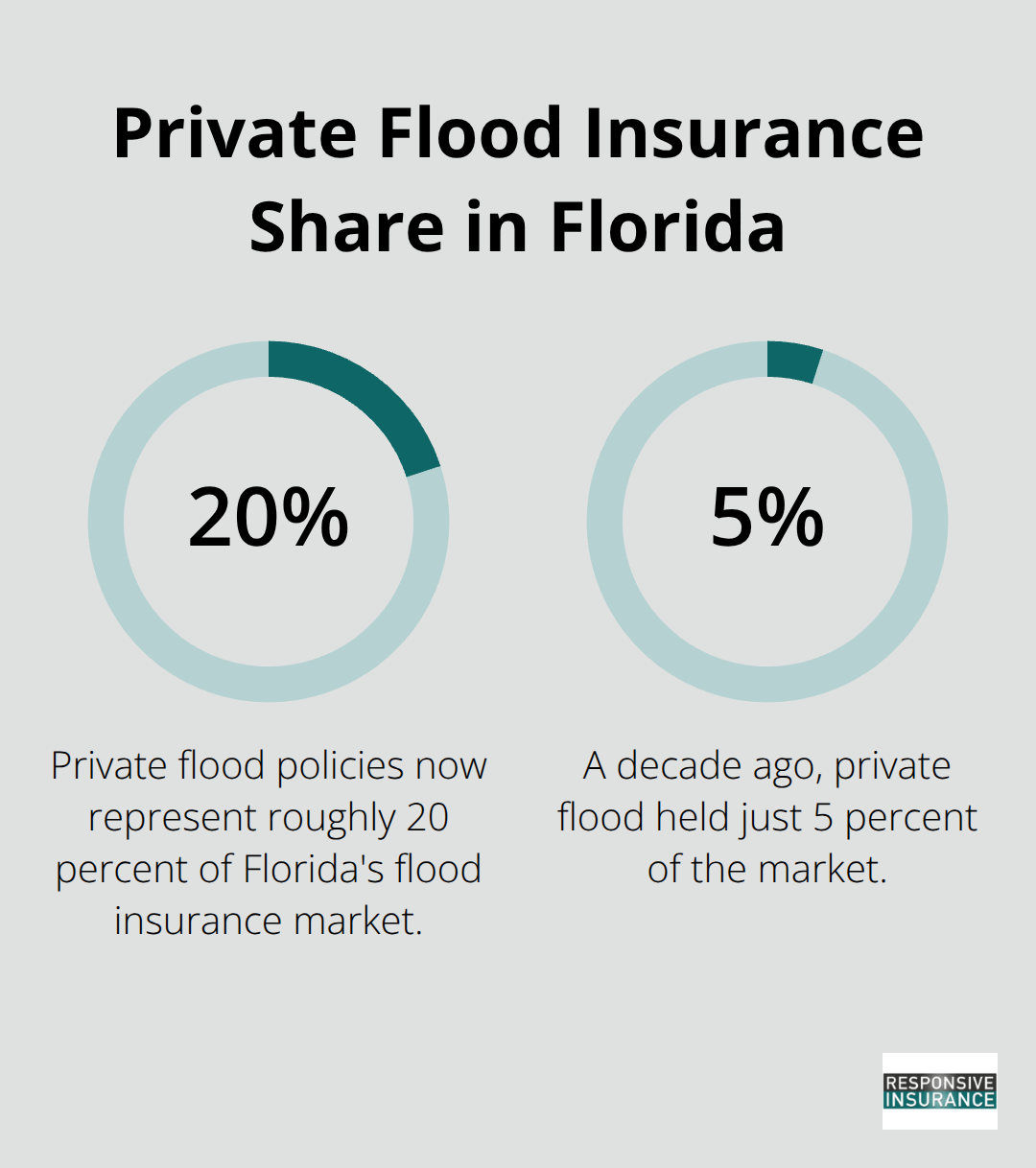
Private flood insurance has expanded significantly in Florida over the past five years and often provides better rates and higher coverage limits than the NFIP. According to the National Association of Insurance Commissioners, private flood policies now represent roughly 20 percent of the Florida flood insurance market, up from just 5 percent a decade ago.
Private insurers use more granular risk assessment, meaning they evaluate your specific property elevation, flood history, and mitigation measures rather than applying blanket zone rates.
This individualized approach frequently results in lower premiums for properties in moderate-risk areas or homes with recent elevation work. Private policies can offer building coverage up to $500,000 or higher, with deductibles as low as $250, and some carriers provide coverage for additional living expenses if you’re displaced. However, private flood insurance comes with stricter underwriting requirements, and insurers may decline coverage or require mitigation improvements before binding a policy.
Coverage Limits and Deductibles Explained
The gap between what your policy covers and what repairs actually cost can be substantial. NFIP building coverage maxes out at $250,000, while private policies often reach $500,000 or more. Your deductible choice directly affects your monthly premium-selecting a $5,000 deductible instead of $500 can lower your annual cost significantly, but it also means you pay more out of pocket when a flood occurs.
Additional living expenses coverage (available through some private carriers) protects you if you need temporary housing after a flood. This coverage type matters more than many homeowners realize, especially in Naples where hotel rates spike during hurricane season. Understanding these distinctions between NFIP and private options helps you make an informed decision about which program actually fits your financial situation and risk tolerance.
The next step involves determining exactly where your property sits in relation to flood risk zones and identifying any gaps in your current protection.
Steps to Assess Your Flood Risk and Get Protected
Determine Your Flood Zone Classification
Start with FEMA’s flood maps, which classify your property as high-risk, moderate-risk, or low-risk. Visit the FEMA Flood Map Service Center online and enter your Naples address to see your official designation. This single step matters more than most homeowners realize because it directly affects your insurance requirements and premium costs. If you live in a high-risk zone (also called Special Flood Hazard Area or SFHA), your mortgage lender will require flood insurance, and you’ll pay higher premiums regardless of which policy you select. Moderate-risk zones offer more flexibility, but the financial stakes remain serious-a flood in these areas causes just as much damage as one in a high-risk zone.
Review Your Current Coverage Gaps
Once you know your zone, compare that information against your current homeowners policy. Call your agent and ask explicitly: does my policy cover flood damage from any source, including heavy rainfall and storm surge? The answer will almost certainly be no, which means you have a coverage gap that needs immediate attention. Your homeowners policy protects against fire, theft, and wind damage, but flood damage falls outside that protection entirely. This gap exists for every homeowner in Naples, regardless of location or property value.
Work with an Insurance Agent to Find the Right Policy
Connect with an insurance agent who understands Naples’ specific flood landscape and can compare NFIP policies against private flood insurance options for your exact situation. An agent working with multiple carriers shows you side-by-side quotes, coverage limits, and deductible options rather than forcing you into a one-size-fits-all NFIP policy. If your property has had recent elevation work, mitigation improvements, or sits on higher ground despite being in a mapped flood zone, private insurers often recognize these factors and offer substantially lower rates than the NFIP would charge.
Request quotes from at least two private carriers alongside an NFIP option so you can see the real differences in cost and coverage. Don’t assume the cheapest option is best-a $50 monthly savings means nothing if your coverage limit falls $100,000 short of actual repair costs. As an independent agency based in Naples, Responsive Insurance, Inc. works with multiple A-rated insurance companies to compare coverage options and find the best fit for your specific flood risk situation. We recommend reviewing your flood risk assessment and coverage options before hurricane season peaks in August and September, when agent availability tightens and processing times extend beyond normal timelines.
Final Thoughts
Flood damage in Naples strikes thousands of homeowners every year, and it’s far from a remote possibility. The combination of your location, rising water levels, and inadequate standard homeowners coverage creates a protection gap that only flood insurance can fill. Your mortgage lender will require it if you’re in a high-risk zone, but even moderate-risk homeowners face devastating costs without proper coverage-a single flood event routinely exceeds $50,000 in repairs, and that’s before accounting for temporary housing and personal property replacement.
Naples flood policy awareness starts with understanding your flood zone and comparing your actual options. The NFIP provides accessible coverage, but private flood insurance often delivers better rates and higher limits for properties that qualify. The difference between these options can mean thousands of dollars annually and significantly better protection when a flood occurs.
Hurricane season peaks between August and September, when insurance agents become overwhelmed with requests and processing times extend well beyond normal timelines. Acting now-before the season intensifies-gives you time to compare options, ask detailed questions, and secure the coverage you actually need. Contact Responsive Insurance, Inc. today to assess your flood risk and get protected before hurricane season arrives.


