
Florida Flood Insurance Choices: Find Your Best Coverage
Florida’s flood risk is real and growing. Nearly 2.6 million homes in Florida face some level of flood risk, yet many homeowners remain underinsured or uninsured against this threat.
At Responsive Insurance, Inc., we know that understanding your Florida flood insurance choices is the first step toward protecting your property. This guide walks you through your options so you can make an informed decision.
Understanding Florida’s Flood Risk
Why Florida’s Flood Risk Keeps Growing
Florida’s geography makes flooding inevitable. The state sits just six feet above sea level on average, with some areas even lower. Heavy rainfall, storm surge from hurricanes, and rising groundwater all create multiple pathways for water to damage homes.
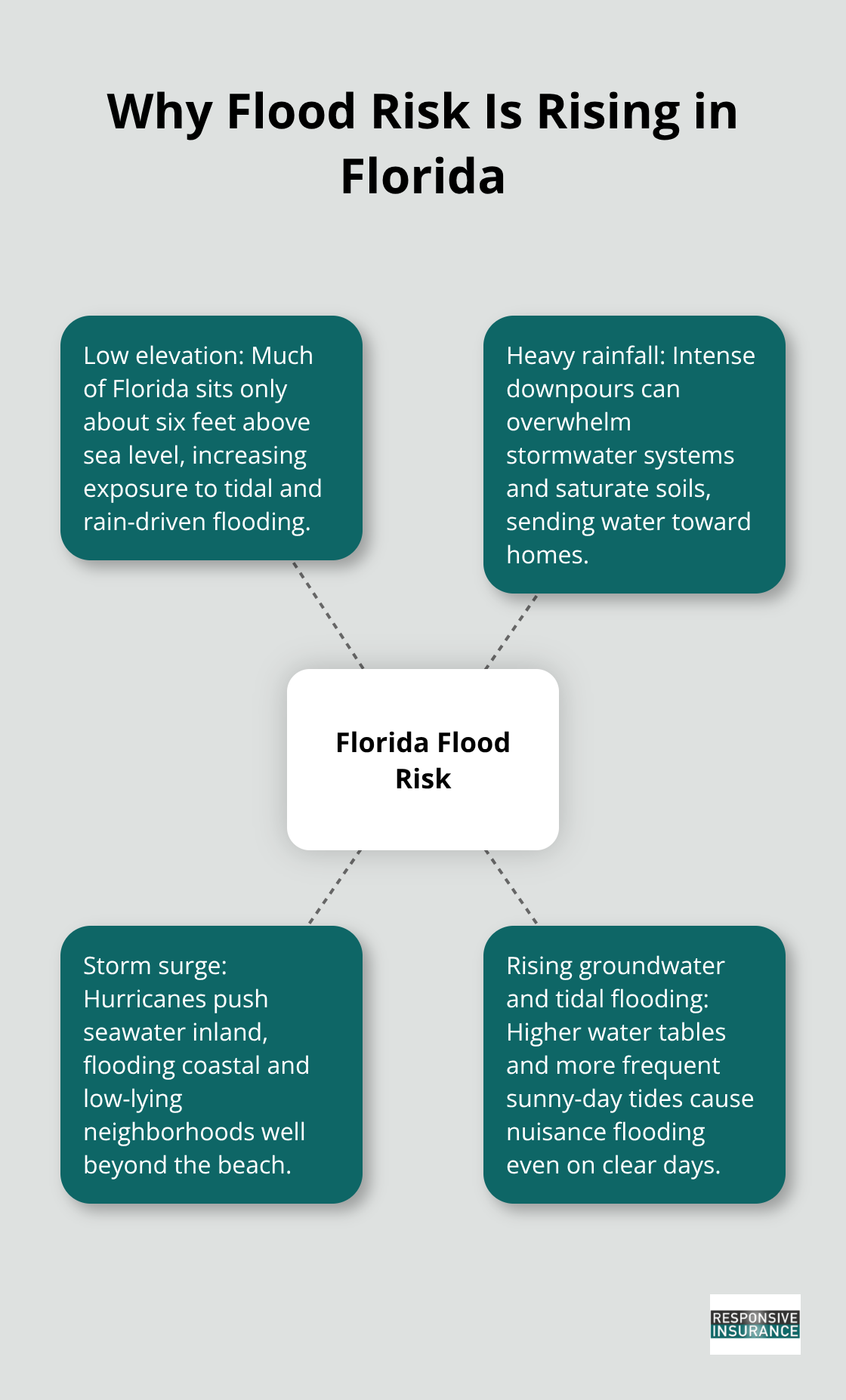
According to the National Oceanic and Atmospheric Administration’s data on Florida’s sunny day flooding frequency, Florida experiences more frequent “sunny day” or nuisance flooding than any other coastal state, with some communities now dealing with tidal flooding on clear days. This isn’t a worst-case scenario anymore-it’s the current reality for many Naples residents.
Where Your Neighborhood Stands
Flood risk in Florida varies dramatically by location, and your specific zone matters for insurance decisions. The Federal Emergency Management Agency divides Florida into flood zones based on historical data and storm surge modeling. Properties in high-risk zones like AE or VE require flood insurance if you have a mortgage through a federally regulated lender. However, moderate-to-low-risk zones in X and X Shaded still flood regularly. Naples sits in a region where properties near the coast, in low-lying areas, and near stormwater systems face elevated risk.
Even homes several miles inland can experience flooding from heavy rainfall alone. Your specific flood risk depends on elevation, proximity to waterways, stormwater drainage patterns, and local development history. Check FEMA’s Flood Map Service Center or speak with a local agent who understands Naples’ particular vulnerabilities.
What Your Homeowners Policy Leaves Unprotected
Standard homeowners insurance does not cover flood damage, period. Insurers exclude flood because it’s considered a catastrophic peril affecting large geographic areas simultaneously, making it impossible to price predictably. Water damage from any source-heavy rain, storm surge, overflowing rivers, or failed drainage systems-falls outside your homeowners policy. Only dedicated flood insurance covers these losses.
This distinction matters because many homeowners discover too late that their expensive policy leaves them exposed to their area’s most common hazard. If you carry a mortgage in a high-risk flood zone, your lender mandates flood insurance. If you’re in a lower-risk zone, it’s optional but increasingly recommended (given how rainfall patterns are intensifying across Florida). Understanding this gap in your current coverage sets the stage for evaluating the two main flood insurance options available to you.
Your Two Flood Insurance Options Explained
How NFIP and Private Flood Insurance Differ
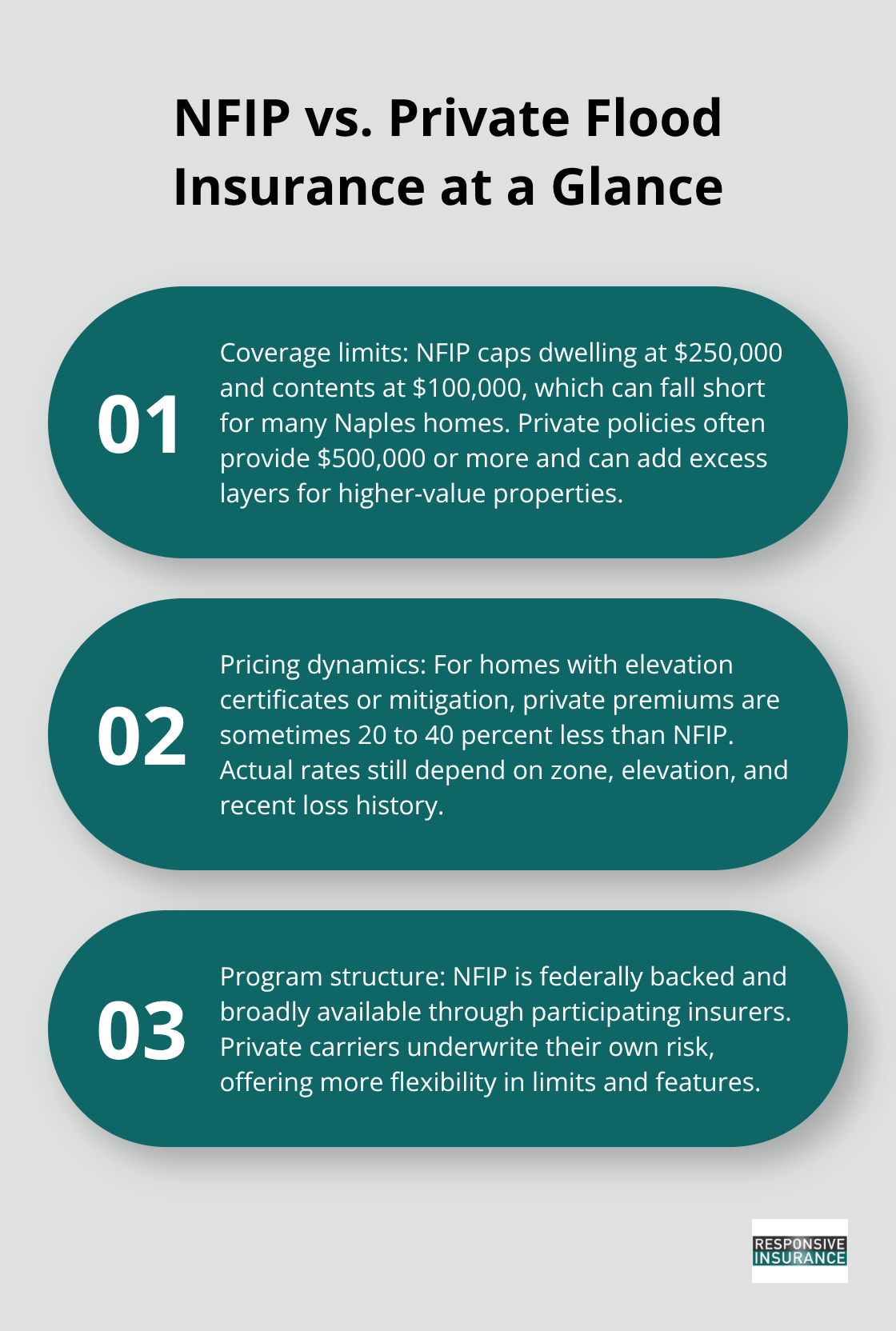
The National Flood Insurance Program (NFIP) and private flood insurance represent fundamentally different approaches to protecting your home. Congress created the NFIP in 1968, and it now covers approximately 5.2 million policies nationwide, with a significant portion in Florida. The program operates through participating insurance companies but receives backing from the federal government. NFIP caps dwelling coverage at $250,000 and contents coverage at $100,000-a limitation that falls short for many Naples homes worth $400,000 or more. Private flood insurance emerged as an alternative over the past decade, with companies like ACS Group and Homeowners Choice offering policies outside the NFIP system. Private carriers can provide dwelling coverage up to $500,000 or more and often deliver better rates for moderate-risk properties, sometimes 20 to 40 percent less than NFIP premiums for homes with elevation certificates or recent flood mitigation work.
What Each Option Actually Covers
The critical difference lies in what each option covers and how quickly you receive payment. NFIP policies include replacement cost coverage for your dwelling structure but actual cash value for contents, meaning depreciation reduces what you recover on personal belongings. Private policies increasingly offer replacement cost for both structure and contents, covering what it truly costs to rebuild or replace items. NFIP claims historically take longer to process-sometimes 6 to 12 months-because federal adjusters handle assessments. Private insurers typically settle claims in 30 to 60 days.
Stability vs. Flexibility: The Trade-Off
However, NFIP offers one major advantage: it cannot deny you coverage or drop your policy based on prior claims or increased risk, whereas private carriers can. For Naples residents, this matters significantly. If your home experiences flooding and you carry private insurance, that carrier may non-renew you afterward, forcing you back to NFIP as a last resort. NFIP also serves as a backstop when private markets retreat from high-risk areas.
Finding Your Best Fit
Right now, private flood insurance works best for homes in moderate flood zones with strong elevation data and no recent loss history. For high-risk coastal properties or those with prior flood damage, NFIP provides stability and guaranteed renewability, even if premiums climb. Many Naples homeowners benefit most from a hybrid approach: carry NFIP as your base policy and evaluate private coverage for enhanced limits if your home value justifies it. An independent agent familiar with both markets can run exact quotes and show you the real dollar difference for your specific property. Your NFIP premiums are based on your flood zone and elevation, with rates starting around $400 to $600 annually for lower-risk properties but climbing to $1,500 or higher for high-risk zones. The program operates on a break-even model over time, meaning rates periodically increase to cover previous flood losses.
Now that you understand your two main coverage options, the next step involves assessing your home’s actual flood risk and determining how much coverage you truly need.
Matching Coverage to Your Home’s Reality
Start with your home’s flood zone and elevation, not your gut feeling about risk. Log into FEMA’s Flood Map Service Center and locate your property’s designated flood zone-this determines your baseline insurance requirement and pricing. If your home sits in zones AE or VE, lenders mandate flood insurance regardless of your opinion about risk. Zones X and X Shaded are optional, but this is where many Naples homeowners make costly mistakes by skipping coverage entirely.
Know Your Elevation Certificate
Once you know your zone, obtain your home’s elevation certificate if you don’t already have one. This document, prepared by a surveyor, shows your home’s lowest floor elevation relative to the base flood elevation. Homes elevated above the base flood elevation qualify for significantly lower NFIP premiums. If you’ve never had an elevation certificate, the cost runs $300 to $600, but the premium savings often recover that investment within two years. Private insurers almost always require elevation certificates for quotes, making this document essential for comparing your actual options rather than relying on default NFIP rates.
Calculate the Right Coverage Limit
Coverage limits should match your home’s replacement cost, not just its market value. NFIP’s $250,000 dwelling cap sounds adequate until you price actual reconstruction. In Naples, where labor and materials run high, rebuilding a 2,000-square-foot home typically costs $300,000 to $400,000 or more depending on finishes and foundation work. If your home carries a $450,000 mortgage and carries only $250,000 in NFIP dwelling coverage, you face a $200,000 shortfall after a total loss.
Private flood insurance becomes practical here-policies routinely offer $500,000 to $1,000,000 in dwelling coverage. For contents, most homeowners underestimate what they own. Inventory your belongings room by room, including furniture, electronics, clothing, and kitchen items. NFIP contents coverage tops out at $100,000 but only pays actual cash value, meaning depreciation cuts what you recover. Private carriers increasingly offer replacement cost contents coverage, paying what it costs to replace items at current prices.
Many Naples homeowners benefit from carrying NFIP for the base dwelling limit plus a private excess flood policy that covers amounts above $250,000, effectively stacking coverage without doubling premiums.
Get Real Quotes from a Local Agent
Do not rely on online quote tools alone-they lack local knowledge and often miss mitigation credits that lower your actual premium. An independent agent in Naples understands which private carriers actively write policies in your specific neighborhoods, which ones have recently exited the market, and which ones offer elevation discounts or mitigation credits for recent improvements like roof reinforcement or drainage upgrades.
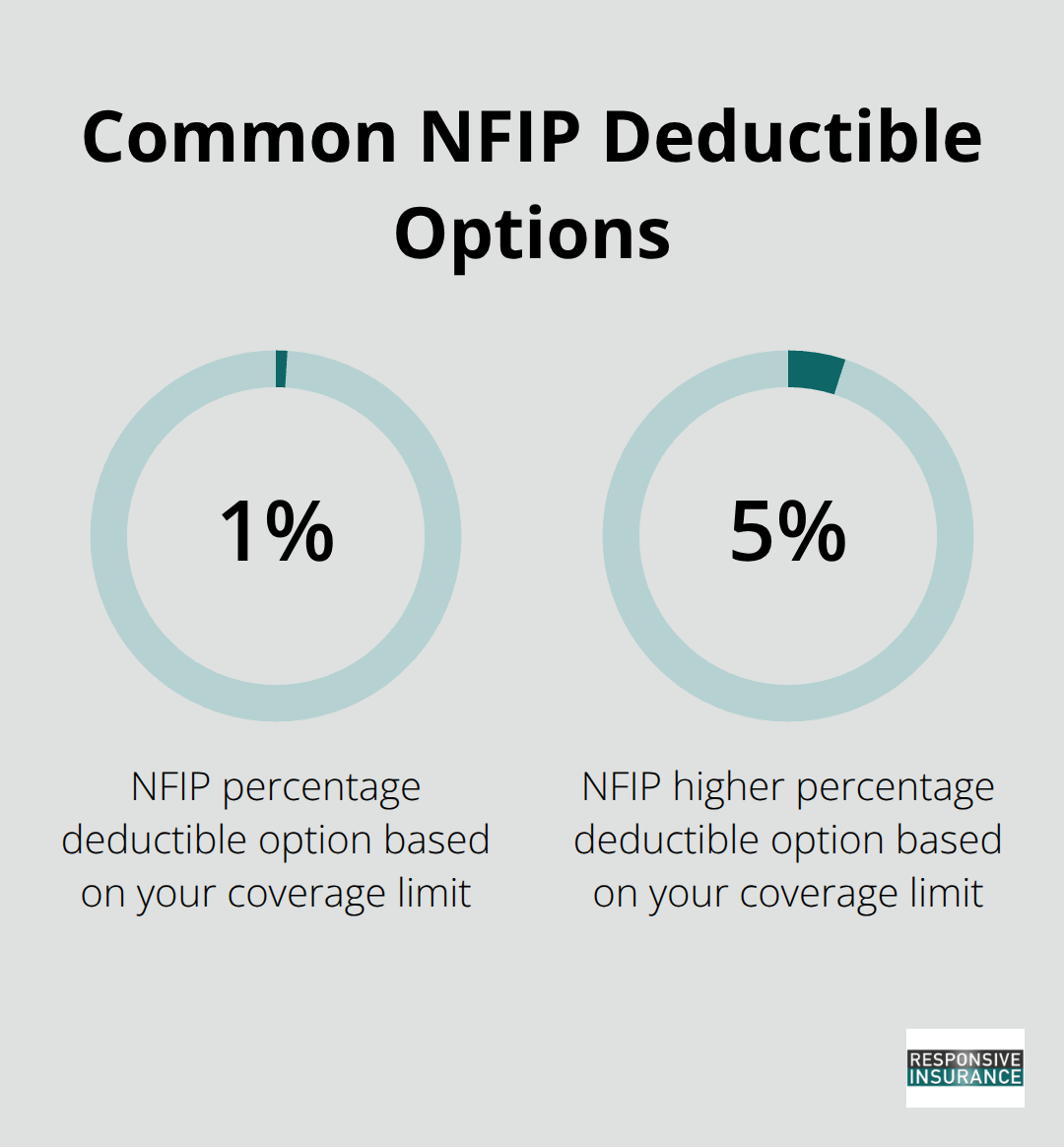
Contact an independent agent with flood expertise and provide your property address, elevation certificate, and home value. Request quotes from both NFIP and at least two private carriers. The agent should show you exact premium comparisons, coverage limits, deductibles, and claims-handling timelines for each option. Pay attention to deductibles-NFIP typically uses 1 percent or 5 percent of coverage limits, while private carriers often offer $1,000 to $5,000 flat deductibles, which may cost less for high-value homes.
Ask your agent about mitigation discounts: completed flood vents, elevated utilities, sump pumps, or backflow valves often qualify for premium reductions with private carriers. Your agent should also explain non-renewal risk-if a private carrier drops flood coverage in your area, you need a backup plan. This is why many Naples residents maintain NFIP as their primary policy while using private coverage only for the enhanced limits they truly need. An agent familiar with both markets can structure this approach so you pay for what matters most rather than duplicating base coverage unnecessarily.
Final Thoughts
Your Florida flood insurance choices ultimately rest on three factors: your home’s flood zone, your property’s replacement cost, and your preference for stability versus flexibility. NFIP guarantees coverage and renewal regardless of claims history, while private flood insurance often delivers faster claims processing and higher limits at competitive rates for moderate-risk homes. An independent agent familiar with Naples’ specific vulnerabilities can run exact quotes from both markets and show you the real dollar difference for your property.
Obtain your elevation certificate, calculate your home’s true replacement cost, and inventory your belongings before comparing policies. These steps eliminate guesswork and let you evaluate actual coverage limits, deductibles, and claims timelines rather than relying on estimates. A policy with lower premiums but inadequate dwelling limits leaves you exposed to catastrophic loss, while actual cash value contents coverage means depreciation reduces what you recover on personal items.
Responsive Insurance, Inc. works with multiple A-rated insurance companies to compare your options and find the coverage that matches your home’s risk and your budget. Contact us to discuss your specific property, review quotes side by side, and structure a flood insurance strategy that protects what matters most.


