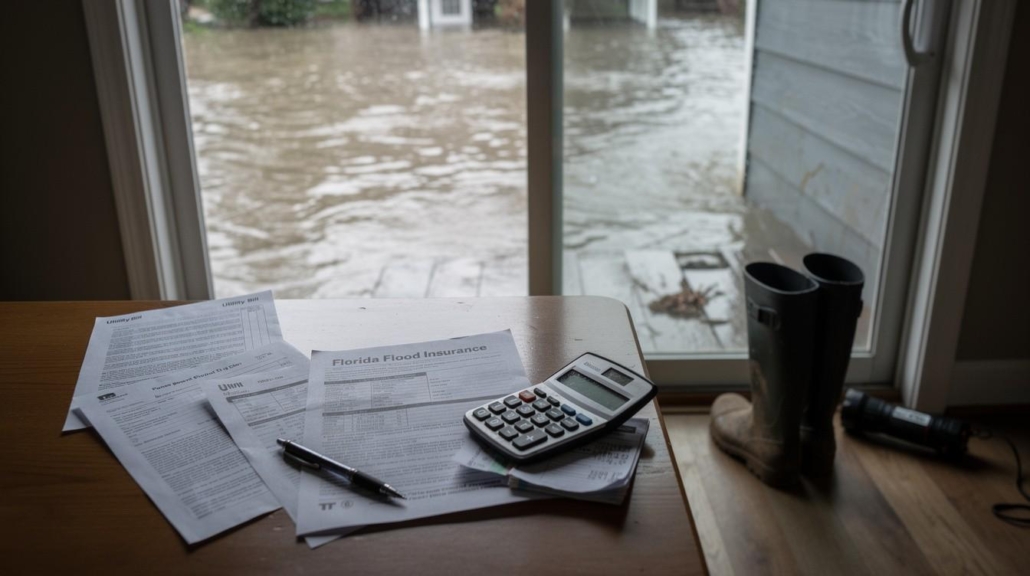
Flood Insurance Costs Florida: Budgeting for Sudden Events
Flood insurance costs in Florida vary dramatically based on where your home sits and what protections you have in place. At Responsive Insurance, Inc., we help Naples homeowners understand these expenses so they can budget effectively.
This guide walks you through the factors that shape your premiums and shows you concrete ways to reduce what you pay.
What Determines Your Flood Insurance Rate
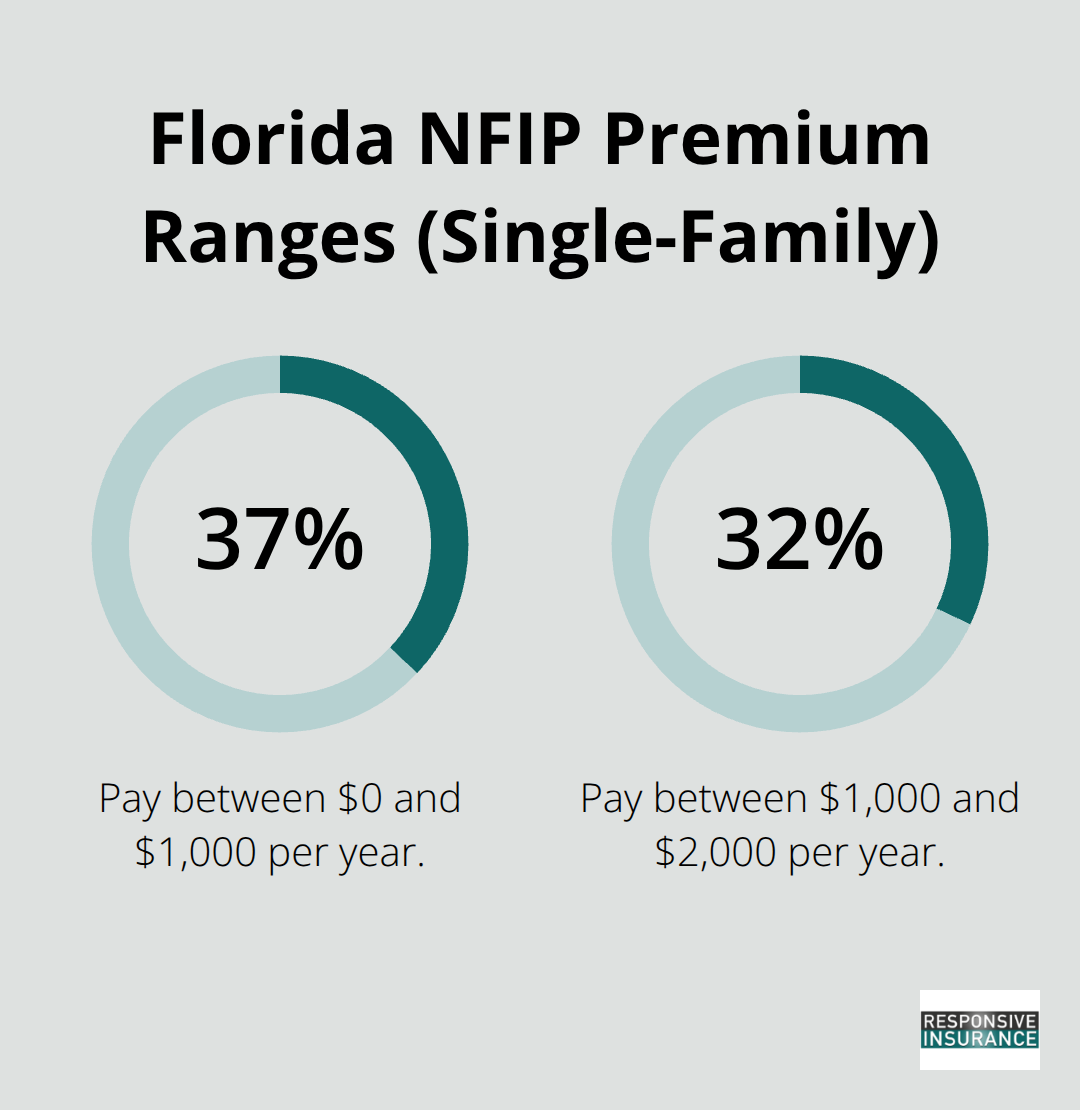
Your flood insurance premium depends far more on your specific property than on broad zones. FEMA’s approach to pricing individual flood risk means that two homes on the same street can pay vastly different premiums. The NFIP bases premiums on the likelihood of different flood perils, your building’s foundation type, first-floor elevation, distance to flood sources, replacement cost value, flood adaptation measures like flood vents, and levee performance. About 37% of single-family NFIP policyholders in Florida pay between zero and $1,000 annually, while 32% pay between $1,000 and $2,000 per year. Homes with annual costs under $1,000 have an average replacement cost value of about $400,587. Higher replacement costs push premiums up because they increase rebuild expenses.
If your home sits lower than neighboring properties, you’ll pay more. If you’ve installed flood vents or elevated your first floor, those improvements reduce your rate.
Your Flood Zone Matters, But It’s Not Everything
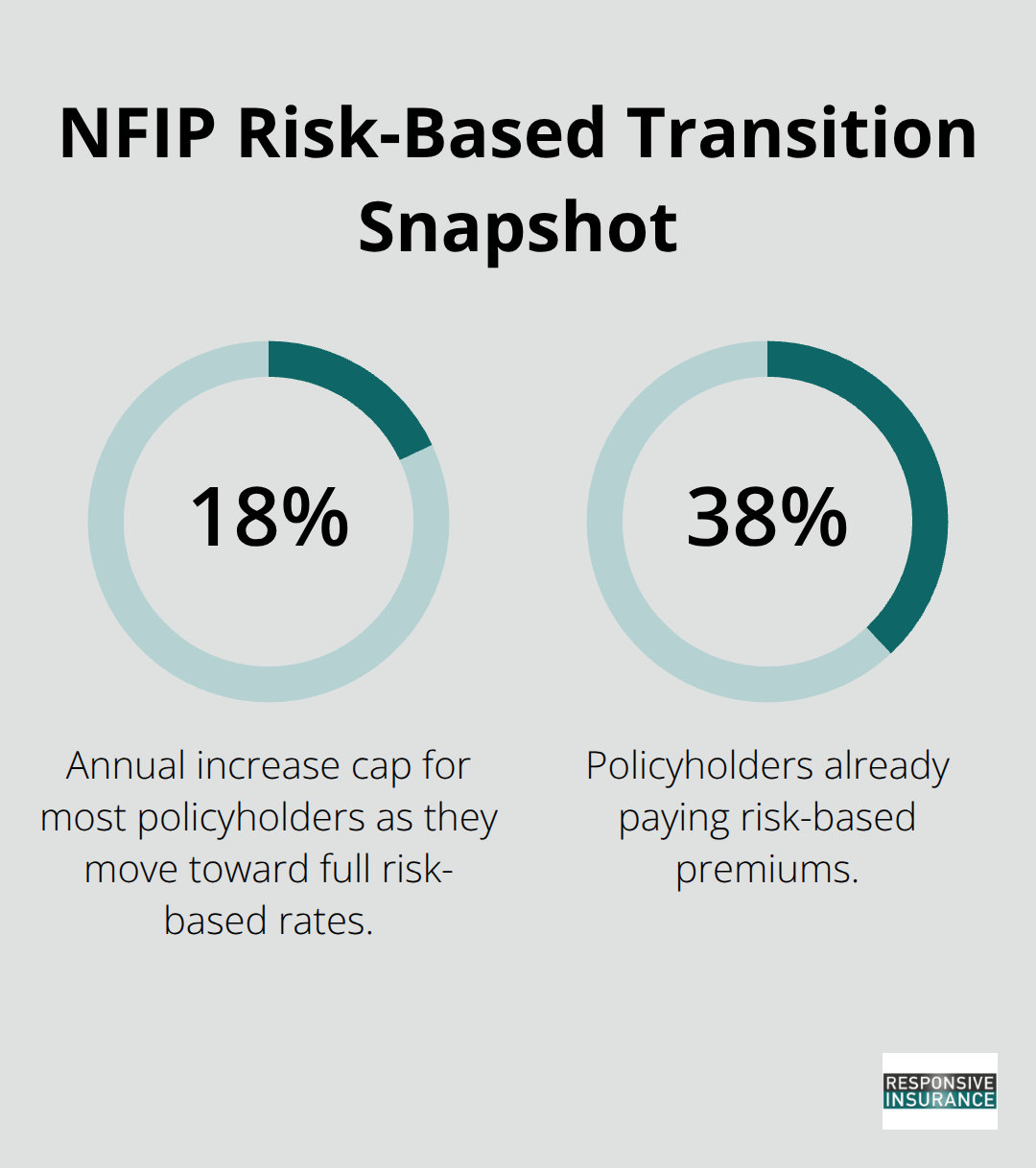
The 2024 Flood Insurance Rate Maps now in effect for Naples reflect updated, more detailed flood hazard data than the 2012 maps they replaced. Naples has three main Special Flood Hazard Areas: Zone AH with shallow flooding of one to three feet, Zone AE covering the one percent annual-chance flood with some wave run-up, and Zone VE as a coastal high-hazard area with one percent annual-chance flooding and wave action of three feet or more. All three require flood insurance if you have a federally backed mortgage. Zone X areas outside the one percent annual-chance flood zone don’t require coverage but are strongly recommended since about 20% of all flood claims come from outside high-risk zones. Check your specific flood zone using the City of Naples interactive flood maps tool or contact the Naples Floodplain Coordinator at 239-213-5039 for official designation. Understanding your zone helps you anticipate whether premiums will rise as the NFIP transitions policyholders toward full risk-based rates. Most policyholders see annual increases capped at 18% as they move toward their actuarial rate, but the timeline depends on how far below full-risk your current premium sits.
Elevation and Home Characteristics Drive Individual Costs
A property’s first-floor elevation above the Base Flood Elevation is the single strongest factor in your rate calculation. Homes elevated well above the BFE pay substantially less than those at or below it. Your home’s foundation type also matters: elevated structures cost less to insure than those with basements or crawl spaces that trap floodwater. Building materials and age influence risk too. Newer construction with flood-resistant designs and materials qualifies for better rates than older homes with standard materials. Replacement cost value directly affects your premium; a $600,000 home costs more to insure than a $300,000 home in the same flood zone. Distance to flood sources like rivers, streams, or storm surge pathways affects your individual risk score. Properties protected by well-maintained levees may qualify for lower premiums. When you shop for coverage or consider upgrades, prioritize elevation improvements over other modifications. Raising your first floor by even two feet can meaningfully reduce long-term costs, especially as the NFIP phases in higher risk-based rates.
How Premiums Shift Over Time
The NFIP transitioned from a legacy rating method to its current pricing approach, which means your costs may differ from past years. If your current premium sits below the full risk-based rate, annual increases move you toward that actuarial amount through a glide path (capped at 18% per year for most policyholders). Once you reach the full-risk rate, premiums stop rising annually unless your property’s risk profile changes. Development and infrastructure changes in your community can increase or reduce flood risk across the area, which affects future premiums. About 38% of policyholders already pay risk-based premiums, while others pay less due to caps and subsidies. Understanding this trajectory helps you plan for potential increases and identify when home improvements might offset rising costs.
The risk environment is dynamic, so what you pay today reflects current flood hazard data and your property’s specific characteristics.
How to Budget for Flood Insurance Without Breaking Your Annual Plan
Get an Actual Quote for Your Property
Flood insurance isn’t a one-time expense you can ignore after purchase. The NFIP uses the best available flood risk data to set premiums based on each property’s individual risk, so treating it as a fixed cost is a mistake. Start with an actual quote for your property rather than guessing based on averages. Your specific home’s elevation, foundation type, and distance to flood sources determine your premium. Contact your insurance agent and request quotes from at least two different insurers before committing. The NFIP isn’t your only option anymore-Florida has expanded private flood insurance, and comparing an NFIP quote against private policies often reveals significant savings, especially for higher-value homes.
Plan for Annual Premium Increases
Once you have a real number, add 15% to 18% to your budget annually since most policyholders see increases capped at that level as they transition toward full-risk rates. This approach prevents the shock of renewal notices that arrive higher than expected. Naples residents benefit from a specific advantage: the city’s Community Rating System Rating Class 5 qualifies you for up to a 25% discount on standard NFIP policies. That discount alone can reduce a $1,000 annual premium to $750, which is substantial when budgeting. Ask your agent whether you qualify and confirm the discount applies to your quote before finalizing coverage.
Compare Coverage Limits and Additional Protections
Shopping for flood insurance requires more than price comparison. Coverage limits matter just as much as premiums. The NFIP caps building coverage at $250,000 for single-family homes and contents coverage at $100,000, but private insurers often offer higher limits that better match expensive properties. Some NFIP policies include dislocation coverage for temporary housing and meals if flooding forces you to relocate, while others don’t-verify what’s included in each quote. The 30-day waiting period applies when you purchase flood insurance, meaning coverage doesn’t activate immediately. If you live in a Special Flood Hazard Area with a federally backed mortgage, you must carry flood insurance, so purchase it now rather than waiting for a storm threat.
Invest in Mitigation to Reduce Long-Term Costs
Mitigation investments reduce your long-term costs more effectively than shopping alone. Elevation of your first floor above the Base Flood Elevation produces the largest rate reduction, but installation of flood vents in foundation walls or upgrades to flood-resistant materials also lower premiums. These improvements require time and money upfront, but they offset premium increases over multiple years. Before you make any structural changes, contact the Naples Floodplain Coordinator at 239-213-5039 to understand what modifications the city permits and whether they’ll reduce your risk rating.
Review Your Coverage Annually to Stay Competitive
Your coverage needs change as your property evolves and the NFIP’s rate environment shifts. Don’t assume last year’s quote remains competitive-private flood options expand regularly, and your home’s improvements may qualify for better rates than when you originally purchased. Annual reviews with your agent help you identify rate reductions from mitigation work and catch new coverage options that fit your budget. This ongoing attention to your policy positions you to make informed decisions about the next phase of flood protection planning.
Structural Upgrades That Actually Cut Your Premiums
Elevation improvements deliver the most significant premium reductions available to Florida homeowners, and the numbers justify the investment. Raising your first floor above the Base Flood Elevation can reduce your annual premium by 30% or more, depending on how far below the BFE your home currently sits. FEMA’s pricing approach heavily weights first-floor elevation because it directly correlates with flood damage risk-a home elevated two feet above the BFE experiences dramatically different water exposure than one at or below it. If your current premium runs $1,500 annually, elevation work that qualifies for a 30% reduction saves you $450 per year. Over a decade, that’s $4,500 in savings, which offsets a significant portion of elevation costs.
Understanding Elevation Costs and Timeline
Residential elevation typically costs $20,000 to $100,000 depending on your home’s size and foundation type. However, if you’re paying the full actuarial rate and expecting 18% annual increases, elevation becomes financially rational within five to seven years. Before you pursue elevation, contact the Naples Floodplain Coordinator at 239-213-5039 to confirm the city permits your planned work and understand exactly how much elevation you need. Some properties only require one to two feet of additional height to move significantly lower on the risk scale, while others need more substantial work.
Flood Vents and Sump Pumps: Faster Alternatives
Flood vents in foundation walls and crawl spaces offer a faster, cheaper alternative that still moves the needle on your rate. Installing flood vents costs between $500 and $2,000 per opening and allows floodwater to flow through your foundation rather than building up pressure and causing structural damage. The NFIP recognizes flood vents as a mitigation measure, and properties with properly installed vents typically see 5% to 15% premium reductions.
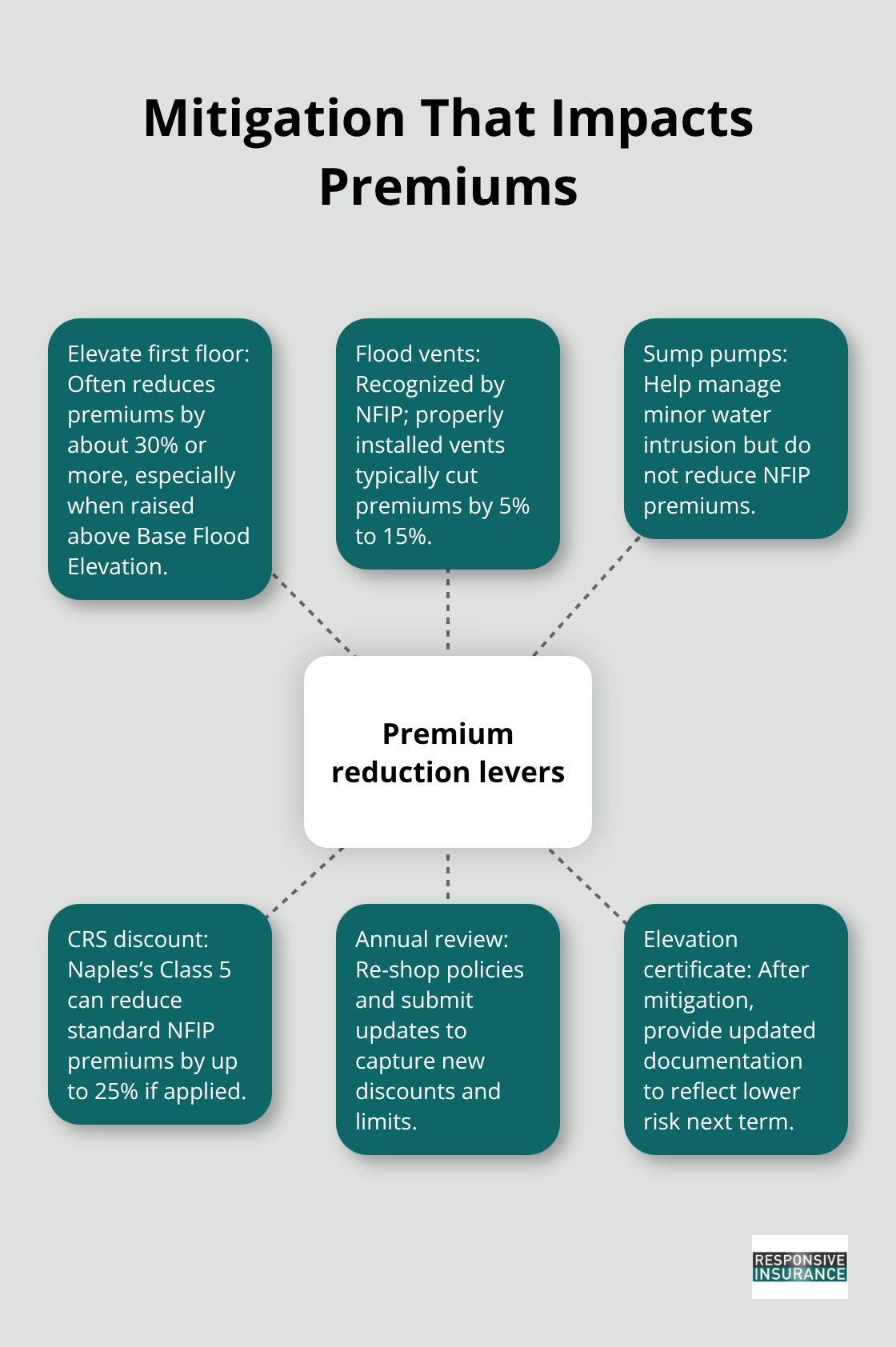
Sump pumps protect your basement or crawl space by actively removing water that enters during minor flooding events, but they only work if power remains available and you maintain them properly. Unlike elevation or flood vents, sump pumps don’t reduce NFIP premiums because they don’t address structural vulnerability-they function as damage prevention rather than permanent risk reduction. Install them if your property experiences standing water, but treat them as damage prevention rather than rate reduction strategy.
Timing Mitigation Work With Policy Reviews
Your agent should review your coverage every twelve months, not just at renewal, because premium reductions from completed mitigation work often don’t appear until your next policy term. If you elevated your first floor in 2025, your agent needs to request a new flood elevation certificate and updated risk assessment before your 2026 renewal to capture the rate reduction. Additionally, private flood insurers expand their offerings regularly, and a policy that cost more than NFIP coverage last year might now offer better rates and higher limits.
Naples residents specifically benefit from the Community Rating System discount that reduces NFIP premiums by up to 25%, but you must verify your agent applies it to every quote. Some agents overlook this discount, so explicitly confirm it’s included in your renewal notice. If you’re considering structural improvements, prioritize elevation over other upgrades-it delivers the largest rate reduction and addresses the root cause of flood damage rather than managing water after it arrives. Request a pre-mitigation and post-mitigation quote from your agent to see the exact savings before you commit to expensive work. This concrete comparison prevents you from investing thousands in improvements that yield minimal premium reductions.
Final Thoughts
Flood insurance costs in Florida demand attention and planning, not avoidance. About 37% of single-family NFIP policyholders pay under $1,000 annually, while 32% pay between $1,000 and $2,000-your actual cost depends entirely on your property’s elevation, foundation type, distance to flood sources, and replacement value. Waiting until a storm approaches guarantees you’ll miss the 30-day waiting period and face unprotected exposure, so start now to shop multiple quotes and understand your flood zone.
The most effective strategy combines three actions: get an actual quote for your specific property rather than relying on averages, ask your agent whether you qualify for Naples’s Community Rating System discount (which cuts NFIP premiums by up to 25%), and evaluate whether elevation or flood vents make financial sense for your situation. Elevation delivers the largest premium reductions, often 30% or more, which justifies the upfront cost within five to seven years if you’re paying full actuarial rates. As the NFIP phases policyholders toward risk-based premiums with annual increases capped at 18%, your budget must account for rising costs.
Private flood insurance options continue expanding in Florida, and comparing NFIP quotes against private policies regularly reveals savings you’d otherwise miss. Annual reviews with your agent catch these opportunities and confirm that mitigation work you’ve completed actually reduces your next renewal premium. Contact Responsive Insurance, Inc. to discuss your flood insurance needs and explore how mitigation investments might lower your long-term costs.


