Southwest Florida Rental Insurance: Protecting Vacation Homes And Rentals
Owning a vacation rental in Southwest Florida comes with real financial exposure. Guest injuries, property damage, and lost income from unexpected closures can quickly drain your profits.
Southwest Florida rental insurance fills these gaps with targeted coverage that protects both your property and your wallet. We at Responsive Insurance, Inc. help property owners understand what they need and how to get it in place.
Why You Need Specialized Rental Insurance
Standard homeowners insurance won’t cover your vacation rental. The Insurance Information Institute confirms that HO-3 policies explicitly exclude short-term rental activity, which means guest injuries, property damage from guests, and lost booking income fall outside your protection. In Naples and across Southwest Florida, this gap exposes you to serious financial risk. A single guest injury lawsuit can exceed $100,000 in liability costs, and guest-caused damage might run $10,000 to $50,000 depending on the property. Without rental-specific coverage, you pay these costs entirely from your pocket.
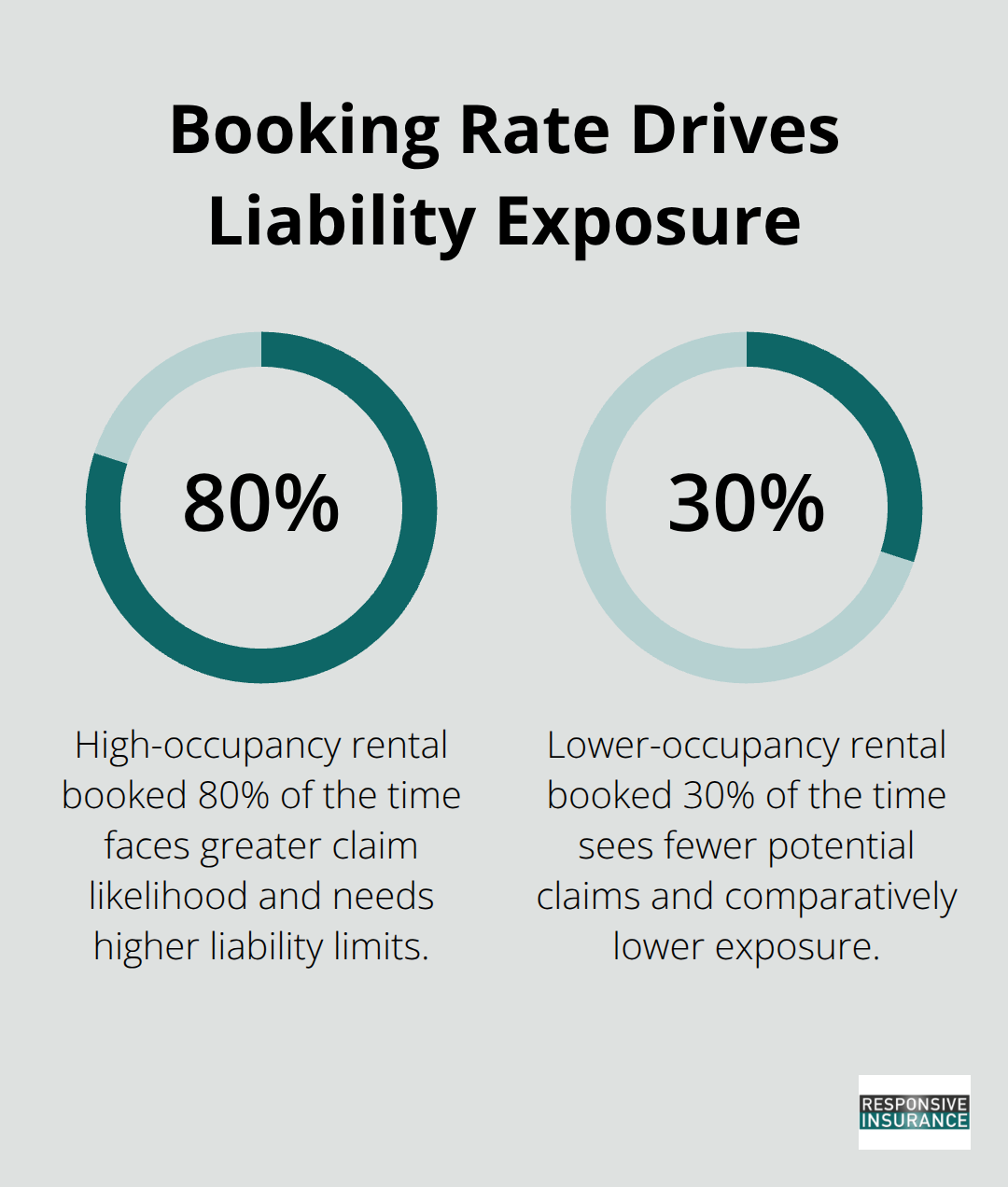
Vacation rental insurance addresses this head-on by covering liability claims that arise from guest injuries or property damage they cause, protecting your dwelling and furnishings against damage events, and reimbursing lost rental income when a covered loss makes the property uninhabitable. The National Association of Insurance Commissioners notes that Florida homeowners insurance premiums average around $11,000 annually, roughly $3,300 above the national average, because of hurricane and flood risk. Your vacation rental faces even higher exposure because guest turnover increases liability risk. A property booked 80 percent of the time carries substantially more liability exposure than one booked 30 percent of the time, simply because more guests mean more potential claims.
Guest Liability Claims Demand Higher Coverage Limits
Liability coverage in vacation rental policies typically starts at $1,000,000 or higher, compared to the $100,000 to $300,000 limits in standard homeowners policies. This matters because a guest who slips on a wet deck, gets injured by a pool, or causes damage to neighboring properties can file a claim that exhausts low liability limits quickly. Properties with pools carry elevated exposure, and Florida pool-safety requirements add complexity. Adequate liability limits protect your assets in Southwest Florida-they’re not optional.
Income Loss During Repairs Disrupts Your Business
Loss of rental income coverage reimburses you when a covered peril temporarily prevents bookings. If a hurricane damages your roof and repairs take three months, and you normally earn $3,000 per month, this coverage replaces up to your policy limit during that downtime. Seasonal revenue fluctuations matter here: peak-season earnings should drive your loss-of-income limit to avoid underinsuring during your highest-revenue months. Without this protection, you absorb the full income loss yourself while still managing repair costs and mortgage payments.
Understanding what standard policies exclude sets the stage for evaluating the specific coverage options available to rental property owners in Southwest Florida.
What Your Rental Insurance Actually Protects
Vacation rental insurance in Southwest Florida covers three distinct areas that standard homeowners policies ignore completely. Your physical building and attached structures receive protection against damage from guest-related incidents, weather events, and other covered perils. The furnishings and personal property inside the rental also receive protection so that damaged couches, broken appliances, and stolen electronics don’t come out of your pocket. Loss of rental income coverage ensures continuous rental income when your property becomes uninhabitable due to a covered peril.
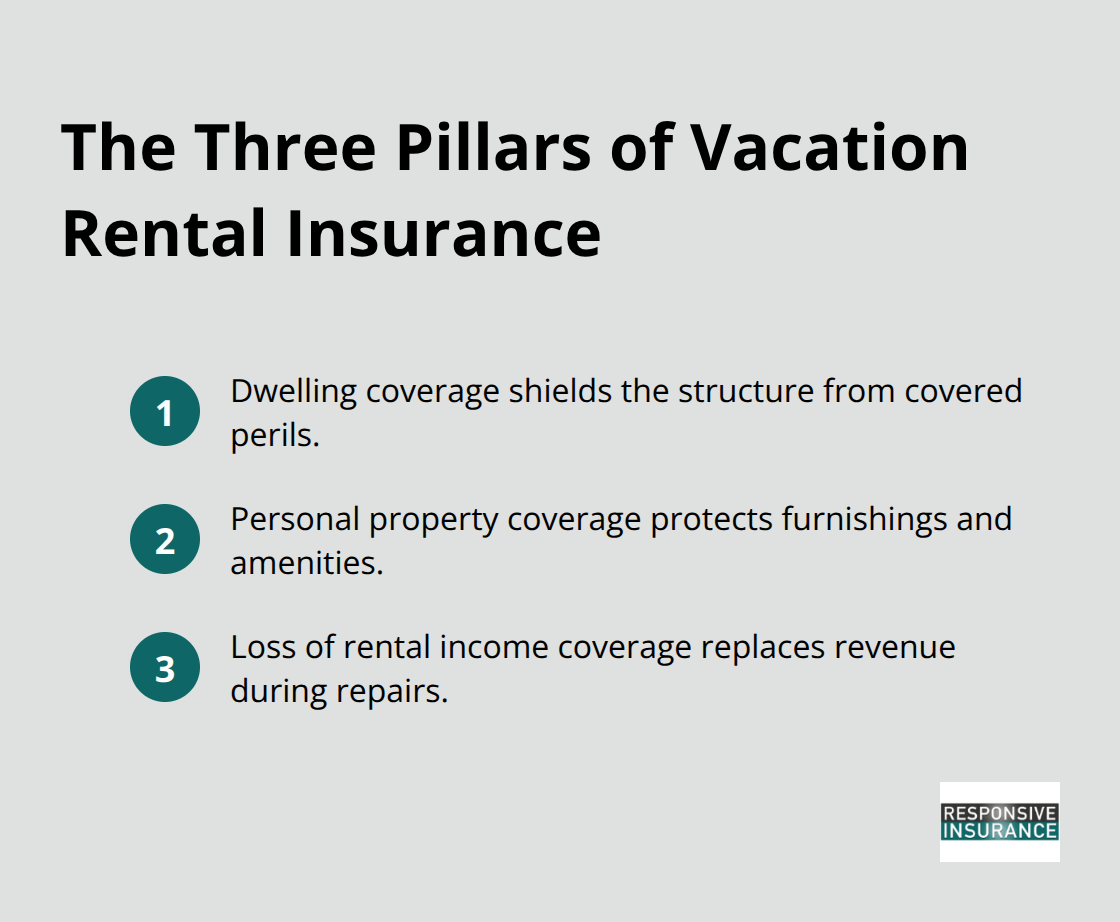
These three pillars work together to protect both your asset and your cash flow.
Dwelling Coverage Protects Your Structure and Permanent Improvements
Dwelling coverage protects the structure itself-walls, roof, fixtures, and permanent improvements. In Southwest Florida, replacement costs run high because of construction expenses and hurricane-resistant building codes. A modest two-bedroom cottage in Naples might cost $300,000 to $400,000 to rebuild, while a beachfront property can easily exceed $800,000. Your policy limit must match the actual replacement cost, not the market value of the property. Underinsuring creates serious problems because if damage occurs and your limit falls short, you absorb the gap yourself.
Personal Property Coverage Protects Furnishings and Guest Amenities
Personal property coverage inside the rental protects furnishings, linens, kitchenware, electronics, and amenities like grills or outdoor furniture. A guest-caused fire that destroys kitchen cabinets and appliances triggers this coverage to pay for replacements. Theft of the television or damage to the air conditioning unit also falls under this protection. The Insurance Information Institute emphasizes that maintaining a thorough property inventory with photos, serial numbers, and receipts streamlines claims and expedites payouts. Photograph everything and store documentation safely before you ever need it.
Loss of Income Coverage Replaces Revenue During Downtime
Loss of income coverage reimburses your expected earnings when a covered peril makes the property uninhabitable. A severe storm that damages the roof and requires four months of repairs creates a significant income gap. If your property normally generates $4,000 per month, this coverage replaces up to your policy limit during that period. The key is setting your limit high enough to cover your actual monthly revenue, accounting for seasonal swings. A property that earns $5,000 monthly during peak season but only $2,000 during off-season should carry a loss-of-income limit that reflects peak-season earnings, because damage costs the same regardless of timing.
Seasonal Revenue Patterns Drive Your Coverage Decisions
Without adequate loss-of-income limits, you face a shortfall where repair expenses and lost income hit simultaneously while you still owe your mortgage. In Southwest Florida’s competitive rental market, sitting vacant for months while repairs happen costs you bookings and income you cannot recover. This coverage bridges that gap so you stay financially stable during recovery. Your next decision involves assessing which specific risks your property faces and how to match your coverage limits to those exposures.
How to Match Your Property’s Risk Profile to the Right Coverage
Your property’s specific location, occupancy patterns, and physical features determine which coverage limits and deductibles actually protect you. A beachfront condo in Naples faces different risks than an inland single-family rental in Collier County, yet both need tailored policies that reflect their exposures. Start with FEMA flood maps to identify your actual hurricane and flood risk-they show whether your property sits in a high-risk flood zone or a lower-risk area. Coastal properties within one mile of the Gulf face substantially higher wind deductibles, often 1 to 5 percent of your dwelling coverage value. A $400,000 beachfront home could require a $20,000 out-of-pocket deductible for wind damage before insurance kicks in, which means your policy must account for this gap. Inland properties typically carry lower wind deductibles but may still need separate flood insurance if they’re in a flood-prone area.
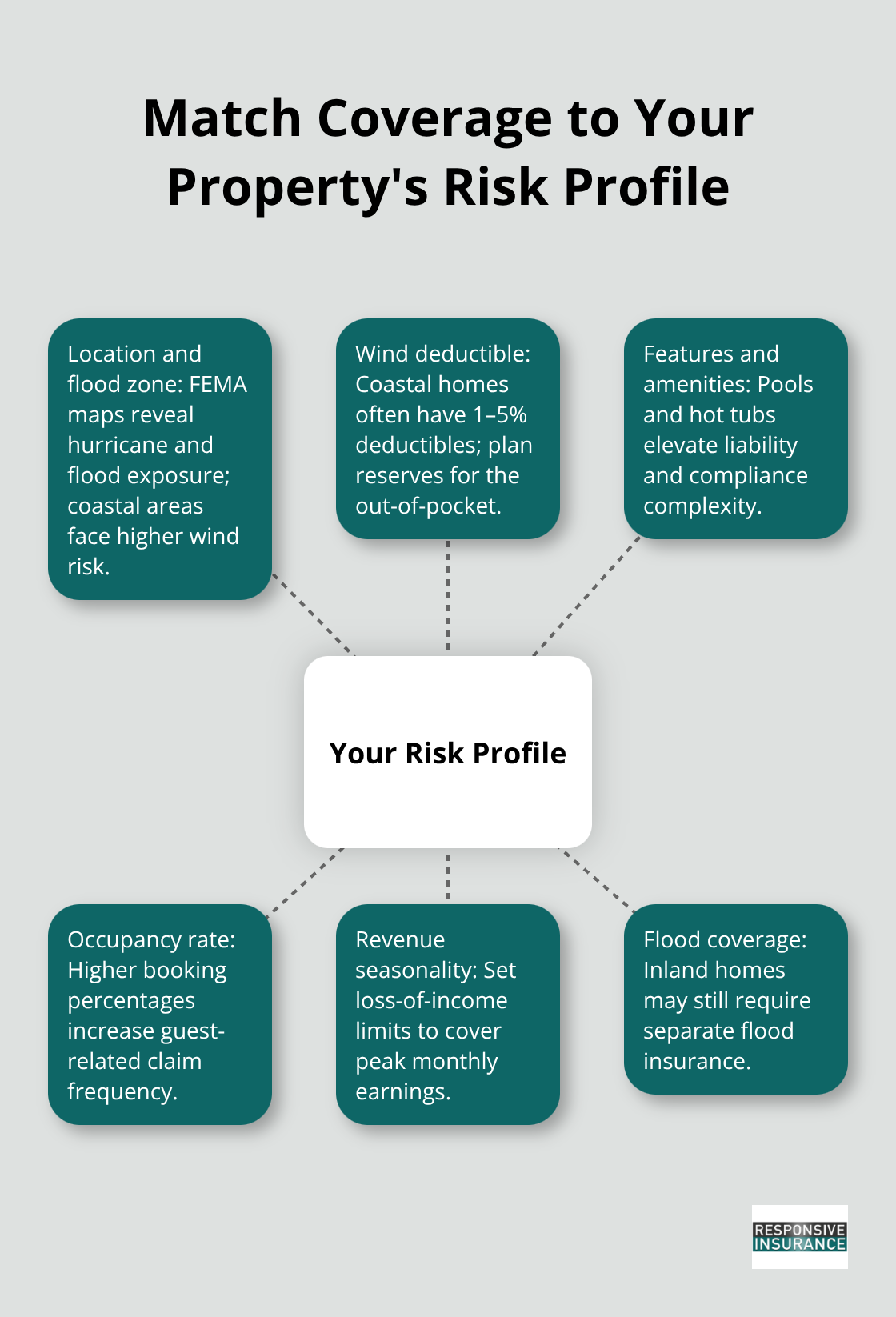
Properties with pools or hot tubs demand higher liability limits because Florida pool-safety regulations add legal complexity and guest-injury exposure. Your occupancy rate also matters: a property booked 80 percent of the year faces more guest-related claims than one booked 30 percent, so higher liability limits become more important for high-turnover rentals. Calculate your actual monthly rental revenue during peak and off-season periods, then set your loss-of-income limit to cover your highest-earning months. If you earn $5,000 monthly during summer but only $2,000 during winter, your loss-of-income limit should reflect the peak amount because damage can happen anytime and will disrupt your best-earning periods.
Look Beyond Price When Comparing Policies
Insurance quotes from different carriers often vary wildly in price, but cheaper premiums frequently hide higher deductibles, lower coverage limits, or exclusions that create gaps when claims happen. The National Association of Insurance Commissioners recommends comparing admitted carriers regulated by the Florida Office of Insurance Regulation, which provide guaranty fund protection if an insurer fails. Surplus-lines carriers may offer lower rates but lack this protection, leaving you exposed if the company becomes insolvent during a major disaster. When evaluating quotes, check whether guest-caused theft and intentional damage are covered-many basic policies exclude these, forcing you to cover expensive guest damage yourself. Verify that your wind deductible percentage is clearly stated and that flood coverage is either included or available as an add-on, since standard policies typically exclude flood damage entirely.
Identify Hidden Gaps in Coverage
Ask whether loss-of-income caps apply-some policies limit how much they’ll reimburse monthly or annually, which could leave you short during a lengthy recovery. Properties with beds should confirm that bed bug and flea coverage is included or available as an endorsement, since these claims can be expensive and many standard policies exclude them. Work with an independent agent who can access multiple carriers and explain how each policy’s deductibles, limits, and exclusions match your specific property and revenue patterns. An agent familiar with Southwest Florida rental properties understands local regulations too-Collier County requires short-term rental registration for certain occupancy patterns and requires listing your Rental Registration Number in all advertising, and coverage should align with these requirements to avoid compliance gaps.
Final Thoughts
Protecting your vacation rental in Southwest Florida requires more than hoping nothing goes wrong. Standard homeowners insurance leaves you exposed to guest liability claims, property damage costs, and lost income that can devastate your rental business. Southwest Florida rental insurance fills these gaps with dwelling protection, personal property coverage, and loss-of-income reimbursement designed specifically for short-term rentals.
Assess your property’s actual risks by checking FEMA flood maps, calculating your peak monthly revenue, and identifying whether pools or high-occupancy rates increase your liability exposure. Then compare quotes from multiple carriers, paying close attention to deductibles, coverage limits, and exclusions rather than price alone. A policy that costs $200 less per year but carries a $20,000 wind deductible or excludes guest-caused theft creates far greater financial exposure than a slightly higher premium with comprehensive protection.
We at Responsive Insurance, Inc. work with multiple A-rated insurance companies to compare coverage options and find the best fit for your specific property and budget. As an independent agency based in Naples, we understand Southwest Florida’s unique risks, from hurricane exposure to local rental regulations that affect your coverage needs. Contact us today to discuss your rental property’s protection and get quotes that match your actual exposure.


