
Naples Flood Insurance: Safeguarding Your Home Against Storm Surges
Naples sits in one of Florida’s most hurricane-prone regions, where storm surge and flooding threaten homes every year. Standard homeowners insurance won’t cover flood damage, leaving many residents financially exposed when water rises.
At Responsive Insurance, Inc., we help Naples homeowners understand their Naples flood insurance options and protect what matters most. This guide walks you through coverage choices, risk assessment, and the steps to get properly insured before hurricane season arrives.
Why Naples Needs Flood Insurance Now
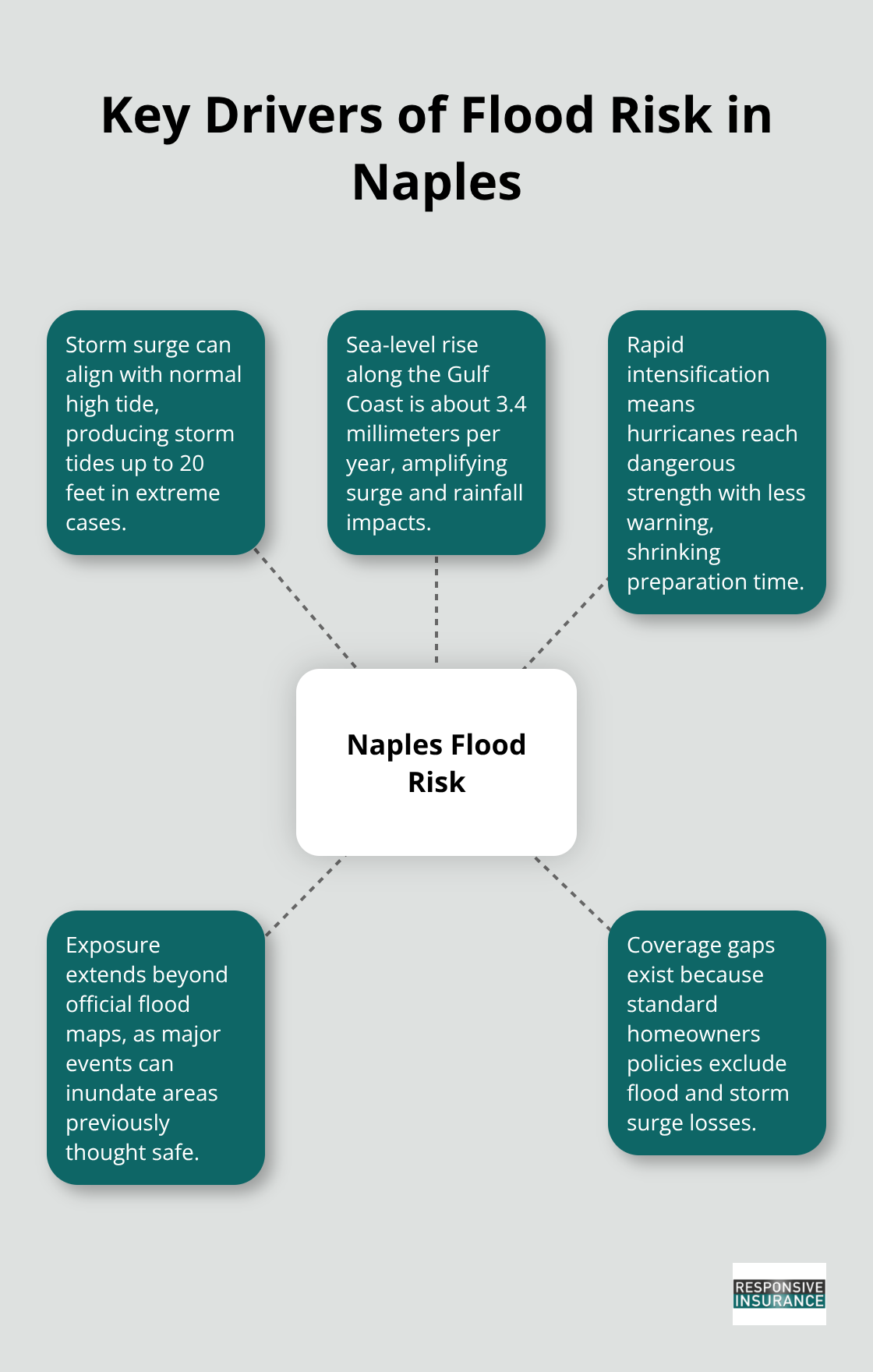
Hurricane season in Southwest Florida runs from June through November, and the statistics tell a sobering story. Since 2000, the Naples area has experienced direct hits or near-misses from major hurricanes including Charley, Irma, and Ian. According to the National Hurricane Center, Florida’s western coast sees tropical storm conditions roughly every two years on average. What makes this threat acute for Naples homeowners is storm surge, which can coincide with normal high tide, resulting in storm tides reaching up to 20 feet or more in some cases.
Standard Policies Leave You Exposed
Your standard homeowners policy simply will not cover any flood damage. The Insurance Information Institute reports that homeowners insurance explicitly excludes flood and water damage caused by storm surge, heavy rainfall, or coastal flooding. This gap in coverage has left thousands of Florida residents facing catastrophic losses when water breaches their homes. If you own property in Naples, a hurricane-driven flood event could wipe out your equity with zero insurance protection under a traditional homeowners policy.
Rising Sea Levels Compound the Danger
Sea levels along Florida’s Gulf Coast are rising at roughly 3.4 millimeters per year according to NOAA data, which compounds the danger during storm events. When a hurricane combines with already-elevated water levels, even homes that seemed safe in past decades now face genuine inundation risk. The U.S. Geological Survey has documented that Southwest Florida’s subsiding geology makes the region even more vulnerable to relative sea level rise compared to other coastal areas.
Storms Intensify Faster Than Before
Storm intensity itself is shifting too. Research from the National Oceanic and Atmospheric Administration indicates that Atlantic hurricanes intensify more rapidly than they did decades ago, meaning storms can reach dangerous strength with less warning. For Naples residents, this means that properties in flood zones and even those outside official flood maps can experience damaging water intrusion during major events.
Understanding your actual flood risk requires more than assumptions about your location. The next section walks you through the coverage options available to protect your home.
Your Flood Insurance Coverage Options
The National Flood Insurance Program, administered by FEMA, covers up to $250,000 for building coverage and $100,000 for personal property on residential properties. These limits sound substantial until water fills your home. Interior water damage remains one of the most consistent sources of insurance claims and losses. If storm surge pushes three or four feet through your Naples home, NFIP coverage alone may not fully restore what you’ve lost. The NFIP also imposes a 30-day waiting period from the time you purchase a policy before flood coverage activates, meaning you cannot wait until a hurricane warning is issued to buy protection.
Private flood insurance alternatives have emerged across Florida and offer higher coverage limits, faster activation, and sometimes lower premiums than NFIP policies. Companies offering private flood coverage in Naples often provide building limits exceeding $500,000 and contents coverage up to $250,000 or more. Private carriers typically waive or shorten the waiting period, which matters significantly during hurricane season when storms develop rapidly.
NFIP Versus Private Coverage: Which Costs Less?
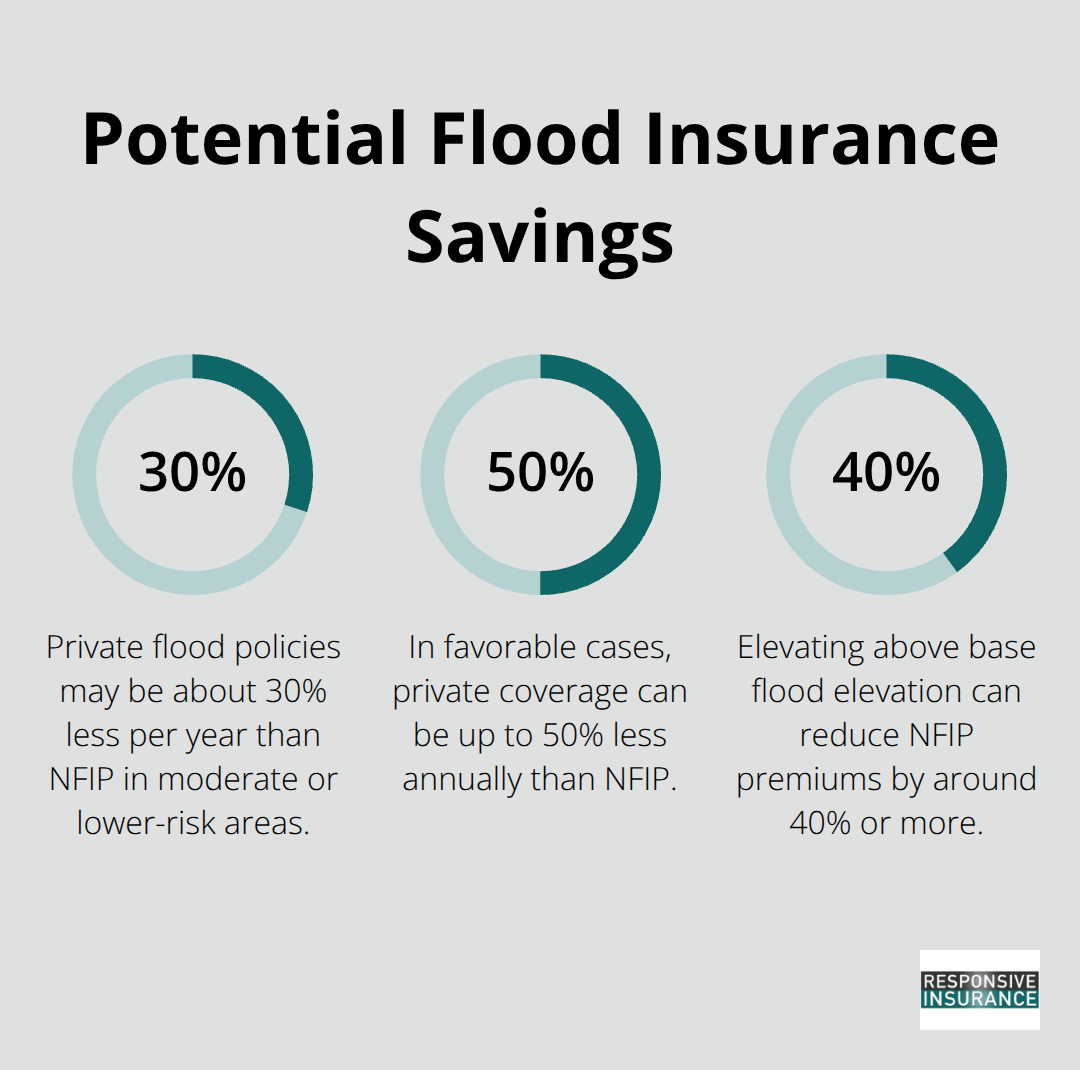
The NFIP remains the most affordable option for properties in high-risk flood zones because federal backing keeps premiums lower than private market rates. However, if your home sits in a moderate-risk area or outside designated flood zones altogether, private insurers often undercut NFIP pricing substantially. A private policy might cost 30 to 50 percent less annually while providing superior limits and faster claims processing. An independent agency in Naples compares both NFIP and private flood policies side-by-side so you see exactly what each option delivers for your specific property and risk profile.
The choice hinges on your home’s flood zone designation, replacement value, and your risk tolerance. Properties in SFHA zones designated by FEMA typically find NFIP more economical, while homes outside these zones benefit from private market competition.
Calculate Your True Replacement Cost
Your coverage amount should match your home’s replacement cost, not its market value. Many homeowners underestimate what reconstruction truly costs in Southwest Florida’s labor and material markets. Calculate your replacement cost by documenting your home’s square footage, construction type, foundation elevation, and building quality. Include not just structural repairs but also the cost of replacing personal property, removing debris, and addressing mold remediation. Most Naples homes built before 2000 lack proper elevation or flood-resistant construction, making water damage restoration expensive. Setting your coverage limit below true replacement cost leaves you absorbing the difference from your own pocket when a flood occurs.
Why Coverage Limits Matter More Than You Think
Interior water damage represents a significant financial risk for homeowners. Three or four feet of storm surge water multiplies that damage exponentially, potentially reaching $75,000 to $120,000 or more. The NFIP’s $250,000 building limit sounds adequate until you face actual reconstruction costs in today’s Southwest Florida market. Private policies that exceed $500,000 in building coverage provide the financial cushion that protects your equity when major storms strike. Your next step involves understanding exactly which flood zone your property occupies and what that designation means for your insurance options.
Getting Flood Insurance in Naples
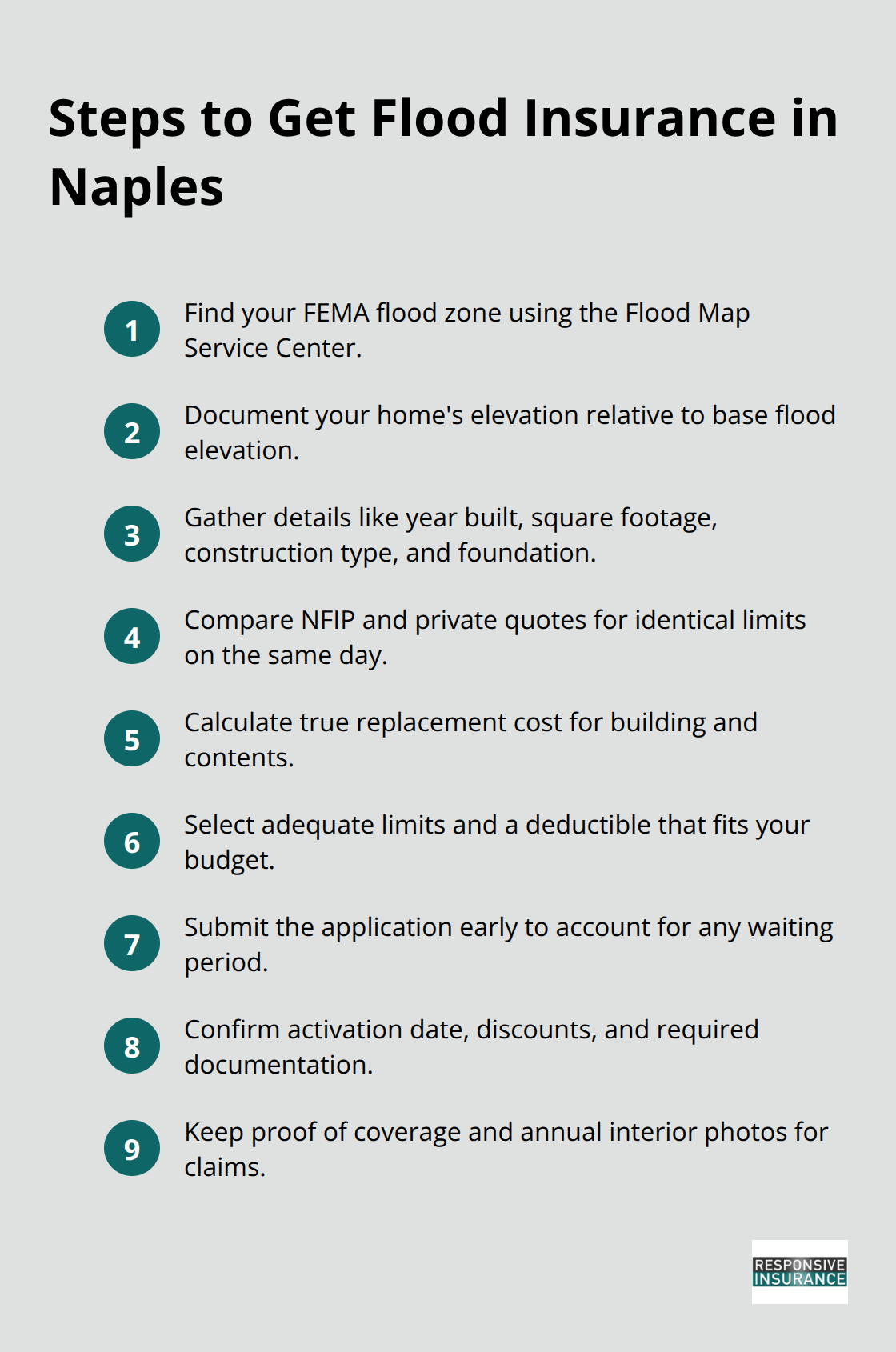
Start with FEMA’s Flood Map Service Center and enter your Naples address to identify your property’s flood zone. Your designation-whether high-risk Special Flood Hazard Area, moderate-risk zone, or outside mapped flood areas-directly determines which insurers will quote you and at what price. Homes in SFHA zones marked as AE or VE face mandatory flood insurance requirements if you have a mortgage, while properties in moderate zones like X-shaded areas qualify for lower premiums through private carriers. This single step eliminates guesswork and prevents you from wasting time with insurers who won’t cover your specific risk profile.
Once you know your zone, document your home’s elevation relative to the base flood elevation shown on the map. This measurement affects your premium significantly. Properties elevated above the base flood elevation qualify for substantial discounts on NFIP policies, sometimes reducing annual costs by 40 percent or more according to FEMA actuarial data.
Compare Quotes from Multiple Insurers
Request quotes from multiple carriers and reveal dramatic price differences that most Naples homeowners never discover. Contact NFIP-participating insurers alongside private flood carriers in Florida and request quotes for identical coverage amounts on the same day, since flood insurance rates fluctuate based on underwriting cycles. A property in a moderate-risk zone might see NFIP quotes around $800 annually while private insurers quote $450 to $600 for superior coverage limits and faster claims processing.
The difference between three quotes versus one quote frequently exceeds $300 per year, meaning you could waste thousands over a decade with the first offer. Request quotes that include both building coverage and contents protection, and ask each insurer specifically about waiting period terms, deductible options, and any discounts for elevation certificates or recent home improvements. An independent agent can streamline this process through simultaneous quotes from multiple carriers rather than having you contact each insurer individually.
Assess Your Home’s Replacement Cost
Your coverage amount should match your home’s replacement cost, not its market value. Many homeowners underestimate what reconstruction truly costs in Southwest Florida’s labor and material markets. Calculate your replacement cost through documentation of your home’s square footage, construction type, foundation elevation, and building quality. Include not just structural repairs but also the cost of replacing personal property, removing debris, and addressing mold remediation.
Most Naples homes built before 2000 lack proper elevation or flood-resistant construction, making water damage restoration expensive. Three or four feet of storm surge water multiplies that damage exponentially, potentially reaching $75,000 to $120,000 or more. Setting your coverage limit below true replacement cost leaves you absorbing the difference from your own pocket when a flood occurs.
Submit Your Application and Activate Coverage
Submit your application immediately rather than waiting for hurricane season to intensify. The 30-day waiting period on NFIP policies means that if you apply on August 1st, your coverage doesn’t activate until September 1st, potentially leaving you exposed during the season’s most active months. Private insurers often waive or shorten this waiting period, but you must confirm activation timing before signing your application.
Provide accurate information about your home’s construction year, square footage, foundation type, and any prior water damage or claims, as misrepresenting these details can result in claim denials later. Review your policy documents carefully before the coverage date, checking that your coverage limits match what you requested and that your deductible amount aligns with your financial situation. Most Naples homeowners should select a $2,500 deductible as the minimum, since lower deductibles increase premiums substantially while protecting against only minor water events.
Once your policy activates, maintain proof of coverage in an accessible location and photograph your home’s interior and contents annually for documentation purposes should you ever need to file a claim.
Final Thoughts
Flood damage devastates Naples homes and drains savings faster than almost any other disaster, yet standard homeowners insurance won’t cover it. Waiting until hurricane season peaks leaves you scrambling for protection you cannot obtain, and the 30-day waiting period on NFIP policies means you must act well before storms arrive. Your Naples flood insurance decision directly affects whether your property survives financially when the next major storm strikes.
You now understand that your flood zone designation, home elevation, and replacement cost determine which coverage options work best for your situation. Comparing quotes from multiple insurers reveals price differences that save hundreds annually while securing superior coverage limits and faster claims processing. Properties built before 2000 face particularly high restoration expenses when water intrudes, making adequate coverage limits essential rather than optional.
We at Responsive Insurance, Inc. work with multiple A-rated insurance companies to compare your flood insurance options and find the coverage that protects your equity without overpaying. Contact us to review your current situation and secure the flood protection your home needs before hurricane season intensifies.


