
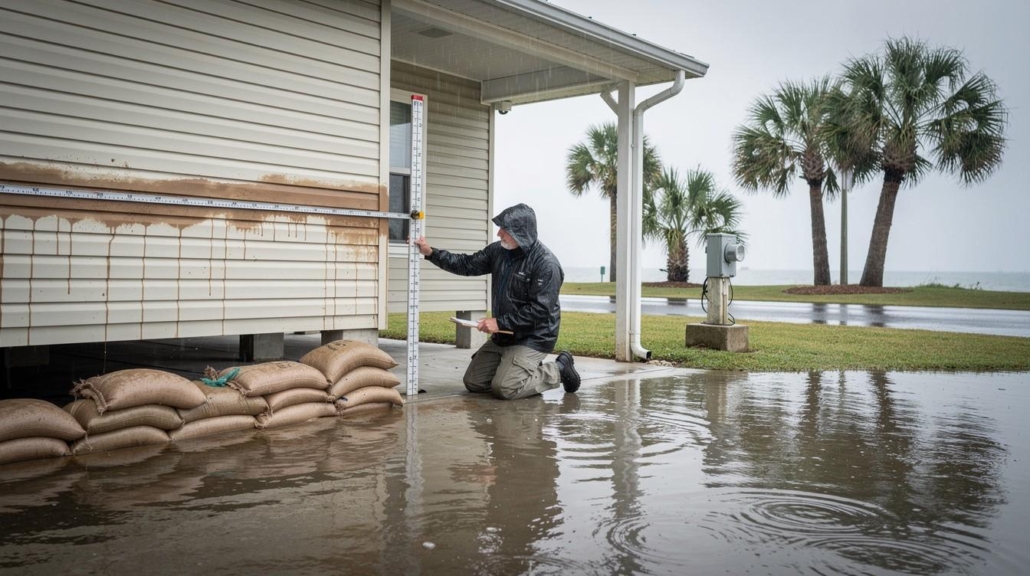
Florida Flood Risk Information: Understanding Your Exposure and Mitigation
Florida flood risk information matters more than ever for homeowners in Naples and across the state. Rising water levels and increasingly severe storms mean your property faces real exposure that standard insurance won’t cover.
At Responsive Insurance, Inc., we help residents understand their actual flood risk and find the right protection. This guide walks you through identifying your exposure, taking action to reduce damage, and securing adequate coverage.
Florida’s Flood Risk Landscape
Geographic and Climate Factors Behind High Flood Risk
Florida’s geography makes it one of the most flood-prone states in America, and Naples sits directly in the crosshairs. The state averages just 6 feet above sea level, with some areas barely 3 feet higher. This low elevation means storm surge, heavy rainfall, and rising tides all pose genuine threats to your property.
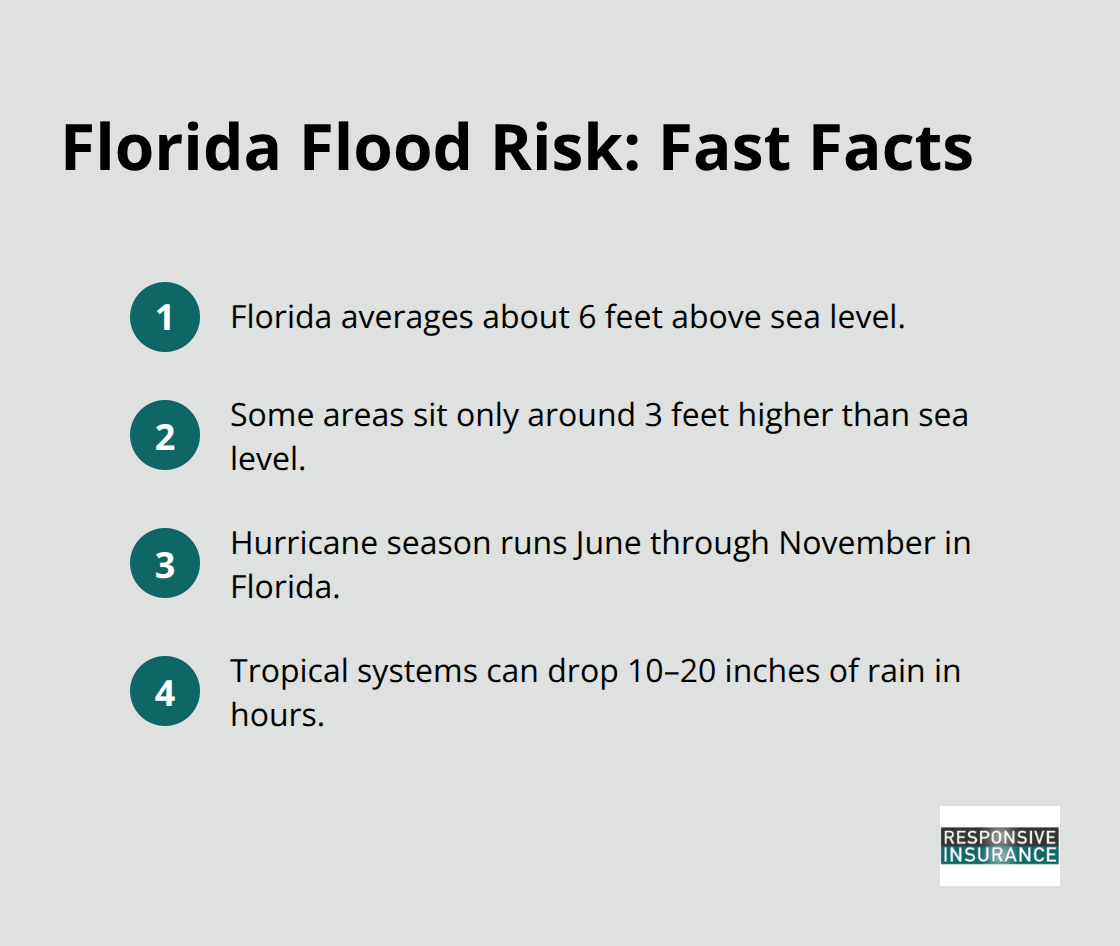
According to the National Oceanic and Atmospheric Administration, Florida experiences “nuisance flooding” that has increased between 300 and 925 percent since the 1960s on U.S. coasts. Hurricane season from June through November intensifies this risk, as Naples faces direct exposure to tropical systems that dump 10 to 20 inches of rainfall in hours.
Rising Sea Levels Accelerate Flood Exposure
Sea levels along the Florida coast have risen approximately 8 inches since 1950, and recent measurements show this rate accelerating. The U.S. Geological Survey reports that some areas of Southwest Florida experience relative sea level rise at nearly double the global average due to land subsidence. This ongoing rise means properties that had minimal flood risk 20 years ago now sit in moderate or high-risk zones. Naples experiences this acutely because the city sits on relatively unstable ground and borders the Gulf of Mexico directly.
Inland and Coastal Flood Threats Differ
Inland areas face different but equally serious risks: heavy summer thunderstorms and poor drainage systems cause flooding that affects properties miles from any coast. The Florida Department of Environmental Protection identifies that over 2.4 million Floridians live in areas vulnerable to coastal flooding, and that number grows annually as development expands into formerly undeveloped flood-prone land. Your specific risk depends heavily on whether you live near the coast, in low-lying areas, or in neighborhoods with aging stormwater infrastructure that cannot handle modern rainfall intensities. Understanding which threat applies to your property sets the foundation for determining your actual flood zone and exposure level.
Know Your Flood Zone
Access Your FEMA Flood Map Today
Determining your actual flood zone is the first step toward understanding your property’s real exposure, and it’s far more straightforward than most Naples homeowners realize. The Federal Emergency Management Agency maintains detailed flood maps for every property in Florida, and you can access yours within minutes through the FEMA Flood Map Service Center online by entering your address. These maps categorize properties into zones based on statistical flood probability: Zone AE represents areas with a 1 percent annual chance of flooding from storm surge or heavy rain, Zone X indicates moderate to low risk, and unmapped areas fall outside the official flood zone system. If your property sits in Zone AE or any A-designated zone, your mortgage lender will require flood insurance, which already tells you that your risk is significant enough that standard homeowners coverage won’t protect you.
Understand Base Flood Elevation and What It Means
The FEMA map itself shows base flood elevation, which represents the water level during a 100-year flood event, and this number matters because it directly influences both your flood insurance costs and your mitigation strategy. Knowing your base flood elevation allows you to calculate how far above or below this threshold your foundation sits, which then informs decisions about elevation projects or waterproofing investments. Properties that sit only a few feet above base flood elevation face substantially higher insurance premiums than those well above this level, so this single data point shapes your financial exposure significantly.
Look Beyond Official Maps for Hidden Risks
Official flood zones capture only part of your actual exposure, and relying solely on FEMA maps leaves dangerous blind spots in your understanding. Properties outside mapped zones still flood regularly in Naples because stormwater infrastructure fails, drainage systems back up, and localized heavy rainfall overwhelms municipal systems regardless of official zone designation. The topography of your specific neighborhood, the age of nearby drainage pipes, whether your property sits in a natural drainage basin, and even the elevation of surrounding streets all affect your real flood risk in ways FEMA maps don’t reflect (these factors often matter more than official zone status for inland properties).
Investigate Your Property’s Actual Flood History
Talk to your neighbors about their flood history, check local stormwater master plans through the City of Naples, and physically inspect your property’s elevation relative to the street and nearby properties. If water pools in your yard during heavy rain, if your foundation sits lower than surrounding ground level, or if your property experienced flooding during Hurricane Ian in 2022, you face genuine risk that may not appear on official flood maps. These on-the-ground observations reveal exposure that maps miss, and they should inform your insurance decisions just as much as your FEMA zone designation does.
Assess Your Complete Risk Profile
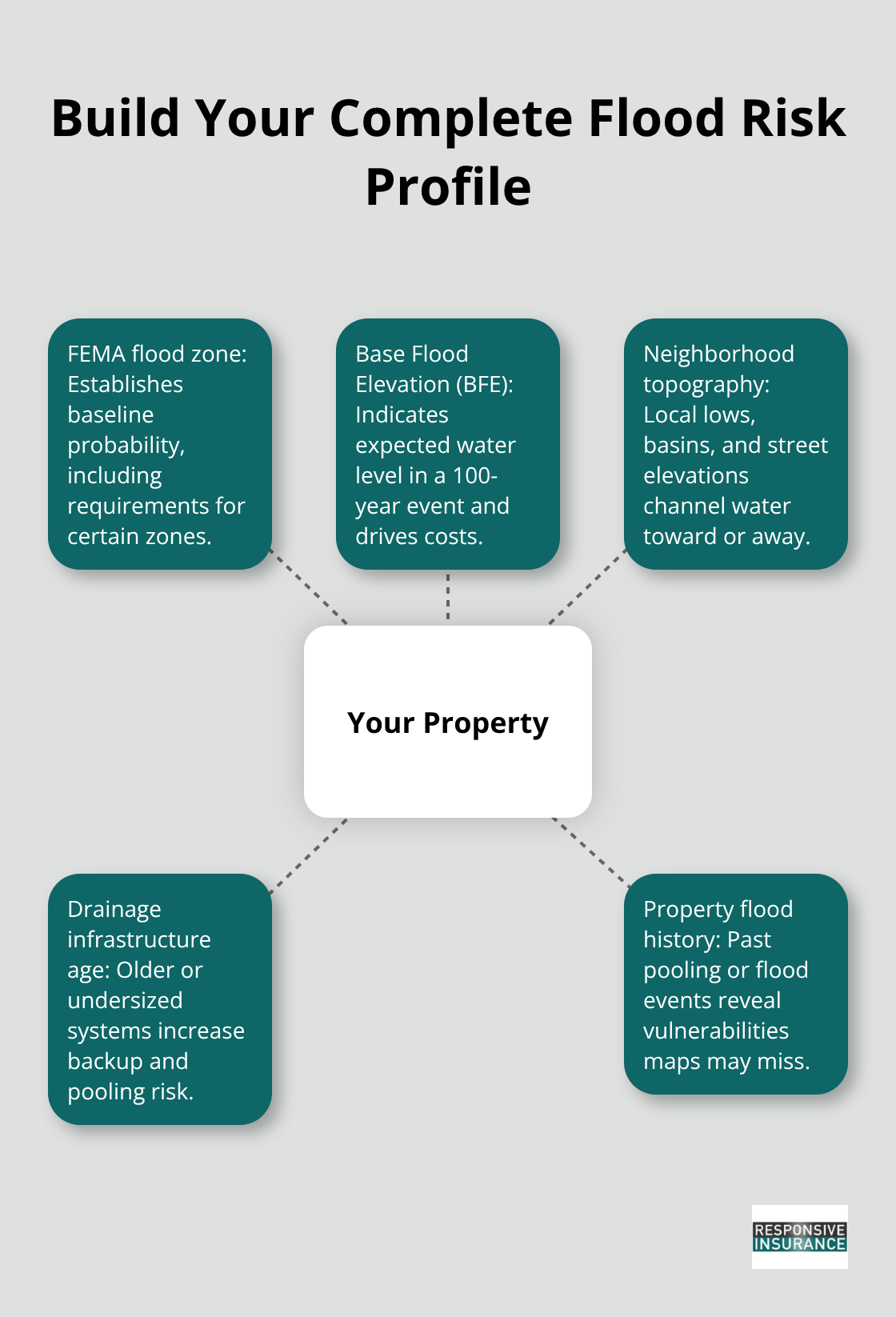
Your actual flood exposure extends well beyond what any government map can show, which means you need to evaluate multiple data sources together. The combination of your FEMA zone, base flood elevation, neighborhood topography, drainage infrastructure age, and your property’s specific flood history creates your complete risk picture. Once you understand this full profile, you can move forward with concrete mitigation steps that address your property’s actual vulnerabilities rather than generic flood prevention measures.
Reducing Flood Damage Through Smart Property Changes
Elevation Cuts Insurance Costs and Flood Risk
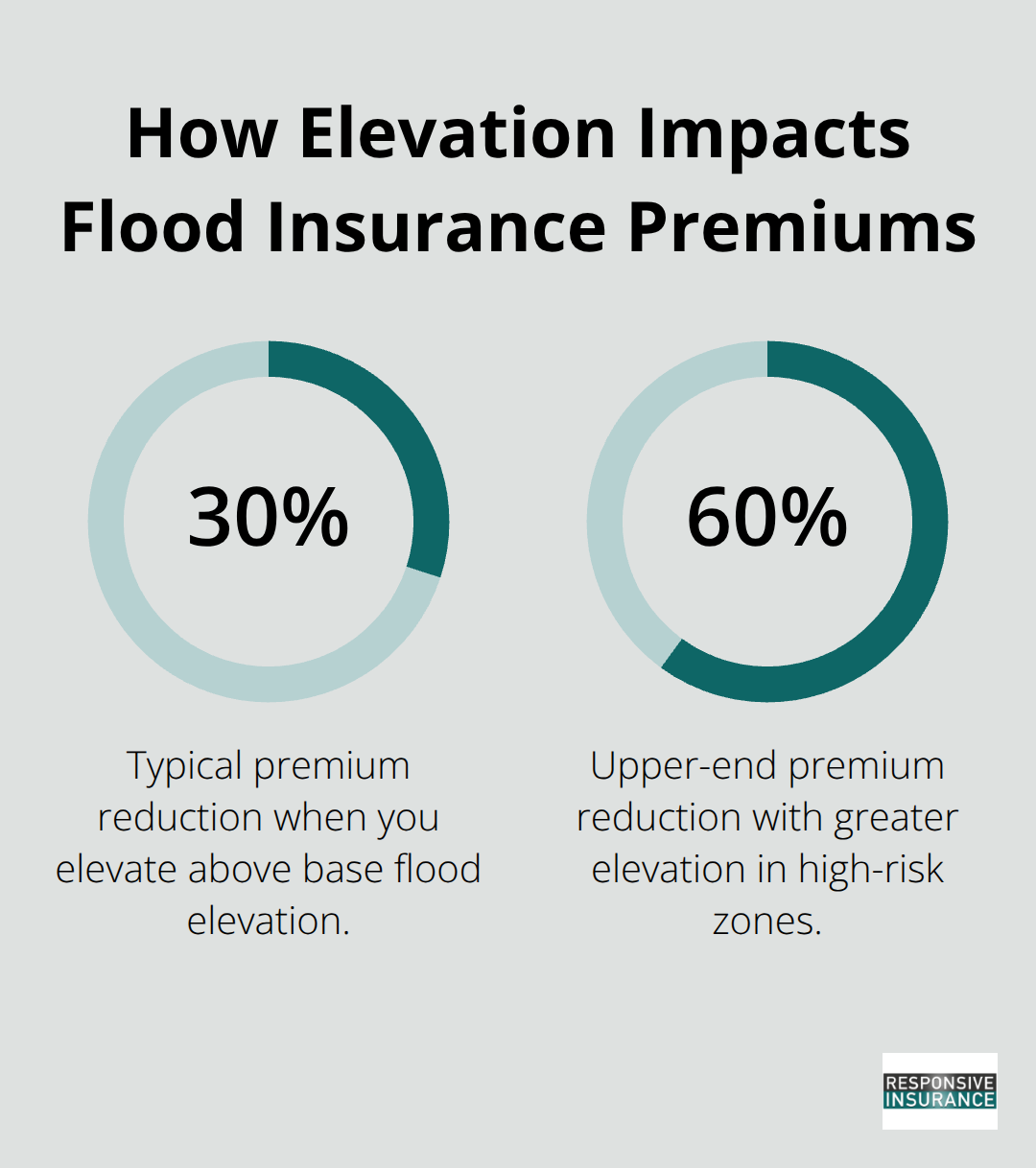
Elevation and drainage improvements form the backbone of effective flood mitigation for Naples properties, and these aren’t optional upgrades for homeowners in high-risk zones. Raising your home’s foundation above base flood elevation reduces insurance premiums significantly-typically by 30 to 60 percent depending on how many feet you raise the structure-while also eliminating the requirement for flood insurance altogether if you exceed the base flood elevation for your area.
The Federal Emergency Management Agency recognizes elevation as the single most effective mitigation strategy, and properties raised above the 100-year flood level experience substantially fewer claims than those at or below this threshold. Elevation costs range from $30,000 to $100,000+ depending on your foundation type and soil conditions, but this investment pays dividends through lower insurance costs over 10 to 15 years.
Improve Drainage to Prevent Localized Flooding
Beyond elevation, improving drainage around your property matters equally for inland flooding. Install French drains or swales to redirect water away from your foundation, grade your yard to slope away from the house rather than toward it, and clear gutters and downspouts regularly so water flows away from your structure instead of pooling nearby. These drainage improvements cost far less than elevation-typically $2,000 to $10,000-and prevent the localized flooding that devastates properties outside official flood zones during heavy rainfall. Poor drainage systems cause more damage to inland Naples properties than official flood zone designation alone would suggest.
Flood Vents and Waterproofing Protect Below-Grade Spaces
Flood vents and waterproofing provide critical protection for properties you cannot raise, particularly crawl spaces and basement areas that sit below base flood elevation. Flood vents allow water to flow freely through foundation walls during floods rather than building pressure that cracks concrete or causes structural failure, and FEMA requires these vents in certain flood zones. Waterproofing sealants applied to foundation walls, basement windows, and door frames slow water infiltration and reduce damage during minor flood events, though they won’t stop determined floodwater entirely. These solutions work best when combined with elevation and drainage improvements rather than standing alone.
Landscaping Provides Limited Protection
Landscaping and natural barriers deserve consideration as part of your complete strategy, but they’re far less effective than most homeowners believe. Rain gardens and bioswales capture excess stormwater temporarily and allow it to permeate the soil rather than flowing toward your home, and native plantings with deep root systems improve soil drainage over time. However, these solutions address only minor rainfall events and provide minimal protection during serious flooding. Landscaping alone won’t save your property during a hurricane or major storm surge, so don’t rely on it as your primary defense.
Layer Your Defenses for Maximum Protection
Combine drainage improvements with flood vents and waterproofing, then add landscaping as supplementary protection. This layered approach addresses your property’s actual vulnerabilities rather than betting everything on a single mitigation method. Properties that combine multiple strategies experience far fewer losses than those relying on one solution, and this comprehensive approach maximizes your protection across different flood scenarios (from minor rainfall to major storm surge).
Final Thoughts on Flood Protection
Standard homeowners insurance excludes flooding entirely-your policy covers wind damage, hail, theft, and fire, but water damage from rising water, heavy rain, or overflowing rivers falls outside that protection. This gap exists because flood losses are unpredictable and catastrophic, making them impossible for traditional homeowners insurers to price accurately. If your mortgage lender required you to carry flood insurance, that requirement signals your property sits in a mapped flood zone where the risk is too high to ignore.
You can choose between the National Flood Insurance Program or private flood insurance to protect your property. The NFIP, run by the federal government, offers standardized coverage available to most property owners regardless of risk level, though premiums have increased significantly as the program addresses mounting losses. Private insurers now compete in Florida’s flood market and often provide better rates for lower-risk properties or more generous coverage limits than the NFIP allows, so comparing both options matters because a property in moderate-risk zones might find substantially cheaper private coverage.
Calculate your property’s replacement cost to determine your coverage limits accurately-most Naples homeowners underestimate this figure significantly, and rebuilding typically costs 30 to 50 percent more than expected. Your coverage limit should match your actual replacement cost, not an arbitrary number that leaves you exposed when water arrives. We at Responsive Insurance, Inc. help Naples homeowners compare coverage options across multiple A-rated insurers and explain what each policy actually protects, so contact us to review your current coverage and verify your limits match your property’s actual replacement cost.


