

Florida Home Insurance Options: How to Compare Plans
Shopping for Florida home insurance options shouldn’t feel overwhelming. At Responsive Insurance, Inc., we know that comparing plans takes time and research, but it’s worth the effort to find coverage that actually fits your needs.
This guide walks you through the essential steps to compare homeowners insurance, flood coverage, and additional protection options available in Naples.
What Coverage Do You Actually Need in Florida?
Most Naples homeowners purchase a standard HO-3 policy, which covers your dwelling structure, other structures like a detached garage, personal property inside your home, and liability protection if someone gets hurt on your property. According to the Insurance Information Institute, this is the baseline for owner-occupied homes, but it falls short in Florida. The critical gap most people miss is that standard homeowners policies do not include flood coverage. Florida’s high flood risk means you need separate flood insurance, either through the National Flood Insurance Program administered by FEMA or through a private flood insurer. If your home sits in a high-risk flood zone or near the coast, lenders typically require you to purchase flood coverage before closing. FEMA’s National Flood Insurance Program covers up to $250,000 for your dwelling and $100,000 for contents, though private policies can offer higher limits if you need additional protection.
Hurricane Deductibles Add Significant Out-of-Pocket Costs
Wind and hurricane damage require separate attention in Florida. Most policies include a separate hurricane or windstorm deductible that runs between 1 percent and 5 percent of your insured home value, meaning a $400,000 home could require a $4,000 to $20,000 out-of-pocket payment after a hurricane. This deductible applies separately from your standard deductible, so you need to understand both numbers before you buy. Many homeowners overlook this distinction and face unexpected costs when a storm hits.
Scheduled Personal Property Riders Protect Your Valuables
Jewelry, artwork, collectibles, and high-end electronics often hit coverage limits in standard homeowners policies. If you own items worth more than a few thousand dollars, you need scheduled personal property riders that specifically list these items and their values. Without this endorsement, your standard policy may cover jewelry at only $1,500 to $2,500 total, far below what you actually own.
Umbrella Policies Extend Your Liability Protection
Liability coverage in your homeowners policy typically maxes out at $100,000 to $300,000, which sounds substantial until you face a serious lawsuit. If someone is badly injured on your property and wins a judgment against you, they can go after your savings, investments, and future income. An umbrella policy sits above your homeowners and auto coverage, providing an additional $1 million or more in liability protection for a relatively low cost (usually $150 to $300 annually). Naples residents with significant assets should seriously consider this protection, especially if you have a pool, trampoline, or other features that increase injury risk on your property.
Now that you understand what coverage types exist in Florida, the next step involves comparing specific plans side by side to find the right fit for your situation.
What Should You Actually Compare Between Quotes
Request Identical Coverage Across All Quotes
Comparing home insurance quotes means looking beyond the premium price, which is where most Naples homeowners stop. The real work involves examining what you actually receive for that monthly payment and whether the coverage matches your situation. Pull three to five quotes from different insurers, then place them side by side with the same coverage levels across all quotes. This sounds obvious, but many people compare quotes with different deductibles, coverage limits, and hurricane deductible percentages, making the comparison meaningless. Request quotes with identical dwelling coverage amounts, personal property limits, and liability limits so you can see which company offers the best value for the same protection.
Calculate Your Worst-Case Deductible Scenario
Deductibles matter far more than most people realize, especially in Florida. Your standard deductible and your hurricane deductible work independently, so a $500 standard deductible combined with a 2 percent hurricane deductible on a $400,000 home means you could pay $8,500 out of pocket after a major storm. The Insurance Information Institute reports that comparing total costs at different deductible levels is essential because a lower premium might come with a higher deductible that costs you thousands when you file a claim. Calculate your worst-case scenario: what would you actually pay if your home sustained hurricane damage? Some homeowners find that paying $50 more monthly for a lower hurricane deductible saves them money overall.
Unlock Savings Through Wind Mitigation and Discounts
Wind mitigation features reduce these costs significantly, so request a wind mitigation inspection before finalizing your policy. Adding mitigation improvements can also make you eligible for discounts on the windstorm portion of your insurance premium. Many insurers offer discounts for bundling home and auto policies, installing protective devices, or living in a newer home, so ask about every available reduction. Premium costs in Naples run higher than most Florida markets due to coastal flood risk and hurricane exposure, but shopping thoroughly reveals differences of hundreds of dollars annually for the same coverage.
Verify Company Ratings and Customer Service Quality
Insurance company ratings and customer service quality reveal themselves through independent review sources and how quickly insurers respond to questions. Check ratings from the National Association of Insurance Commissioners and the Florida Office of Insurance Regulation to verify company financial stability and complaint histories. A lower premium means nothing if the company denies legitimate claims or takes months to respond to your questions. Contact each insurer’s customer service line with specific questions about your coverage and measure how quickly they receive clear answers. Local independent agents in Naples can compare multiple A-rated carriers simultaneously, saving you hours of individual quote requests and providing guidance on which companies handle claims efficiently in Southwest Florida.
Once you understand what separates one quote from another, the next step involves actually requesting those quotes and organizing them in a way that makes your final decision straightforward.
Getting Your Quotes Without Wasting Hours
Prepare Your Home Information Before Contacting Insurers
Requesting multiple quotes requires a specific approach that separates serious shoppers from those who waste time on incomplete comparisons. Gather your home’s details first: the year built, square footage, roof age, construction type, and replacement cost estimate. You’ll need this information for every quote, and having it prepared saves you from repeating yourself across five different conversations. Contact three to five insurers directly or work with independent agents who can pull quotes from multiple A-rated carriers simultaneously. Independent agents in Naples have access to companies you won’t find online, and they can request identical coverage across all quotes without you managing each conversation separately. The Florida Office of Insurance Regulation maintains a list of licensed agents and brokers if you want local options, though calling agents directly and asking which carriers they represent works just as well.
Request Specific Coverage Details in Writing
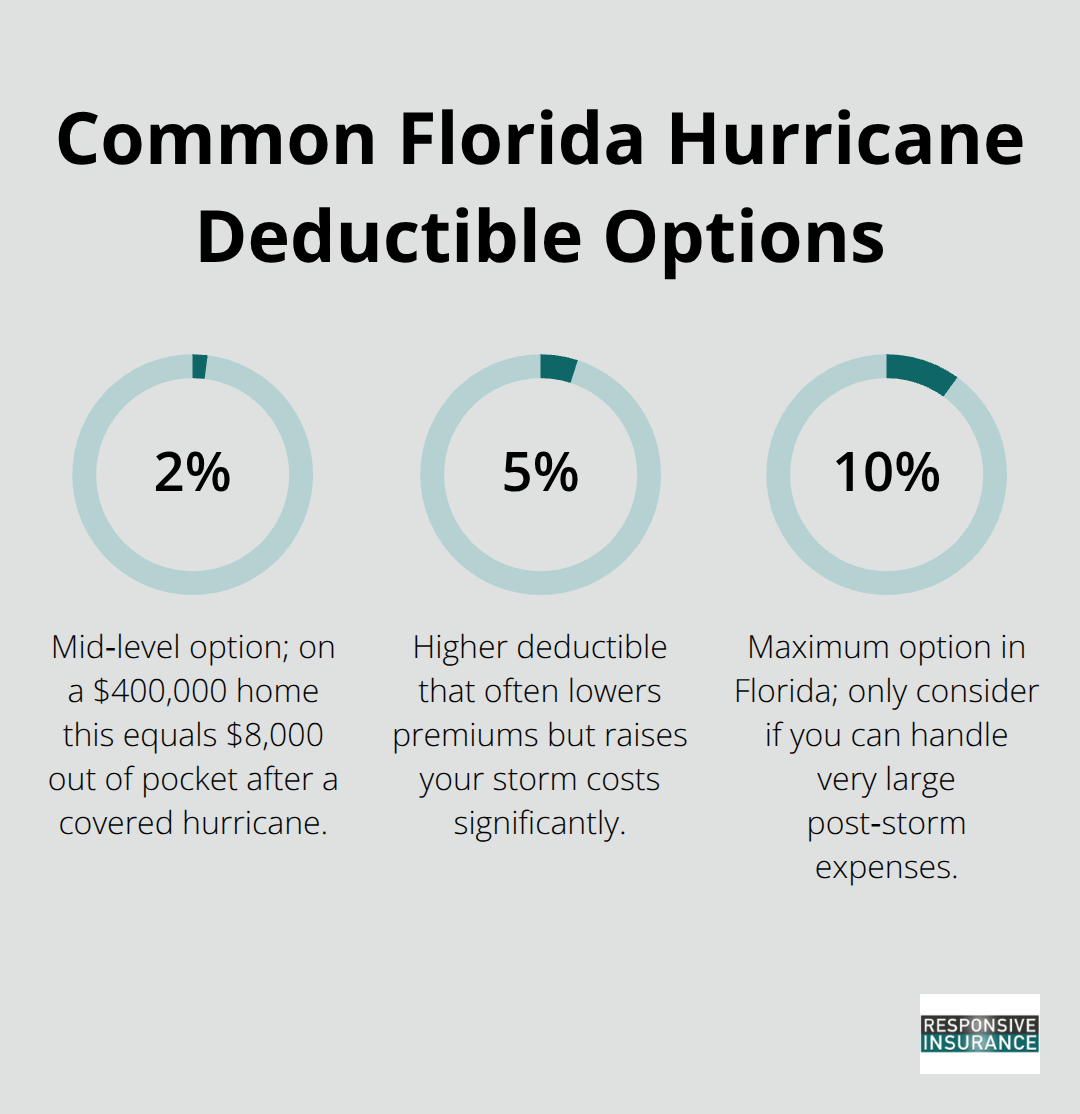
When you request quotes, specify your desired coverage limits, state your preferred deductibles, and ask explicitly for the hurricane deductible percentage included in each proposal. All insurance companies must offer hurricane deductible options of $500, 2 percent, 5 percent, or 10 percent of the policy dwelling or structure limits. Request written quotes via email so you have documentation to compare rather than relying on phone notes. This written record protects you and ensures each insurer understands your exact coverage needs.
Organize Quotes in a Spreadsheet for Clear Comparison
Once you have three to five quotes in hand, organize them in a spreadsheet with columns for dwelling coverage, personal property limits, liability limits, standard deductible, hurricane deductible percentage, annual premium, and available discounts. Calculate the actual hurricane deductible dollar amount for each quote so you can compare worst-case out-of-pocket costs accurately. A $400,000 home with a 2 percent hurricane deductible means you’d pay $8,000 after a major storm, which dramatically affects your true cost of coverage. This spreadsheet approach reveals which companies offer genuine value versus those that appear cheap only because they hide higher deductibles.
Identify Red Flags in Quotes and Company Responses
Red flags appear when one quote is dramatically lower than others for identical coverage, which often signals reduced coverage, higher deductibles, or a company with financial stability concerns you should verify through the National Association of Insurance Commissioners database. Another warning sign is when an insurer cannot clearly explain their hurricane deductible structure or fumbles questions about wind mitigation credits, suggesting their customer service may struggle when you file a claim. Avoid companies that pressure you to decide quickly or won’t provide written documentation of coverage terms. If an agent or company representative dismisses your questions about specific coverage details or seems irritated by comparisons, that behavior predicts how they’ll handle claim disputes later. Contact customer service for each company with a specific question about coverage to measure response times and clarity, since a company offering the lowest premium means nothing if they take weeks to answer basic questions. Naples homeowners should prioritize carriers with strong complaint ratios according to the Florida Office of Insurance Regulation, which publishes complaint data annually showing how often companies deny legitimate claims or frustrate policyholders.
Final Thoughts
Comparing Florida home insurance options requires patience, but the effort pays off when you find coverage that protects your home without draining your budget. The process boils down to three core steps: understanding what coverage types exist in Florida, requesting identical quotes from multiple insurers, and organizing those quotes side by side to spot genuine value. Most Naples homeowners overlook hurricane deductibles, flood insurance requirements, and available wind mitigation discounts, which means they either overpay or discover gaps in their coverage after a storm hits.
Your next step involves gathering your home’s details and contacting three to five insurers or independent agents for written quotes. Request identical coverage limits and deductible options across all quotes, then organize them in a spreadsheet that shows annual premiums, actual hurricane deductible dollar amounts, and available discounts. This comparison reveals which companies offer real value versus those that appear cheap only because they hide higher deductibles or reduced coverage.
Responsive Insurance, Inc. works with multiple A-rated insurance companies to compare Florida home insurance options and find the best fit for your specific situation. As an independent agency based in Naples, we understand Southwest Florida’s unique risks and can pull quotes from carriers you won’t find shopping alone. We provide timely responses to your questions and serve as a knowledgeable advocate throughout the comparison process, saving you hours of individual phone calls while ensuring you don’t miss important coverage details or available discounts.


