Southwest Florida Rental Policy: What Landlords And Tenants Need
Renting property in Southwest Florida comes with specific legal obligations and protections that both landlords and tenants need to understand. Whether you’re leasing out a home or signing a lease agreement, knowing your rights and responsibilities protects your interests.
At Responsive Insurance, Inc., we’ve seen how confusion about Southwest Florida rental policy leads to costly disputes. This guide covers the regulations, tenant protections, and insurance coverage that matter most in our region.
What Landlords Must Do to Stay Compliant in Southwest Florida
Security Deposits: Documentation Protects You
Florida’s Residential Landlord and Tenant Act sets clear expectations for property owners, and ignoring these rules costs money fast. Security deposits are the first major area where landlords make mistakes. You must hold deposits in a Florida bank account and notify tenants within 30 days where the money sits and whether it earns interest. When a tenant moves out, you have 15 days to return the full deposit if there are no deductions, or 30 days if you claim damage charges. Many landlords in Southwest Florida lose deposit disputes because they cannot document the condition of the unit at move-in or fail to itemize deductions properly.
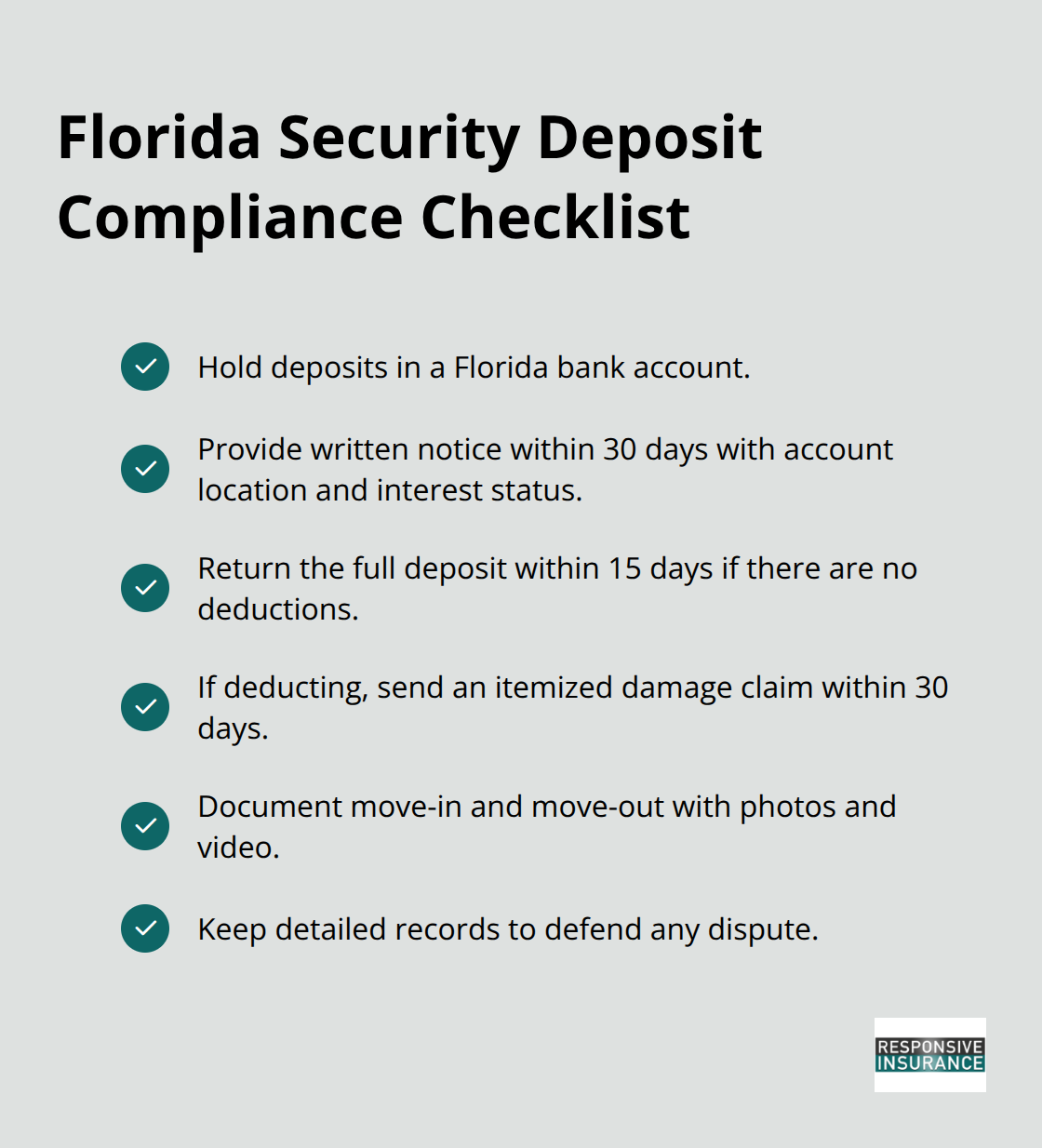
Take photos and video before tenants arrive, then do the same when they leave. This documentation prevents arguments and protects you legally. If you wrongfully withhold a deposit, Florida courts award the tenant triple damages plus attorney fees-a disputed $1,500 deposit can cost you $4,500 or more.
Maintenance and Habitability: Respond Quickly
You must keep plumbing, heating, and structural elements in working order, provide functioning locks on all entry doors, maintain pest-free conditions, and comply with housing and health codes. Tenants have the right to withhold rent if you fail to make repairs within seven days of written notice, and they can pursue lease termination or damages if problems persist. The best strategy is responding to maintenance requests within 24 to 48 hours and keeping records of all repairs and contractor visits.
Eviction: Follow the Legal Process Exactly
Eviction is the final resort, and Florida requires strict procedural compliance. You must issue a three-day notice for nonpayment, a seven-day notice for lease violations, file a formal eviction action with the court, obtain a court order, and finally receive a sheriff’s writ of possession. The entire process typically takes 30 to 45 days, during which the tenant can defend the case in court. Self-help evictions such as changing locks or shutting off utilities are illegal and expose you to significant liability. Work with a residential real estate attorney to handle evictions properly and avoid costly mistakes-the Law Office of Sam J. Saad III serves Southwest Florida with offices in Naples and Fort Myers and offers a free 30-minute consultation at 239-963-1635.
Understanding these landlord obligations sets the foundation for stable rental operations, but property owners also need the right insurance coverage to protect their investment against liability claims and property damage.
Tenant Rights and Protections Under Florida Law
Repair Rights Give Tenants Real Leverage
Florida law gives tenants real power when landlords ignore maintenance requests, and knowing how to use it prevents expensive problems. When a landlord fails to make necessary repairs within seven days of written notice, tenants can withhold rent, terminate the lease, or pursue damages in court. The key is documentation: send repair requests in writing (email works), keep copies, and photograph the problem. If your landlord ignores a seven-day notice about a broken air conditioning unit in July or non-functional plumbing, you have the right to stop paying rent and move out without penalty.
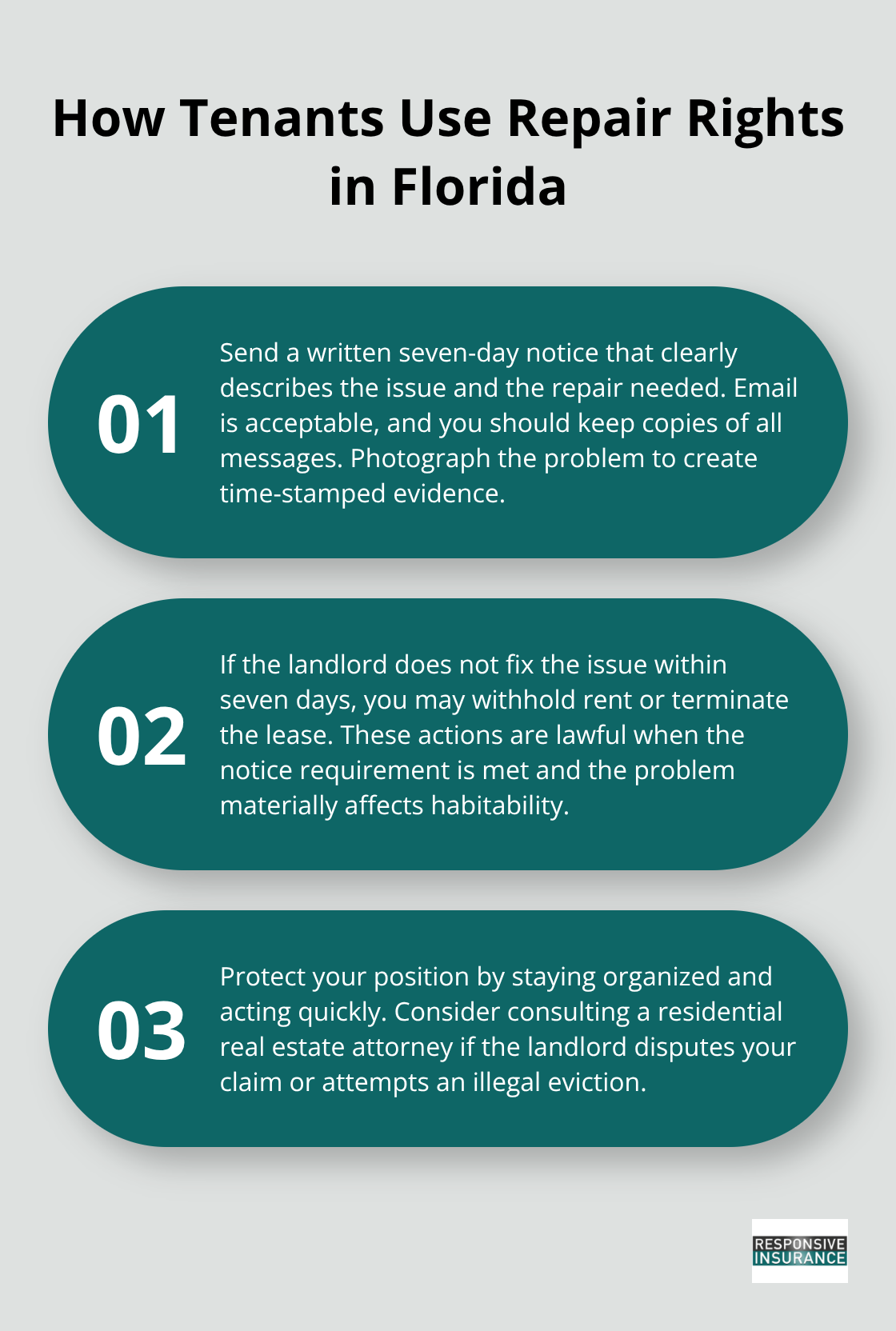
Many tenants don’t realize this protection exists and instead suffer through substandard conditions or pay for repairs themselves. Taking action quickly matters because delays weaken your legal position and allow problems to worsen.
Protection Against Retaliation and Illegal Eviction
Landlords cannot retaliate against tenants for asserting repair rights and filing housing complaints, and Florida courts take retaliation seriously. You also have privacy protections: landlords must provide at least 12 hours’ written notice before entering your unit, and entry occurs only between 7:30 a.m. and 8:00 p.m. unless you agree otherwise or the landlord faces an emergency like a fire or flood. If a landlord changes locks, shuts off utilities, or removes your belongings without a court order, that action constitutes an illegal self-help eviction, and you can sue for damages.
Eviction Rights and Court Protections
Eviction in Florida requires the landlord to file a formal case with the court, serve you proper notice, and obtain a judge’s order before the sheriff can remove you. If your landlord tries to evict you without following this exact process, the eviction is unlawful and you can defend yourself in court. Understanding these protections gives you leverage in disputes and helps you avoid accepting illegal pressure to move. When disputes arise over repairs, deposits, or eviction procedures, a residential real estate attorney can help you understand your options and protect your rights-the Law Office of Sam J. Saad III serves Southwest Florida with offices in Naples and Fort Myers and offers a free 30-minute consultation at 239-963-1635.
These tenant protections form one side of the rental relationship, but property owners also need the right insurance coverage to manage liability exposure and protect their investment against claims and property damage.
Insurance Protection Separates Smart Landlords From Those Taking Unnecessary Risk
Landlord insurance and tenant renters insurance serve completely different purposes, and confusing them leaves property owners exposed to serious financial loss. Landlord insurance protects your investment against fire, hurricane damage, and personal liability claims when someone is injured on your property. Tenant renters insurance protects a tenant’s belongings and covers their personal liability if they damage the rental unit or injure someone inside it. The critical difference: landlord insurance does not cover a tenant’s personal property, and renters insurance does not protect your building structure. In Southwest Florida, where hurricane risk is real, landlord policies specifically address wind and water damage that destroys rental properties.
What Your Landlord Policy Actually Covers
A standard landlord policy typically covers the building structure, loss of rent if the property becomes uninhabitable, and liability protection up to the limits you select. Many Southwest Florida landlords carry liability coverage because a single serious injury claim can result in substantial costs. Some policies also allow you to add personal umbrella liability insurance, which extends protection beyond your standard limits without significant additional cost. This matters because medical expenses from a guest’s fall or a visitor’s injury can drain your savings in weeks.
What Landlord Policies Exclude
Standard policies do not cover damage from poor maintenance, intentional damage you cause, or losses from tenant activities like cooking fires started through negligence. Flood damage is excluded from most landlord policies, requiring a separate flood insurance policy in Southwest Florida where hurricane surge and heavy rain create real flood risk. If a tenant causes damage to the rental unit, your landlord policy covers your liability to third parties but not repairs to the building itself.
Common Claims in Southwest Florida
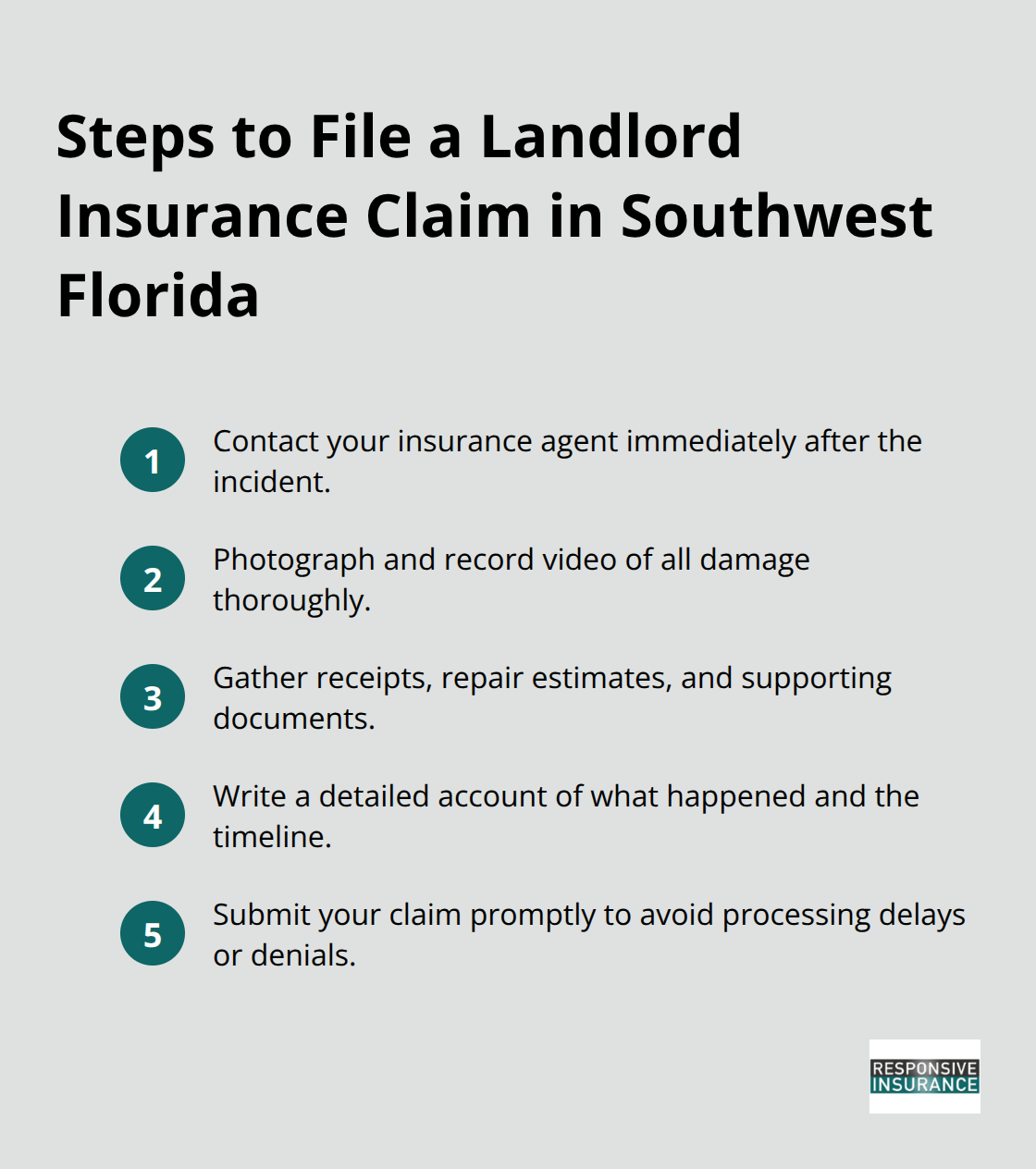
Hurricane-related structural damage, liability claims when a guest is injured on the property, and loss of rent claims when damage forces you to temporarily close the unit to guests or long-term tenants represent the most frequent claims we see in our region. To file a claim, contact your insurance agent immediately after an incident occurs, document damage with photos and video, gather receipts and repair estimates, and provide a detailed written account of what happened. Speed matters because delays in filing can complicate claims processing and may result in denial.
Finding the Right Coverage for Your Property
We at Responsive Insurance, Inc. help landlords select coverage amounts that match their property value and liability exposure. Contact us at 239-596-3177 or visit our offices at 2950 Immokalee Rd Ste 4 in Naples or 9470 Corkscrew Palms Cir #103 in Estero to discuss the right coverage for your rental property.
Final Thoughts
Legal compliance and proper insurance coverage work together to protect both landlords and tenants in Southwest Florida. A landlord who documents security deposits correctly, responds to maintenance requests promptly, and follows strict eviction procedures avoids costly disputes and triple-damage liability. A tenant who sends written repair requests, photographs problems, and asserts rights in writing gains real leverage in disputes. Neither party benefits from shortcuts or confusion about Southwest Florida rental policy.
Insurance fills the gap that law alone cannot cover. Landlord policies protect your building, lost rental income, and liability exposure when someone is injured on your property. Tenant renters insurance protects personal belongings and covers liability if a tenant damages the unit or injures a visitor. These policies reduce financial risk for both sides of the rental relationship.
We at Responsive Insurance, Inc. help landlords and tenants in Southwest Florida select coverage that matches their specific situation. Contact us at 239-596-3177 or visit our Naples office at 2950 Immokalee Rd Ste 4 to discuss your rental property insurance needs.


