
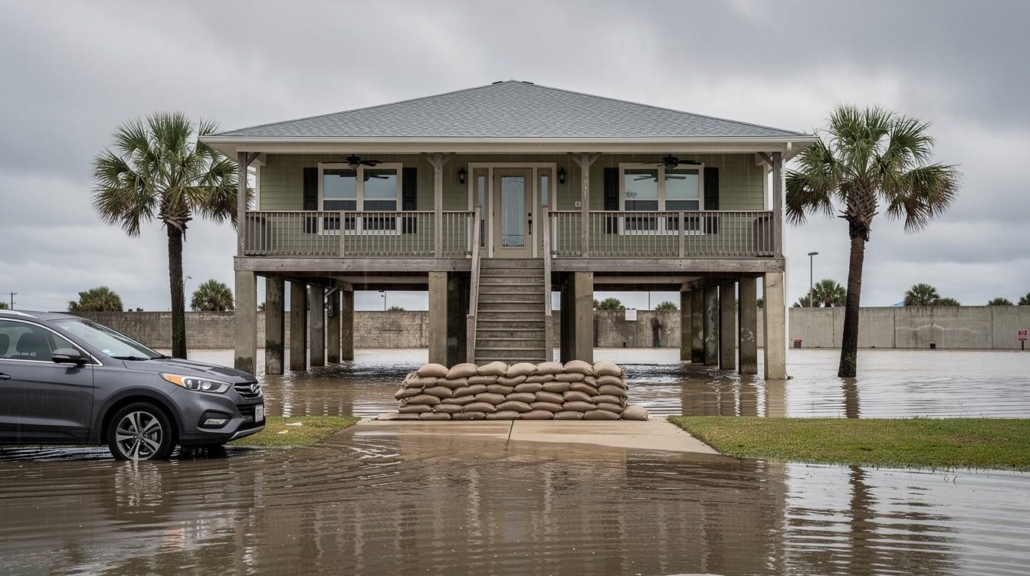
Coastal Florida Flood Risk: What Homeowners Should Know
If you live in Naples, FL, coastal Florida flood risk isn’t just a weather concern-it’s a financial one. Your home faces real threats from rising water levels, intense storms, and unpredictable rainfall patterns that standard homeowners insurance won’t cover.
At Responsive Insurance, Inc., we help homeowners understand exactly what protection they need. This guide walks you through flood insurance options, practical home improvements, and the steps to safeguard your property.
Understanding Coastal Florida’s Flood Risk
Why Naples Faces Serious Flood Threats
If you live in Naples, FL, coastal flood risk represents a genuine financial threat, not just a weather concern. Your home sits in one of the most vulnerable locations in the country due to geography that virtually guarantees water problems. The combination of low elevation, porous limestone bedrock, and Atlantic Ocean proximity creates conditions where flooding happens regularly.
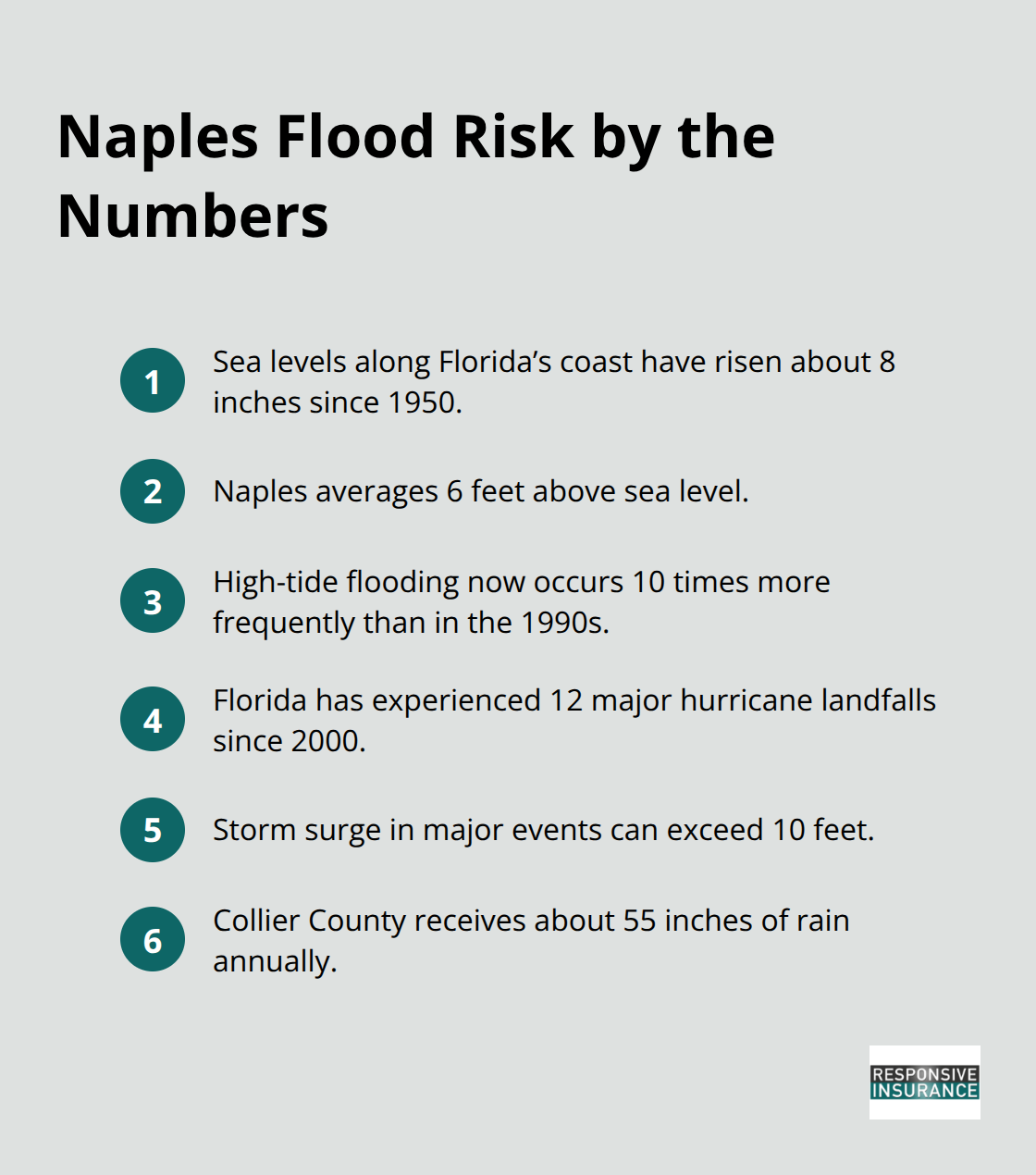
The numbers tell a stark story. Sea levels along Florida’s coast have risen approximately 8 inches since 1950, and the rate continues to accelerate. Naples averages just 6 feet above sea level, which means even modest sea level rise translates into tangible flooding problems for residents. A 2023 study from the University of Florida found that high-tide flooding in coastal communities now occurs 10 times more frequently than it did in the 1990s.
This isn’t theoretical future risk-homeowners in Naples experience nuisance flooding during regular high tides, not just during storms. The porous limestone that underlies Southwest Florida allows saltwater to seep upward through the ground, causing flooding from below even when surface water appears manageable. Standard homeowners insurance policies exclude flood damage entirely, leaving most Naples residents completely unprotected against the most common weather-related loss they face.
Storm Surge and Hurricane Season Reality
Hurricane season runs from June through November, and Naples sits in one of the most active corridors for major storms. When hurricanes approach the Gulf of Mexico, they push enormous volumes of water onto land-storm surge can exceed 10 feet in major events. The National Weather Service data shows that since 2000, Florida has experienced 12 major hurricanes making landfall, with several causing catastrophic damage in Southwest Florida.
Beyond hurricanes, tropical storms and regular thunderstorms dump heavy rainfall that overwhelms local drainage systems. The Collier County area receives approximately 55 inches of rain annually, concentrated heavily during summer months when the ground is already saturated. This combination of storm surge threat and heavy precipitation means Naples homeowners need flood protection year-round, not just during hurricane season.
Understanding these specific threats to your property sets the foundation for making informed decisions about protection. The next section examines how flood insurance actually works and what coverage options exist for Naples residents.
Your Flood Insurance Options in Florida
The NFIP and Private Insurance Alternatives
The National Flood Insurance Program, or NFIP, covers approximately 5 million policies nationwide and represents the primary flood insurance option for most Naples homeowners. This federal program exists because private insurers historically refused to offer flood coverage due to the high frequency of claims in coastal areas. The NFIP sets standard coverage limits and rates based on flood risk zones that FEMA maps establish. However, the program carries significant limitations that Naples homeowners must understand.
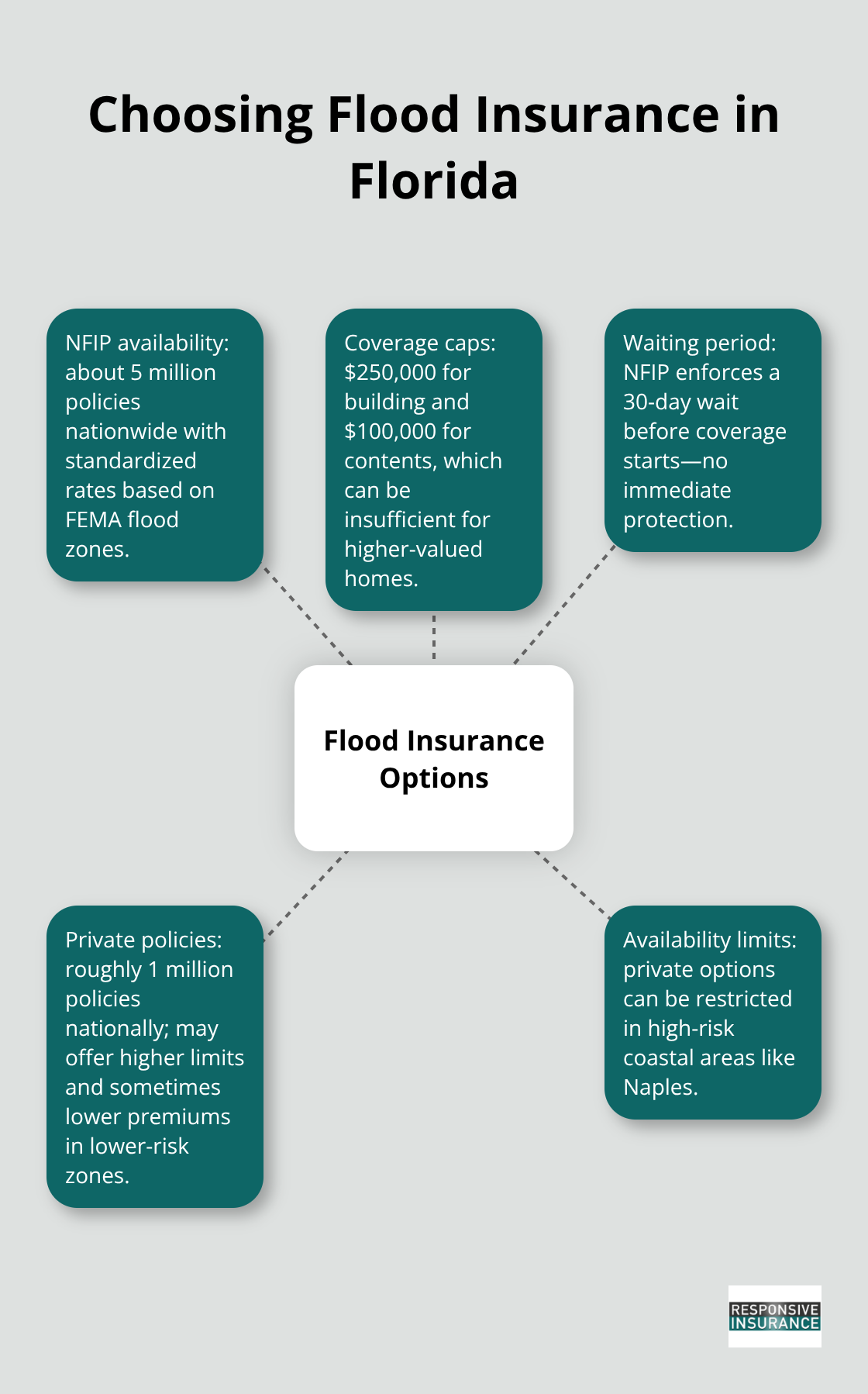
Maximum building coverage caps at $250,000 and contents coverage at $100,000, which falls short for many homes in Southwest Florida where median property values exceed $400,000. Additionally, the NFIP enforces a mandatory 30-day waiting period before coverage takes effect, meaning you cannot purchase a policy today and receive protection tomorrow. Private flood insurance has emerged as an alternative over the past decade, with companies now offering higher coverage limits and sometimes lower premiums for properties in lower-risk zones. The Insurance Information Institute reports that private flood policies now cover roughly 1 million policies nationally, though availability remains limited in high-risk coastal areas like Naples.
Coverage Differences That Affect Your Protection
Coverage differences between NFIP and private policies matter significantly for your wallet and protection level. NFIP policies cover building structure and its systems, plus contents, but exclude damage from wind or rain that enters through openings in the roof or walls during storms. Private insurers often provide broader definitions of covered water damage and may exclude fewer scenarios. Premiums vary dramatically based on your home’s elevation relative to the base flood elevation that FEMA establishes. A home sitting 2 feet above base flood elevation might cost $400 annually, while one at the same elevation but with a basement could cost $2,000 or more. Your property’s exact elevation and its location within Collier County’s flood zone determine your rate, and you can find this information through FEMA’s Flood Map Service Center.
Finding the Right Coverage for Your Situation
The decision between NFIP and private programs depends on your home’s value, elevation, construction type, and risk tolerance rather than a one-size-fits-all recommendation. As an independent insurance agency based in Naples, Responsive Insurance, Inc. works with multiple A-rated insurance companies to compare coverage options and identify which program provides the best protection and value for your specific situation. Your next step involves understanding what practical improvements you can make to your home itself-improvements that often reduce your flood risk and may lower your insurance costs.
How to Reduce Flood Damage Through Home Improvements
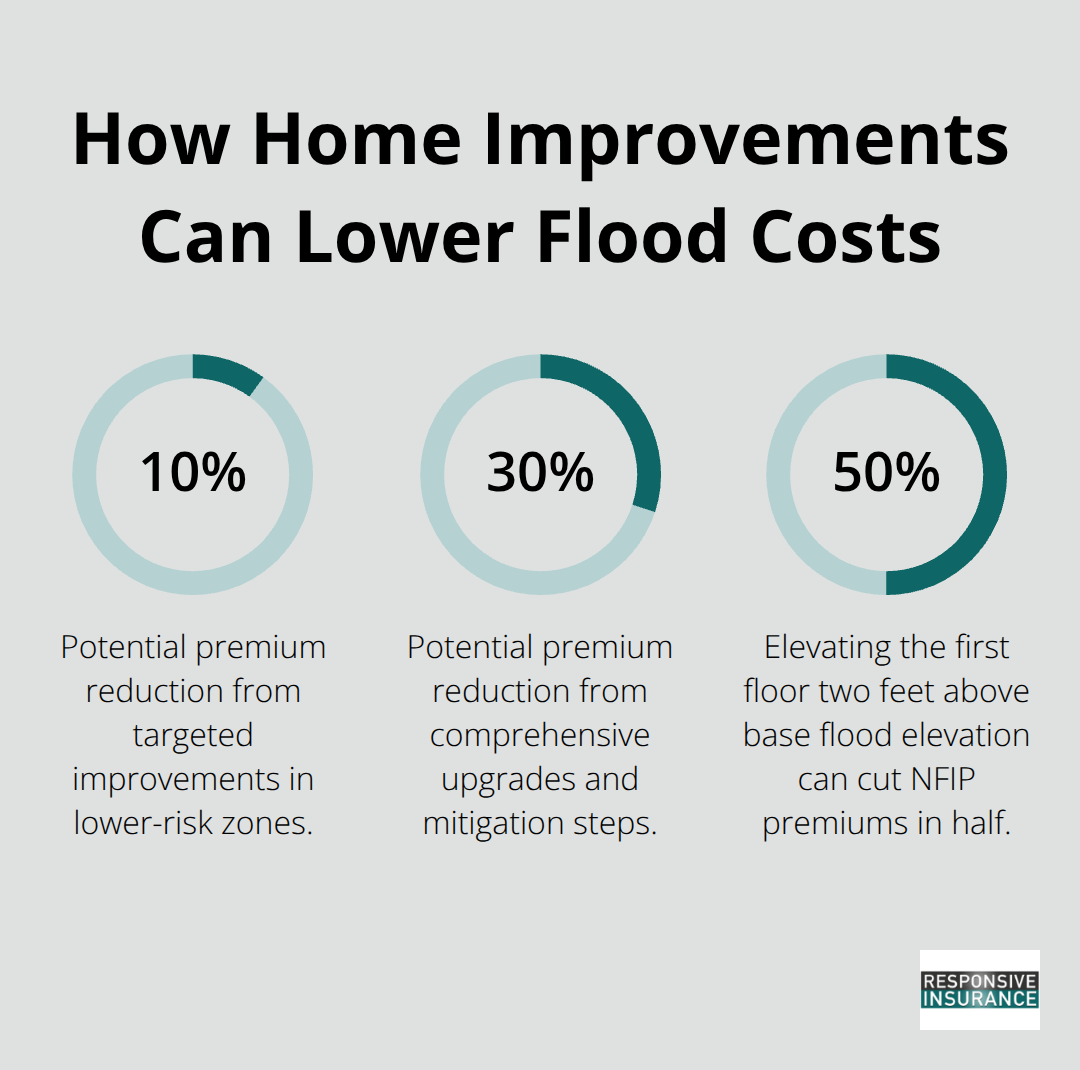
Flood insurance protects your finances, but your home itself needs physical defenses against water intrusion. The most effective protection combines elevation strategies, drainage improvements, and construction choices that actively resist water damage. Naples homeowners who invest in these improvements often see insurance premium reductions of 10 to 30 percent, depending on the specific upgrades and your property’s flood zone. The Federal Emergency Management Agency reports that every dollar spent on flood mitigation saves approximately six dollars in future flood damage and recovery costs.
This isn’t theoretical savings-these numbers come from decades of post-disaster assessments across flood-prone communities.
Elevation as Your Primary Defense
Elevation remains the single most powerful defense available to homeowners in Southwest Florida. Raising your home’s first floor above the base flood elevation that FEMA establishes eliminates or drastically reduces your flood insurance costs. If your property sits in an AE flood zone, elevating the first floor just two feet above base flood elevation can cut your NFIP premium in half. Many Naples homeowners raise their structures on pilings or construct elevated crawl spaces, moving living areas completely out of the flood zone. This approach costs between $30,000 and $100,000 depending on soil conditions and foundation type, but the insurance savings accumulate quickly-a homeowner paying $3,000 annually in premiums recovers the investment within 15 to 30 years while gaining immediate protection.
Strategic Drainage Improvements
For homes where full elevation proves impractical or too expensive, strategic drainage improvements provide substantial protection. Installing or upgrading sump pumps, French drains, and foundation perimeter drainage systems channels water away from your structure before it enters. Collier County’s porous limestone means water rises from below during high tides and heavy rain, making subsurface drainage systems particularly valuable in Naples. Adding perimeter drain tile around your foundation costs $3,000 to $8,000 but prevents the slow seepage that causes the most common flood damage in Southwest Florida.
Water-Resistant Materials and Utility Placement
Material choices matter as much as structural improvements. Wet floodproofing-using water-resistant materials in areas likely to flood-minimizes damage when water does enter. Replace standard drywall with cement board, use moisture-resistant insulation, and install vinyl flooring rather than carpet in basement or ground-floor spaces. Utility systems deserve equal attention: relocate electrical panels, HVAC units, and water heaters above the expected flood level to protect critical systems. Homes with elevated utilities experienced significantly less damage during flood events compared to homes with standard installations.
Foundation and Maintenance Tasks
Maintenance directly impacts your home’s flood resilience. Keep gutters and downspouts clear so water flows away from your foundation rather than accumulating against it. Ensure grading slopes away from your home at a minimum of 5 percent grade within the first 10 feet, directing surface water toward storm drains or away from the structure. Seal cracks in your foundation and gaps around pipes or utility penetrations where water can seep upward through the porous limestone (these maintenance tasks cost nothing beyond your time but prevent thousands in damage). Proper maintenance stops water before it becomes a problem inside your home.
Final Thoughts
Coastal Florida flood risk demands action, not wishful thinking. Your home sits in one of the most flood-prone regions in the country, standard homeowners insurance won’t protect you, and waiting until hurricane season arrives leaves you vulnerable. The combination of rising sea levels, heavy rainfall, and storm surge creates genuine financial exposure that affects your property value and your ability to recover from water damage.
Your protection strategy requires two parallel tracks: flood insurance fills the gap that homeowners policies leave open, and physical improvements to your home reduce both your risk and your insurance costs. Whether you choose the National Flood Insurance Program or a private policy, having coverage means flood damage won’t force you to rebuild from personal savings. Elevation, drainage systems, and water-resistant materials work together to keep water out of your structure in the first place (and lower your premiums by 10 to 30 percent).
Your next step is straightforward: get an accurate flood insurance quote based on your property’s specific elevation and flood zone, then evaluate which home improvements make financial sense for your situation. Contact Responsive Insurance, Inc. to compare flood coverage options and identify the best protection for your Naples home. We work with multiple A-rated insurance companies to review your current coverage and discuss improvements that reduce your coastal Florida flood risk.


