

Auto Insurance Florida Rates: What Does Your Premium Depend On?
Your auto insurance Florida rates aren’t random. They’re built on specific factors that insurers analyze to calculate what you pay each month.
At Responsive Insurance, Inc., we’ve seen how confusing premium pricing can be for drivers in Naples. This guide breaks down exactly what influences your costs and how you can take control of your rate.
What Shapes Your Auto Insurance Premium in Florida
Driving Record and Claims History
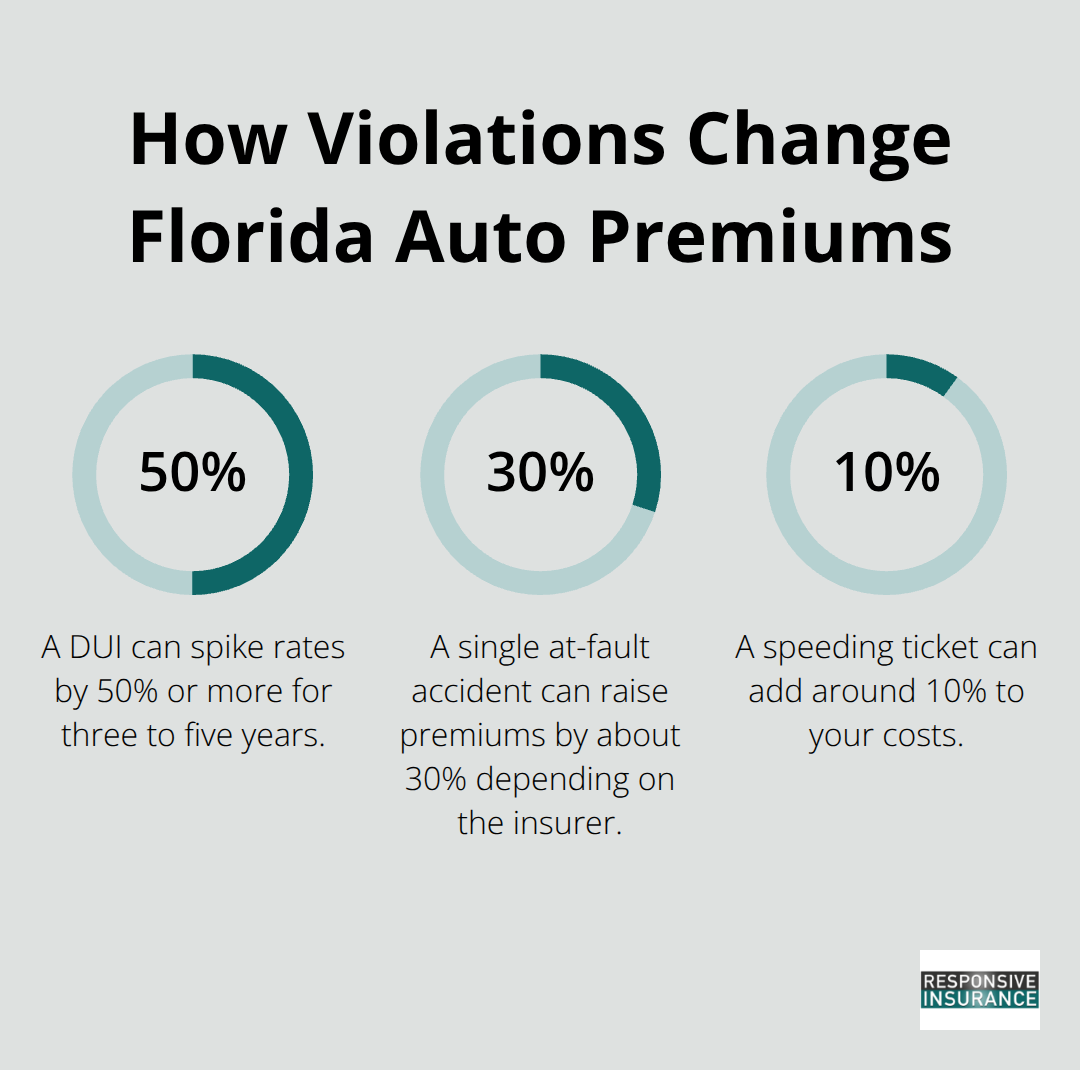
Your driving record stands as the single most important factor insurers examine when calculating your rate, and Florida data backs this up. A clean driving record can save you hundreds of dollars annually, while even one at-fault accident typically increases premiums by 30 to 50 percent depending on the insurer. Minor violations like speeding tickets add 10 to 15 percent to your costs, while serious infractions such as DUIs can spike rates by 50 percent or more for three to five years.
Insurance companies pull your Motor Vehicle Record from the Florida Department of Highway Safety and Motor Vehicles, and they scrutinize not just accidents and violations but also claims history. Filing multiple claims within a short period signals high risk to insurers, making them more cautious about renewal rates. If you’ve had two or more claims in the past three years, expect higher premiums regardless of fault. Some drivers in Naples choose to handle minor damage out of pocket rather than file claims that could haunt their rates for years.
Age and Experience Matter More Than You Think
Age dramatically impacts what you pay for auto insurance in Florida. Drivers under 25 pay significantly higher premiums than their older counterparts because statistics show this age group has higher accident rates. A 20-year-old driver might pay 50 to 100 percent more than a 40-year-old for identical coverage. Conversely, drivers over 65 sometimes face rate increases again, though many insurers offer mature driver discounts that offset this.
Your years of driving experience also matter separately from age. A 35-year-old with only two years of driving experience pays more than a 35-year-old with 15 years behind the wheel. Some insurers offer good student discounts for drivers under 25 who maintain a 3.0 GPA or higher, which can reduce premiums by 10 to 15 percent. Young drivers in Naples should ask about these discounts when shopping for quotes, as they’re not always automatically applied.
Vehicle Type and Location Impact Your Rate
The specific vehicle you drive influences your premium because insurers assess both repair costs and safety ratings. A sedan with standard safety features costs less to insure than a sports car or a luxury vehicle with expensive parts. Vehicles with high theft rates also carry higher premiums, particularly in certain Florida zip codes.
Your location within Naples matters considerably too. Urban areas with higher accident and theft rates generate higher premiums than suburban or rural locations. Your commute distance and whether you use your vehicle for business also factor in. Someone commuting 40 miles daily pays more than someone driving occasionally for personal errands. Parking location matters as well; vehicles parked on the street overnight face higher comprehensive coverage rates than those in garages (due to increased theft and weather damage risk).
Now that you understand what shapes your premium, the next step involves learning how insurance companies actually calculate your specific rate and what role your credit score plays in that calculation.
How Insurers Price Your Coverage
Insurance Scores Drive Your Premium
Insurance companies don’t pull rates from thin air. They use sophisticated algorithms that combine multiple data points into a single premium figure, and understanding this process helps you anticipate what you’ll pay. The biggest lever in rate calculation is your insurance score, which differs from your credit score but correlates strongly with it. Research from the National Association of Insurance Commissioners found that consumers with poor credit scores pay up to 50 percent more for auto insurance than those with excellent scores, even when they have identical driving records. This happens because insurers view payment history and financial responsibility as predictors of future claims.
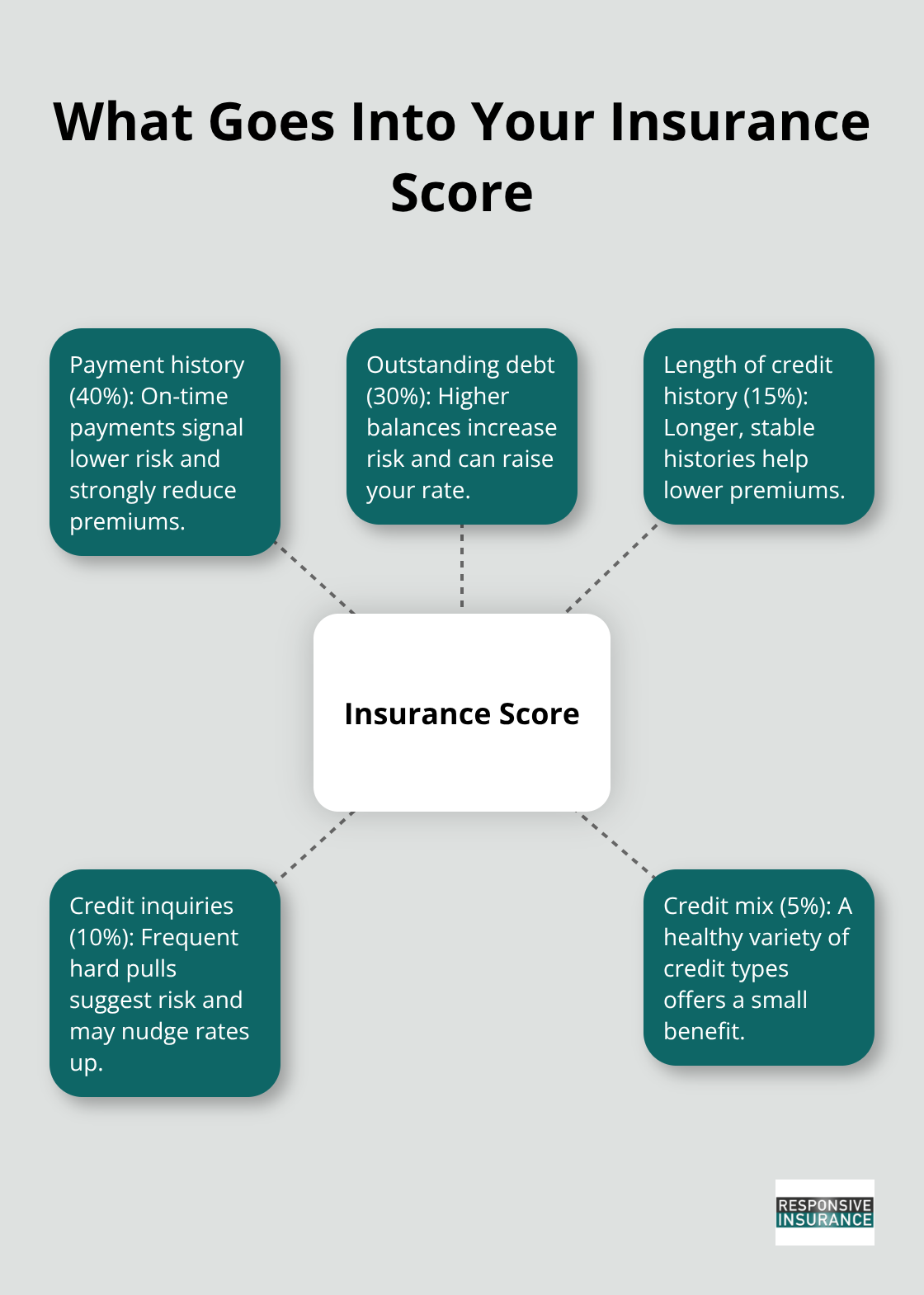
Your insurance score weighs factors like payment history (40 percent), outstanding debt (30 percent), credit inquiries (10 percent), length of credit history (15 percent), and credit mix (5 percent). Improving your credit score from fair to good can lower your premium by 10 to 20 percent annually. In Naples, where many drivers shop rates quarterly, even small credit improvements between quote checks result in measurable savings.
How Mileage Affects Your Rate
Beyond credit, insurers analyze your actual vehicle usage patterns because mileage directly correlates with accident risk. Drivers who commute 50 miles daily accumulate significantly more exposure than those driving 10 miles weekly, and insurers price accordingly. Many companies now offer usage-based insurance programs that track your real driving habits through smartphone apps or plug-in devices. These programs can reduce premiums by 10 to 30 percent if you demonstrate safe driving patterns and low annual mileage.
The Insurance Institute for Highway Safety data shows that drivers covering 7,500 miles annually or less qualify for lower rates at most major insurers. If you work from home or have flexible scheduling, accurate mileage estimates matter tremendously when you obtain quotes. Some drivers underestimate their annual mileage to get lower quotes, only to face premium increases at renewal when actual usage gets verified through policy reviews. Honest mileage reporting at the initial quote stage produces more accurate rates that won’t surprise you later.
What Happens Next in Your Rate Calculation
Now that you understand how insurers assess your credit profile and driving patterns, the next factor-your vehicle’s specific characteristics and safety features-plays an equally significant role in determining your final premium amount.
How to Actually Lower Your Auto Insurance Costs
Your credit score improvement and mileage reduction matter, but the real savings come from knowing exactly which discounts apply to your situation and maintaining them consistently. Most drivers in Naples leave money on the table by accepting the first quote they receive without understanding what discounts they qualify for or how bundling multiple policies creates substantial savings. Drivers often pay 20 to 30 percent more than necessary simply because they never ask about available reductions.
Bundle Policies for Immediate Savings
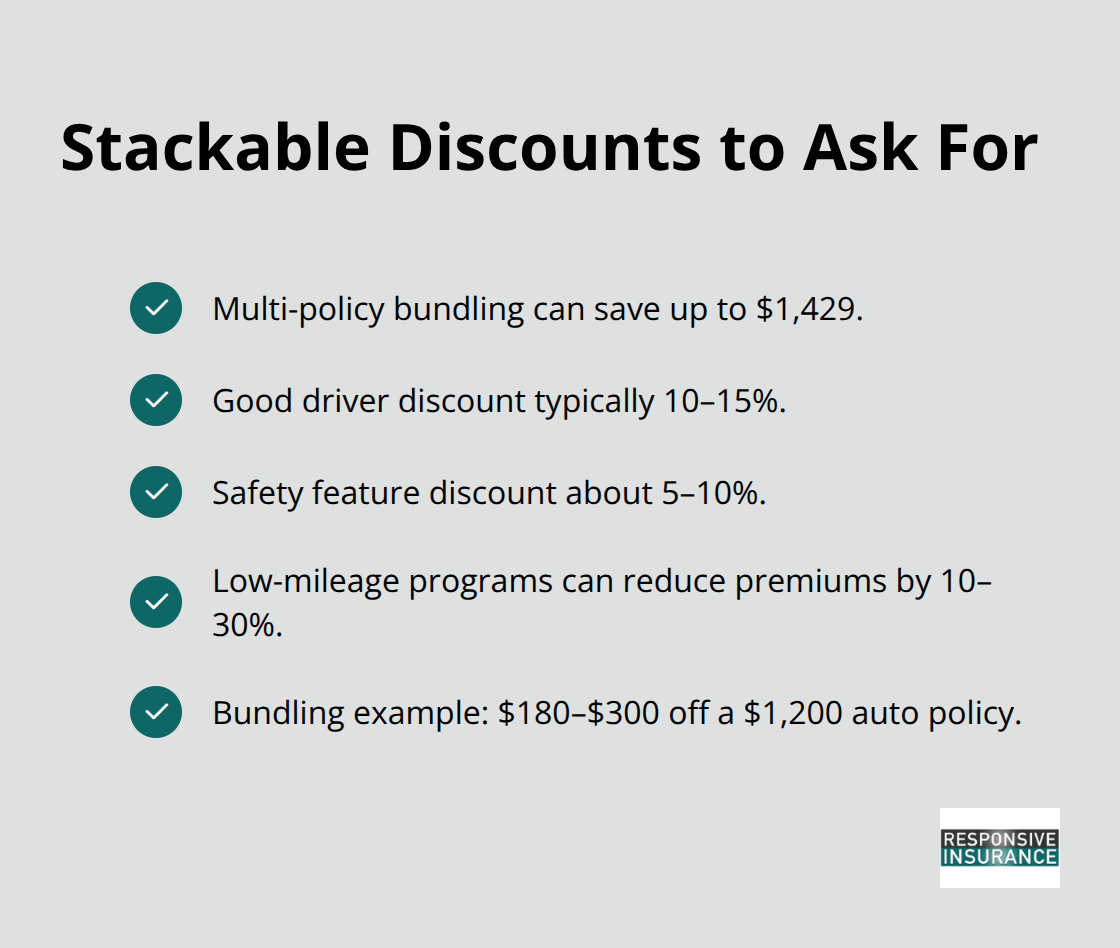
Multi-policy bundling can save you up to $1,429 when combining auto with home or umbrella coverage through the same insurer. This isn’t a minor discount; a driver paying $1,200 annually for auto insurance saves $180 to $300 by bundling with homeowners coverage. Beyond bundling, specific discounts compound quickly: good driver discounts range from 10 to 15 percent, safety feature discounts from 5 to 10 percent, and low-mileage discounts from 10 to 30 percent depending on your annual miles.
The challenge is that most insurers don’t volunteer these discounts-you must ask or they remain unclaimed. When you shop for quotes in Naples, explicitly request a list of all available discounts before accepting any rate. As an independent insurance agency based in Naples, Responsive Insurance, Inc. works with multiple A-rated insurance companies to compare coverage and identify which discounts apply to your specific profile.
Maintain a Clean Driving Record
Maintaining a genuinely clean driving record requires more than avoiding accidents; it means actively protecting yourself from minor violations that accumulate over time. Even a single speeding ticket costs you 10 to 15 percent on your premium for three years, making defensive driving habits financially rational rather than just safe. Some insurers offer accident forgiveness programs that waive the first at-fault accident if you’ve maintained three to five years without claims, but these programs typically apply only at renewal and may require paying slightly higher base rates upfront.
Adjust Your Deductible Strategically
Your deductible choice represents the most direct lever you control at quote time. Raising your deductible from $500 to $1,000 reduces your collision and comprehensive premiums by 15 to 30 percent, while jumping to $2,500 can reduce them by 40 percent or more. This strategy works best if you have emergency savings covering your deductible; otherwise you’re simply trading premium savings for financial risk.
Naples drivers with solid emergency funds and clean records benefit most from higher deductibles, while those with limited savings should maintain lower deductibles despite higher premiums.
Final Thoughts
Your auto insurance Florida rates reflect factors you control and factors you cannot, but understanding this distinction transforms how you shop for coverage. Your driving record, age, vehicle type, and location form the foundation of what insurers charge, while your credit score and mileage patterns refine that calculation further. The good news is that bundling policies, maintaining a clean record, and adjusting your deductible give you real leverage to reduce what you pay each month.
Finding better rates requires action beyond accepting the first quote you receive. Gather quotes from at least three different insurers, then explicitly ask about every available discount before comparing final numbers (good driver discounts, safety feature reductions, bundling savings, and low-mileage programs all add up quickly). Many Naples drivers qualify for discounts they never knew existed simply by asking the right questions during the quote process.
Comparing quotes matters because rates vary dramatically between insurers for identical coverage. Contact Responsive Insurance, Inc. to review your current coverage and explore whether better auto insurance Florida rates are available for your profile. As an independent agency based in Naples, we work with multiple A-rated insurance companies to compare your options and identify which discounts apply to your specific situation.


