

Personal Umbrella Insurance Florida: Extra Protection for Your Assets
One lawsuit or accident could wipe out years of financial progress. Standard homeowners and auto insurance policies have liability limits that often fall short when serious claims arise.
Personal umbrella insurance in Florida fills that gap, protecting your assets when your primary policies reach their limits. We at Responsive Insurance, Inc. help Naples residents understand how this coverage works and why it matters for their financial security.
What Umbrella Insurance Actually Covers
Personal umbrella insurance activates only after your underlying auto or homeowners policies hit their limits. If you cause an accident that results in a $750,000 judgment but your auto policy maxes out at $500,000, your umbrella policy covers the remaining $250,000 plus associated legal costs. This layered protection distinguishes umbrella insurance from standalone coverage. The average personal injury settlement reaches $52,900 according to NOLO, and plaintiffs represented by lawyers receive over 4.4 times more compensation than those representing themselves, meaning legal defense costs become a real financial burden when claims escalate.
Bodily Injury and Property Damage Liability
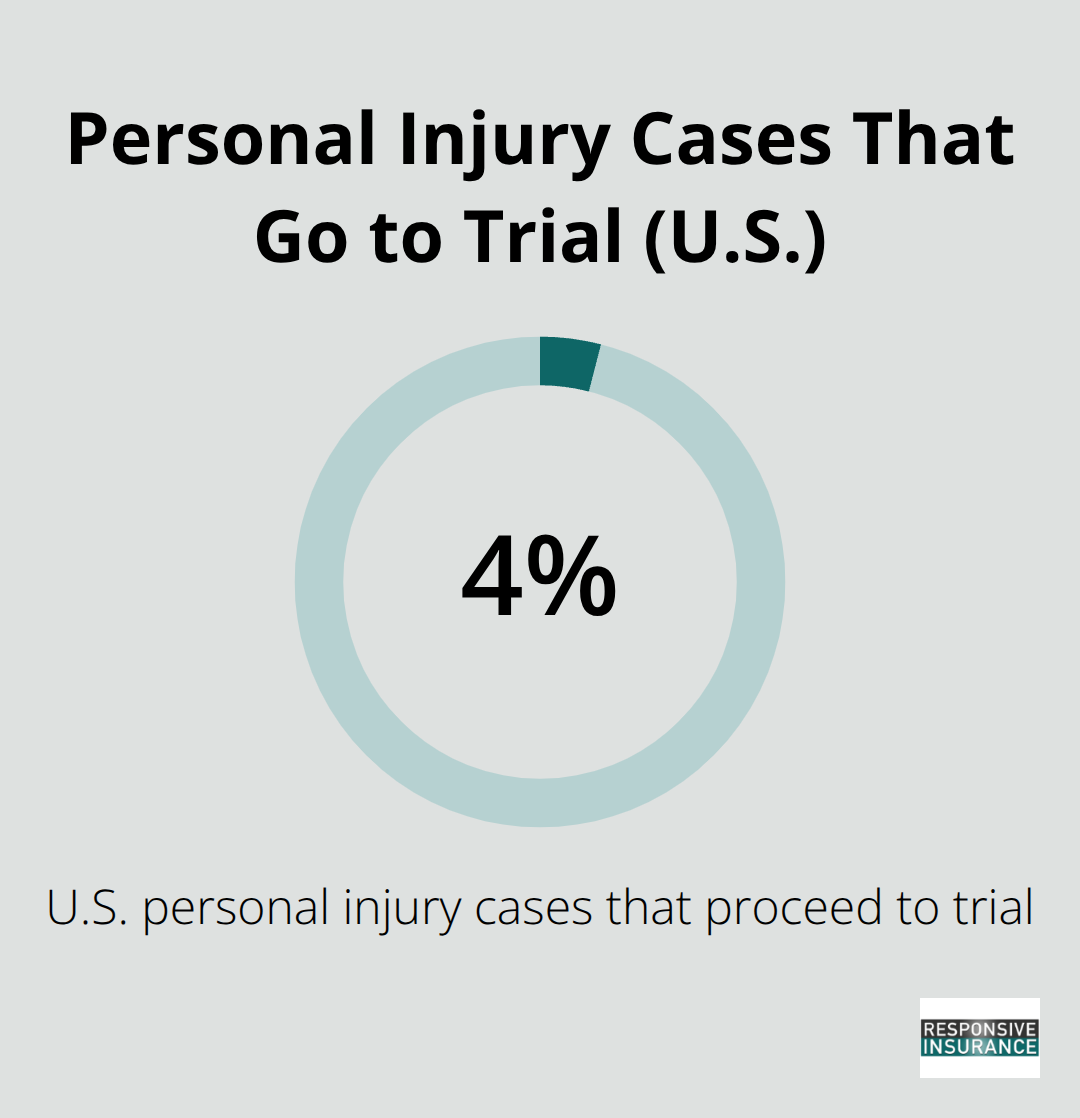
Your umbrella policy covers bodily injury claims when you’re found liable for someone’s injuries, whether that injury occurs at your home, in your vehicle, or elsewhere. Property damage claims fall under the same umbrella protection-if you damage someone’s vehicle, boat, or property, the coverage applies after your primary policies exhaust their limits. The policy also covers personal injury claims including libel, slander, and defamation, which standard homeowners policies frequently exclude. This expanded personal injury protection matters in Florida’s legal environment, where the U.S. personal injury market generated approximately $61.3 billion in revenue in 2024, reflecting the region’s active litigation landscape. About 4 percent of personal injury cases proceed to trial, meaning most claims settle out of court, but settlements still require legal representation and negotiation.
Defense Costs That Protect Your Wallet
Umbrella policies pay for your legal defense costs before they touch the liability coverage limit itself. Attorney fees, court costs, expert witness testimony, and settlement negotiations all qualify. This distinction matters significantly because legal defense in a serious liability case easily reaches tens of thousands of dollars. Your umbrella policy covers these expenses regardless of whether you win or lose the case, providing financial protection during the entire claims process.
What Umbrella Insurance Does Not Cover
Umbrella policies exclude damage to your own property, even if your underlying policy limits are exhausted. Your own medical bills and personal injuries also fall outside umbrella protection-you need separate health or PIP coverage for those expenses. Intentional or criminal acts receive no coverage, nor do contractual disputes or damage you cause through violations of law. Understanding these exclusions helps you identify gaps in your overall protection strategy and determine what additional coverage you may need.
Who Needs Umbrella Coverage in Florida
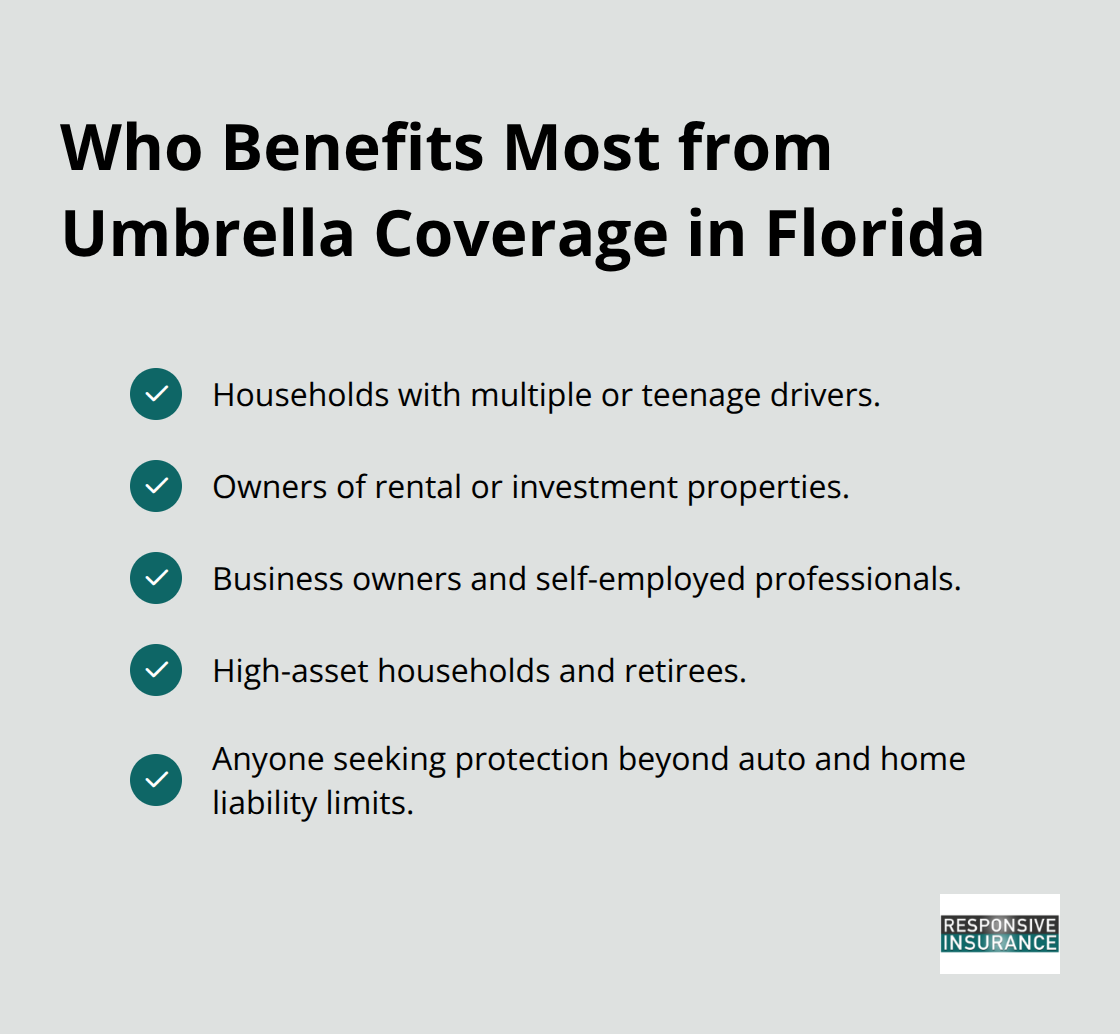
Umbrella insurance isn’t reserved for millionaires or corporate executives. Anyone with assets worth protecting-and that includes most homeowners in Naples-needs to evaluate whether their current liability coverage leaves them exposed. If you own a home valued at $400,000, drive multiple vehicles, or have accumulated retirement savings, a single lawsuit could claim all of it. Florida’s litigation environment makes this especially relevant. The state consistently ranks among the highest for personal injury claims due to dense population, frequent vehicle incidents, and an active legal community. Those who hire lawyers in personal injury cases receive an average of $77,600 in compensation, compared to $17,600 for those without representation. That gap reflects how aggressive legal representation extracts maximum value from claims. If you cause serious injury to someone, their attorney will pursue everything your standard policies don’t cover, then go after your personal assets. Most claims take 11.4 months to resolve, meaning months of financial uncertainty while your assets remain at risk.
Families with Teenage or Multiple Drivers
Households with multiple drivers face compounded liability exposure. Each additional driver increases the probability of an accident, and teenage drivers statistically generate more claims than any other age group. If your auto policy caps liability at $300,000 and a teenage driver causes a multi-vehicle collision injuring three people, you’ll quickly exceed those limits. An umbrella policy starting at $1 million provides the buffer you need. Mercury offers Florida umbrella coverage for less than $1 per day for $1 million in protection, making the cost negligible compared to the risk. Parents protecting their children’s financial futures should view umbrella coverage as essential, not optional.
Real Estate Investors and Property Owners
Rental properties and investment real estate dramatically increase liability exposure. Guests, tenants, contractors, and visitors on your property create multiple scenarios where injuries could trigger lawsuits. If someone slips on your rental property and suffers a permanent disability, medical costs and lost wages can easily exceed $500,000. Coverage ranging from $2 million to $5 million addresses the elevated risk that property ownership introduces, particularly in Southwest Florida where real estate values are substantial. This protection tier becomes especially important when you own multiple properties or operate significant rental operations.
Business Owners and Self-Employed Professionals
Self-employed professionals and business owners face unique liability threats that extend beyond standard homeowners coverage. A client injury at your office, a professional mistake, or an accident involving your business vehicle can trigger claims that dwarf your personal auto and home policy limits. Contractors, consultants, and service providers encounter similar exposure. Umbrella coverage ($2 million to $5 million) protects your personal assets when business-related claims exceed your commercial policy limits. This layered approach keeps your home, savings, and retirement funds separate from your professional liability exposure.
High-Asset Households and Retirees
Households with significant accumulated wealth-investment portfolios, multiple properties, or substantial retirement savings-face the greatest financial exposure from a single lawsuit. Retirees who own homes or investments should view umbrella protection as a safeguard for decades of financial planning. A judgment against you could force asset liquidation, tap retirement accounts, or trigger tax consequences that devastate your financial security. Umbrella limits of $2 million to $5 million align with the asset protection needs of affluent households. The cost remains remarkably low (often under $1 per day for $1 million), making this protection accessible regardless of your income level.
Your assets determine your umbrella needs, but your liability exposure determines your urgency. The next section walks through calculating exactly how much coverage makes sense for your specific situation.
How Much Umbrella Coverage Do You Actually Need
Calculate Your Total Net Worth First
Start with your total net worth, not your annual income. Add up your home value, investment accounts, retirement savings, vehicles, and any other significant assets. If your home is worth $500,000, your investment portfolio holds $300,000, and you have $150,000 in retirement savings, your total exposure reaches $950,000. That number becomes your baseline for umbrella coverage.
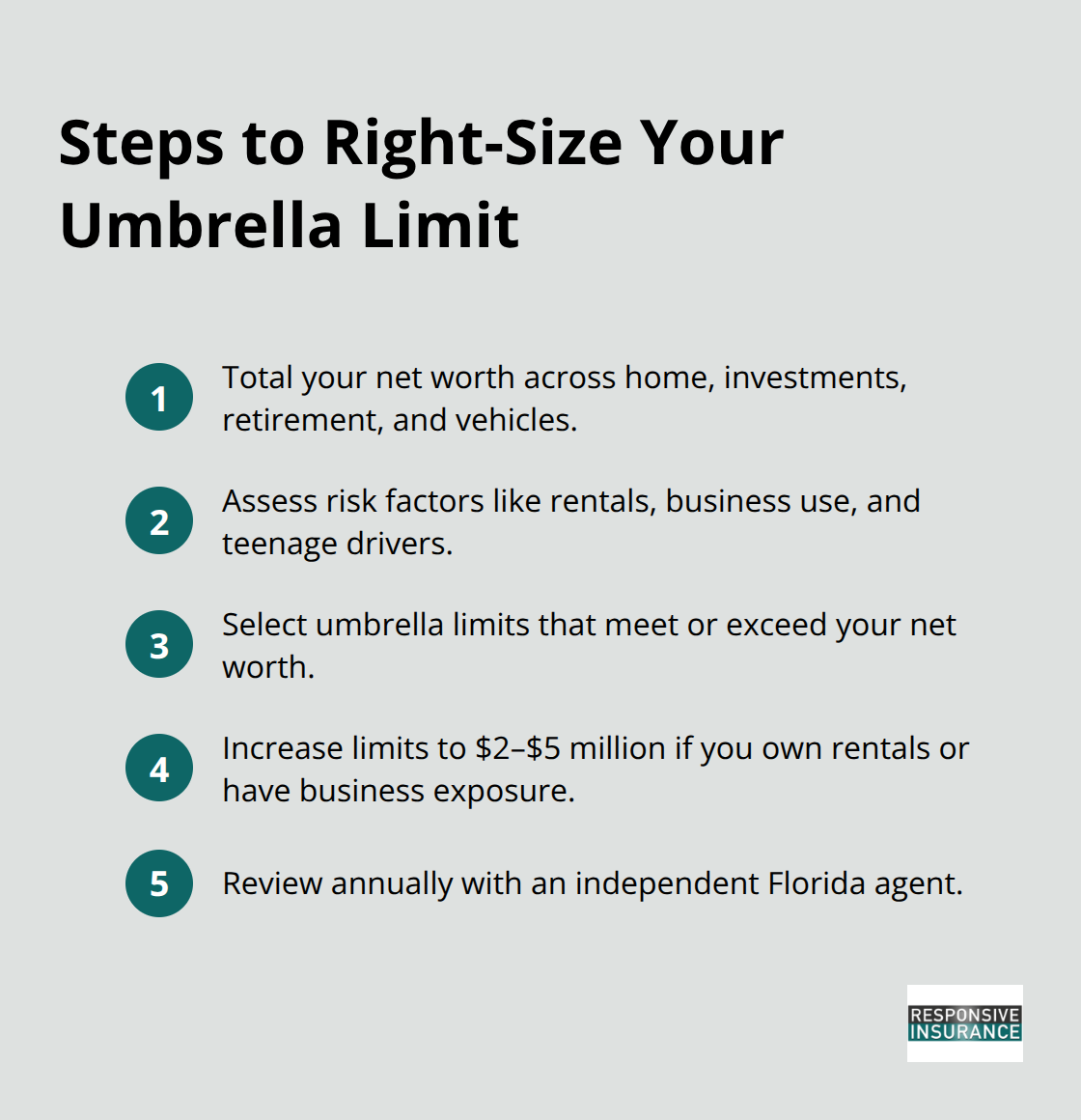
Most financial advisors recommend matching or exceeding your net worth with umbrella limits, which means you’d want at least $1 million in coverage for this scenario.
Account for Your Actual Liability Risk
This baseline assumes moderate liability risk. If you own rental properties, operate a business from home, or have multiple teenage drivers, your actual exposure exceeds your net worth significantly. A single serious accident generates claims that dwarf your assets and then continues accumulating as judgments. The average personal injury case compensation varies significantly by injury type, with fractures averaging $75,000 and herniated discs averaging $90,000, but catastrophic injuries involving permanent disability, lost wages, and ongoing medical care routinely exceed $500,000. Florida’s dense population and high vehicle incident rates mean serious multi-vehicle collisions occur more frequently here than in most states, which directly increases your potential liability exposure beyond what your standard auto policy covers.
Rental Properties Demand Higher Limits
Rental property owners should immediately jump to $2 million to $5 million in coverage. Every guest, tenant, contractor, and visitor on your property creates a potential lawsuit scenario. A contractor injured on your rental property could claim medical expenses, lost wages, and permanent disability that easily reaches $750,000 or more. Business owners operating from home or meeting clients at their residence face similar compounded exposure. The cost remains minimal for additional liability protection, making $2 million or $3 million coverage affordable compared to the financial devastation a single judgment could trigger.
Protect Your Retirement and Accumulated Wealth
Retirees protecting decades of accumulated wealth should view umbrella coverage in the $2 million to $5 million range as non-negotiable, particularly those with multiple properties or significant investment portfolios. Your umbrella limit should exceed your realistic maximum liability exposure, not just match your current net worth. Each situation presents unique risk factors that matter more than generic guidelines. Responsive Insurance, Inc., as an independent agency in Naples, works with multiple A-rated insurance companies to compare coverage options and find the best fit for your specific needs and asset protection goals.
Final Thoughts
Personal umbrella insurance in Florida protects your financial future by creating a safety net that standard policies cannot provide. One serious accident or lawsuit could force you to liquidate retirement accounts, sell your home, or face wage garnishment for years. Your umbrella policy prevents that outcome by covering liability claims that exceed your auto and homeowners limits, plus the legal defense costs that accompany any lawsuit.
Calculate your total net worth, account for your specific liability risks, and match your umbrella limit to that number. Rental property owners and households with multiple drivers need higher limits because their exposure exceeds what standard policies cover. Retirees protecting accumulated wealth benefit equally from this protection, particularly those with multiple properties or significant investment portfolios.
We at Responsive Insurance, Inc. work with multiple A-rated insurance companies to compare personal umbrella insurance options and find the best fit for your specific needs. As an independent agency based in Naples, we understand Southwest Florida’s unique liability landscape and the asset protection strategies that work for families and business owners in our community. Contact us today to discuss your umbrella insurance needs and get a quote tailored to your assets and risk profile.


