Florida Vacation Rental Liability: Protecting Guests and Your Bottom Line
Florida vacation rental liability can turn a profitable investment into a financial nightmare. A single guest injury or property damage claim can expose you to thousands in legal fees and settlements.
At Responsive Insurance, Inc., we’ve seen how the right coverage and smart risk management protect both your guests and your income. This guide walks you through the liability risks you face, the insurance options available, and the practical steps to safeguard your rental business.
What Liability Risks Actually Threaten Your Vacation Rental
Guest Injuries Create Expensive Exposure
Guest injuries represent the most expensive liability exposure for vacation rental owners in Florida. A single incident-a slip on a wet deck, a fall from a balcony, or a pool-related accident-generates significant medical bills and triggers lawsuits that drain your savings. Property damage claims follow closely behind. Guests spill wine on carpets, break tiles, damage furniture, and leave stains that cost thousands to repair.
Unlike long-term rentals where tenants have legal protections and slower turnover, vacation rental guests change every few days, multiplying your exposure to careless behavior and accidents. You remain liable even when the guest caused the damage through their own negligence. Florida courts consistently hold property owners responsible for maintaining safe premises, which means you cannot pass liability to the guest or their homeowners insurance.

Why Your Current Homeowners Policy Won’t Protect You
Your existing homeowners insurance was designed for owner-occupied homes, not businesses. The moment you accept payment for guest stays, you convert your property into a commercial enterprise, and standard policies treat this as a breach of the coverage agreement. Insurers view short-term rental activity as high-risk because guests lack the investment in property care that long-term tenants have, and they occupy your home for days rather than months.
If you file a claim related to guest damage or a guest injury, the insurer will investigate your rental activity and deny coverage, leaving you personally liable for the full claim amount. Your personal homeowners policy explicitly excludes income from rental activity, so filing a claim for guest-caused damage often results in denial and potential policy cancellation. This gap between actual liability and available coverage is where owners face financial ruin.
The Gaps in Landlord and Standard Policies
Landlord policies designed for long-term rentals offer slightly better protection but still contain significant gaps specific to vacation rentals. These policies exclude coverage for property entrustment (guest theft), bed bug liability, or loss of income when the property becomes uninhabitable after a covered loss. A dedicated vacation rental liability policy fills these gaps by covering guest injuries regardless of fault up to specified limits, property damage from guest actions, loss of rental income during recovery periods, and liability for amenities like pools or off-site equipment.
In Naples and across Southwest Florida, properties with pools face even higher exposure because drowning remains a leading cause of injury claims, and insurers now require documented safety compliance before issuing coverage. The right vacation rental insurance protects both your guests and your income stream, addressing risks that standard homeowners and landlord policies simply ignore. Understanding these coverage differences helps you make informed decisions about the protection your rental property actually needs.
What Insurance Actually Covers Vacation Rentals
Standard Homeowners Policies Reject Rental Income
Standard homeowners policies actively reject your rental business. Most carriers now include explicit exclusions for short-term rental income in their homeowners contracts, meaning coverage becomes void the moment a guest pays to stay at your property. Your insurer will deny claims related to guest injuries or property damage if they discover rental activity, leaving you personally liable for the full amount. This gap between your actual liability and available coverage creates serious financial risk.
Vacation Rental Liability Insurance Fills the Coverage Gap
Vacation rental liability policies exist specifically for this business model and cover guest injuries regardless of fault up to your selected limit, property damage caused by guests, and loss of rental income if the property becomes uninhabitable after a covered claim.

In Naples, where properties with pools command higher premiums due to drowning risk, dedicated vacation rental coverage typically requires at least $1,000,000 in liability protection, with many insurers recommending an additional $1,000,000 umbrella policy for total protection of $2,000,000. The cost varies significantly based on location, replacement value, proximity to the coast, and your pool setup, but coverage is flexible-you can pause it during off-season months when occupancy drops and restart it when guests return, avoiding unnecessary expense during slow periods.
Specialized Endorsements Address Specific Risks
The insurance market for vacation rentals in Florida has expanded rapidly, with carriers now offering endorsements that address specific gaps in older policies. Property entrustment coverage protects against guest theft and malicious damage, a protection standard homeowners policies explicitly exclude. Bed bug and flea liability covers both extermination costs and lost revenue from canceled bookings, a scenario that can wipe out weeks of income. Liquor liability addresses alcohol-related claims that most standard policies deny outright. Amenities coverage extends protection to off-site guest amenities like kayaks, bicycles, and golf carts, as well as pools and hot tubs.
Loss of Income Protection and Fast Claims Processing
Loss of income protection reimburses actual revenue lost if a covered claim makes your property unrentable, with no time limit on the payout up to your selected limit. Claims processing is typically fast-many carriers complete payouts within 72 hours, minimizing downtime between guest stays. When comparing quotes, focus on what coverage gaps matter most to your specific property: if you offer a pool, prioritize documented safety compliance and pool liability; if you rent to larger groups, verify that your liability limit matches your guest capacity and property value; if you operate year-round with high turnover, confirm that your coverage covers common guest-caused damages like broken tiles, stained carpets, and furniture damage. These decisions directly impact how well your policy protects your income and assets when claims occur.
How to Prevent Liability Before It Happens
Install Pool Safety Features That Insurers Require
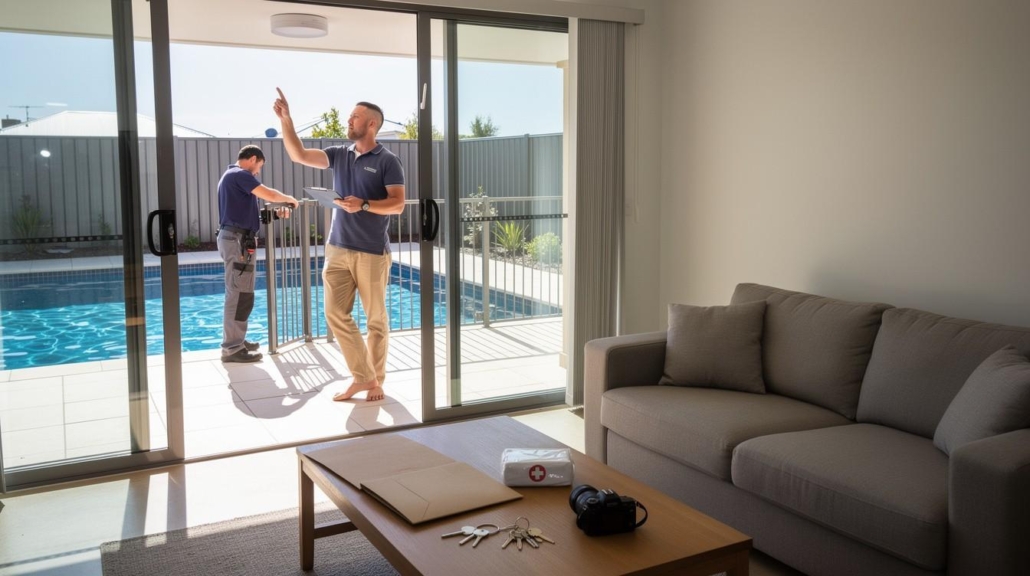
Pool safety is the single most important risk management action you can take in Naples. Florida law requires at least one approved safety feature under the Residential Swimming Pool Safety Act, but insurance carriers now demand documentation of compliance before issuing policies. Install a pool barrier with a self-closing, self-latching gate, or add a certified pool alarm meeting ASTM F2208 standards like the Poolguard PGRM-SB2. Many properties already satisfy barrier requirements through pool cages, but insurers increasingly require photos of barriers, depth markers, pool alarm documentation, posted safety signage, and proper disclosure in your listing. A practical baseline is two safety features-a barrier plus an alarm-to meet insurer expectations and reduce guest injury exposure.
Conduct Quarterly Property Inspections and Document Everything
Quarterly property inspections focused on slip-and-fall hazards protect your liability position. Check deck surfaces for deterioration, test handrails and balcony railings for stability, inspect stairs for loose treads, and photograph any damage immediately. Document repairs with dates and contractor invoices, as this record protects you if a guest later claims a pre-existing condition caused their injury. Maintenance costs vary by property, but neglecting inspections costs far more when liability claims arrive. Photograph conditions before each guest arrives and after they depart to establish baseline conditions and identify new damage quickly.

Write Specific Guest Agreements That Protect Your Legal Position
Your guest agreements and house rules must be specific, not generic. Vague rules like “keep the property clean” create disputes and weaken your legal position if a guest causes damage and disputes liability. Instead, specify occupancy limits tied to your liability coverage, prohibit parties or events beyond stated guest count, require disclosure of any property damage within 24 hours, and state clearly that guests are responsible for damages they cause beyond normal wear. Require guests to acknowledge these terms before check-in, and keep signed confirmations or email confirmations showing they accepted your rules.
Create Incident Reports That Strengthen Claims Investigations
Document every incident immediately. If a guest reports damage, photograph it with date stamps, note the guest name and booking dates, and request written description of how the damage occurred. File incident reports even for minor damage, as these records establish patterns and protect you if the guest later files a counterclaim. Insurance carriers review these records during claims investigations, and thorough documentation strengthens your position significantly. In Naples, where high-value properties attract liability claims, this documentation often determines whether your claim is approved or denied.
Final Thoughts
Your homeowners policy will not protect you once you accept payment for guest stays, leaving you personally liable for guest injuries and property damage. Vacation rental liability insurance fills this gap by covering guest injuries regardless of fault, property damage from guest actions, and loss of income when your property becomes uninhabitable. In Naples, where pools are common and drowning remains a leading injury claim, documented safety compliance now determines whether insurers approve your coverage.
Risk management reduces claims frequency and strengthens your insurance position significantly. Install two pool safety features before your first guest arrives, conduct quarterly inspections, write specific guest agreements that state occupancy limits and damage responsibility, and document every incident with photos and written descriptions. These practices cost nothing compared to a single liability claim and signal to insurers that you take guest safety seriously.
A single guest injury claim can exceed $25,000 in medical bills alone, and property damage claims add up quickly across multiple bookings. Contact Responsive Insurance, Inc. to discuss your Florida vacation rental liability coverage needs and receive a quote tailored to your property’s replacement value, location, and guest capacity.


